

Monday, October 26, 2026
Science
No Result
View All Result
  • Login
  • HOME
  • SCIENCE NEWS
  • CONTACT US
  • HOME
  • SCIENCE NEWS
  • CONTACT US
No Result
View All Result
Scienmag
No Result
View All Result
Home Science News Technology and Engineering

Specialized deep learning improves UAV-based solar fault detection

October 26, 2026
in Technology and Engineering
Blake Davidson
By Blake Davidson Scienmag Editorial Profile - Data Science
Reading Time: 2 mins read
0
Specialized deep learning improves UAV-based solar fault detection

Specialized deep learning improves UAV-based solar fault detection

65
SHARES
587
VIEWS
Share on FacebookShare on Twitter
ADVERTISEMENT

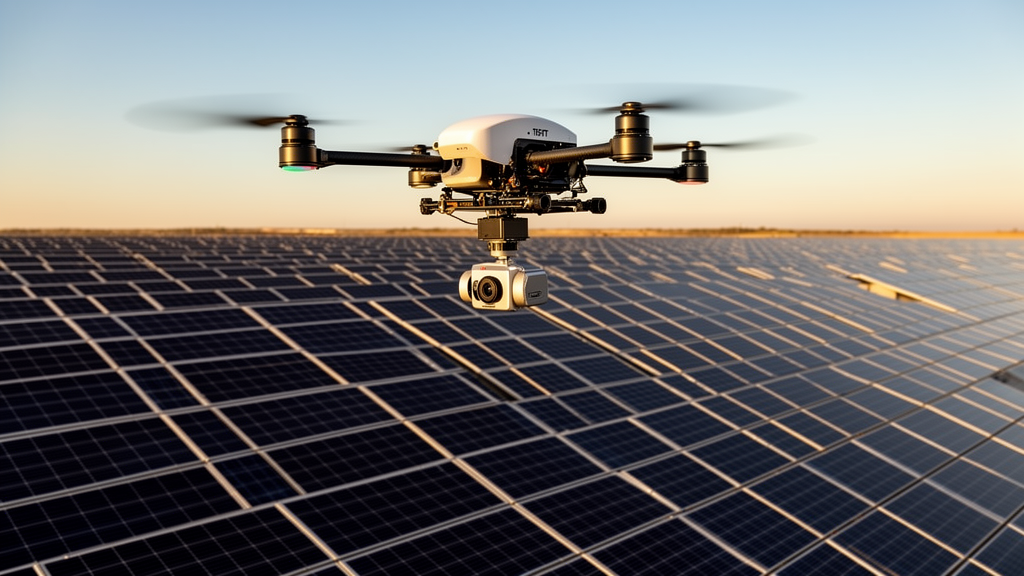
A UAV-assisted system combining radiometric thermal imaging with three specialized YOLOv8s detectors identified hotspots, diode faults and affected cells in photovoltaic modules with 85% accuracy on a held-out test set. The study evaluated the approach using 1,251 thermal images collected over one year from three photovoltaic installations, according to the report in Scientific Reports. Researchers mounted a FLIR One Pro thermal camera on a DJI Phantom 4 unmanned aerial vehicle to collect the imagery.

The proposed Photovoltaic Fault Detector, or PVFD, used a fault-specific One-vs-Rest strategy: three independently trained YOLOv8 detectors focused separately on hotspots, diode faults and affected cells, rather than assigning all categories within a single multi-class detector. On the held-out test set, the PVFD achieved an accuracy of 0.85, precision of 0.89, recall of 0.86 and mean average precision at an intersection-over-union threshold of 0.5, known as mAP@0.5, of 0.77. The corresponding 95% Wilson confidence interval for accuracy was 0.764 to 0.908, indicating uncertainty around the point estimate of 0.85.

A controlled comparison showed that the One-vs-Rest formulation increased overall accuracy from 0.82 for the conventional multi-class YOLOv8 model to 0.85. Average recall also rose from 0.83 to 0.86. The specialized approach therefore produced higher measured accuracy and recall on the study’s test data, although it did so with lower inference throughput.

Class-specific mAP@0.5 increased from 0.70 to 0.73 for hotspots and from 0.66 to 0.71 for diode faults. For affected cells, the score rose from 0.62 to 0.66. The comparison supports the study’s conclusion that the One-vs-Rest design improved detection of less represented fault categories in this dataset, with the largest absolute mAP gain occurring for diode faults.

That improvement involved a measurable efficiency trade-off. The conventional multi-class model processed images at 48 frames per second, compared with 43 frames per second for the One-vs-Rest system. The three specialized detectors therefore improved the reported detection metrics while reducing the rate at which the model processed frames.

The results concern three defined fault categories in thermal imagery collected from three installations. The report does not establish that every detected anomaly requires repair, quantify effects on electricity production, or demonstrate the same performance at other photovoltaic sites. Instead, it provides a quantitative comparison between a conventional multi-class YOLOv8 detector and a specialized One-vs-Rest framework for UAV-assisted thermal inspection.

Overall, the study reports a measurable sensitivity–efficiency trade-off for the proposed PVFD. Its strongest observed benefits were higher accuracy, recall and class-specific mAP@0.5, particularly for diode faults and affected cells, while frame-processing throughput fell by 5 frames per second.

Subject of Research: UAV-based thermal imaging and specialized deep learning for detecting faults in photovoltaic modules

Article Title: Deep learning-driven fault detection in photovoltaic modules using UAV assistance

Article References: Thirugnanasambandam, K., Anbalagan, S., Suganeshwari, G., Mahalingam, P., & Rajagopalan, A. (2026). Deep learning-driven fault detection in photovoltaic modules using UAV assistance. Scientific Reports. https://doi.org/10.1038/s41598-026-75496-y

Image Credits: AI Generated

DOI: 10.1038/s41598-026-75496-y

Keywords: photovoltaic fault detection, unmanned aerial vehicles, radiometric thermal imaging, YOLOv8s, deep learning, one-vs-rest classification, solar modules, hotspots, diode faults, affected cells, Deep, learning-driven

Cite Scienmag News

Blake Davidson. (October 26, 2026). Specialized deep learning improves UAV-based solar fault detection. Scienmag. https://scienmag.com/specialized-deep-learning-improves-uav-based-solar-fault-detection/

Blake Davidson. "Specialized deep learning improves UAV-based solar fault detection." Scienmag, 26 October 2026, https://scienmag.com/specialized-deep-learning-improves-uav-based-solar-fault-detection/. Accessed 26 October 2026.

Blake Davidson. "Specialized deep learning improves UAV-based solar fault detection." Scienmag. October 26, 2026. https://scienmag.com/specialized-deep-learning-improves-uav-based-solar-fault-detection/


Tags: affected cellsDeepdeep learningdeep learning accuracy metrics in solar inspectiondiode fault detection in solar panelsdiode faultsdrone-assisted thermal imaginghotspotsimproved fault diagnosis in renewable energy systemslearning-drivenobject detection in aerial imageryone-vs-rest classificationone-vs-rest strategy in fault classificationphotovoltaic fault detectionphotovoltaic module hotspot identificationphotovoltaic system maintenance automationradiometric thermal imagingsolar modulesthermal camera technology for solar farmsthermal imaging in photovoltaic systemsUAV-based solar fault detectionunmanned aerial vehiclesYOLOv8 deep learning detectorsYOLOv8s
Share26Tweet16
Previous Post

Central obesity prevalence differs across Australian remoteness areas

Next Post

Research report: Associations of patient safety-related perceptions and lifelong learning-related attitudes with critical trust in AI/digital clinical tools among medical students: a cross-sectional study

Related Posts

XPAR-Net: cross-paradigm alignment and reconstruction network for high-fidelity lens-free on-chip microscopy
Technology and Engineering

XPAR-Net: cross-paradigm alignment and reconstruction network for high-fidelity lens-free on-chip microscopy

October 26, 2026
Blood RNA patterns track essential tremor brain and cognitive differences
Technology and Engineering

Blood RNA patterns track essential tremor brain and cognitive differences

October 26, 2026
Virtual Reality Reveals How People Choose Tsunami Escape Routes Inside High-Rise Buildings
Technology and Engineering

Virtual Reality Reveals How People Choose Tsunami Escape Routes Inside High-Rise Buildings

October 26, 2026
Vertical-Axis Wind Turbines Need Power, Noise and Load Designed Together, Review Finds
Science News

Vertical-Axis Wind Turbines Need Power, Noise and Load Designed Together, Review Finds

October 26, 2026
Machine Learning Pushes Flexible Pressure Sensors Toward Intelligent Perception
Technology and Engineering

Machine Learning Pushes Flexible Pressure Sensors Toward Intelligent Perception

October 26, 2026
Atomistic simulations test when partial separation reliably measures stacking fault energy
Technology and Engineering

Atomistic simulations test when partial separation reliably measures stacking fault energy

October 26, 2026
Next Post
Research report: Associations of patient safety-related perceptions and lifelong learning-related attitudes with critical trust in AI/digital clinical tools among medical students: a cross-sectional study

Research report: Associations of patient safety-related perceptions and lifelong learning-related attitudes with critical trust in AI/digital clinical tools among medical students: a cross-sectional study

  • Mothers who receive childcare support from maternal grandparents show more optimized

    Mothers who receive childcare support from maternal grandparents show more parental warmth, finds NTU Singapore study

    27656 shares
    Share 11059 Tweet 6912
  • University of Seville Breaks 120-Year-Old Mystery, Revises a Key Einstein Concept

    1061 shares
    Share 424 Tweet 265
  • Bee body mass, pathogens and local climate influence heat tolerance

    682 shares
    Share 273 Tweet 171
  • Researchers record first-ever images and data of a shark experiencing a boat strike

    546 shares
    Share 218 Tweet 137
  • Groundbreaking Clinical Trial Reveals Lubiprostone Enhances Kidney Function

    531 shares
    Share 212 Tweet 133
Science

Embark on a thrilling journey of discovery with Scienmag.com—your ultimate source for cutting-edge breakthroughs. Immerse yourself in a world where curiosity knows no limits and tomorrow’s possibilities become today’s reality!

RECENT NEWS

  • Research report: Associations of patient safety-related perceptions and lifelong learning-related attitudes with critical trust in AI/digital clinical tools among medical students: a cross-sectional study
  • Specialized deep learning improves UAV-based solar fault detection
  • Central obesity prevalence differs across Australian remoteness areas
  • Survey finds mixed patient-centred orientations among South African optometry students

Categories

  • Agriculture
  • Anthropology
  • Archaeology
  • Athmospheric
  • Biology
  • Biotechnology
  • Blog
  • Bussines
  • Cancer
  • Chemistry
  • Climate
  • Earth Science
  • Editorial Policy
  • Marine
  • Mathematics
  • Medicine
  • Pediatry
  • Policy
  • Psychology & Psychiatry
  • Science Education
  • Science News
  • Social Science
  • Space
  • Technology and Engineering

Subscribe to Blog via Email

Enter your email address to subscribe to this blog and receive notifications of new posts by email.

Join 5,151 other subscribers

© 2025 Scienmag - Science Magazine

Welcome Back!

Login to your account below

Forgotten Password?

Retrieve your password

Please enter your username or email address to reset your password.

Log In
No Result
View All Result
  • HOME
  • SCIENCE NEWS
  • CONTACT US

© 2025 Scienmag - Science Magazine

Discover more from Science

Subscribe now to keep reading and get access to the full archive.

Continue reading