


A stage-integrated tissue-culture platform developed for elite alfalfa increased the frequency of transgene-positive plants 2.8-fold and shortened the transformation cycle by two to three months compared with a previously reported protocol. The system was developed primarily with the elite cultivar ‘Zhongmu No. 1,’ which has a high-quality reference genome, and combines axenic clonal explants, low-browning embryogenic callus induction, somatic embryo development without plant growth regulators, and direct plantlet conversion. Its broader regeneration response was demonstrated in all 25 cultivars tested, although the reported cross-cultivar result concerned regeneration rather than transformation performance in every cultivar.
Alfalfa is a globally important perennial forage crop, but molecular breeding has been constrained by slow and genotype-dependent regeneration and transformation. These limitations are particularly pronounced in elite commercial cultivars, for which efficient protocols are scarce. The researchers addressed the problem by systematically optimizing explant type and culture conditions across successive stages of the regeneration pathway rather than treating callus induction, embryo formation and plantlet production as separate tasks. Their aim was to create a streamlined workflow that maintained embryogenic tissue quality while reducing both the time required to regenerate plants and dependence on the responsiveness of a single genotype.
A key improvement came from culturing stem explants on an optimized callus-induction medium, CIM-MS1. Relative to the reference condition, this medium reduced browning, produced a 3.5-fold increase in callus induction and generated callus 10–20 days earlier, while maintaining a stable embryogenic morphology. The researchers also examined 15-day stem-derived callus through transcriptome analysis. They associated the improved tissue-culture response with enhanced carbohydrate metabolism, cell-wall remodeling and increased expression of regulators related to embryogenesis. These transcriptomic associations provide a possible mechanistic description of the response, but the reported findings do not establish that any single metabolic or regulatory change caused the observed improvement.
The platform also streamlined later stages. When embryogenic calli were transferred to N6 medium containing no plant growth regulators, somatic embryo production increased by 1.3-fold and conversion into plantlets was accelerated. The complete workflow supported both transgene overexpression and CRISPR/Cas9 genome editing, showing that the system could accommodate two routes for introducing or modifying genetic material. Regeneration was tested across 25 cultivars from diverse geographic origins, and every cultivar underwent complete somatic embryo-mediated regeneration. This result broadens the demonstrated scope of the platform beyond the highly responsive ‘Zhongmu No. 1’ material used for optimization; it does not establish that each of the 25 cultivars achieved the same transformation efficiency.
The study’s central advance is the integration of several linked interventions into one sequence, from explant selection and callus quality through regulator-free embryo development and plantlet conversion. By matching conditions across the entire pathway, the researchers reduced a major bottleneck in elite alfalfa tissue culture and shortened the route to transformed, regenerated plants. The measured gains—higher callus induction, earlier callus formation, increased somatic embryo production, a 2.8-fold rise in transgene-positive plants and a transformation cycle shortened by two to three months—support the platform as a technical advance for functional genomics, genome editing and targeted molecular breeding in cultivated alfalfa.
Subject of Research: Somatic embryogenesis for faster regeneration and genetic transformation of elite alfalfa
Article Title: A broadly applicable somatic embryogenesis platform accelerates regeneration and genetic transformation in elite alfalfa
Article References: Li, M., Zhou, Y., He, M., Zhang, H., Wang, Y., Kong, Z., Zhu, H., & Wu, S. (2026). A broadly applicable somatic embryogenesis platform accelerates regeneration and genetic transformation in elite alfalfa. BMC Plant Biology. https://doi.org/10.1186/s12870-026-09922-8
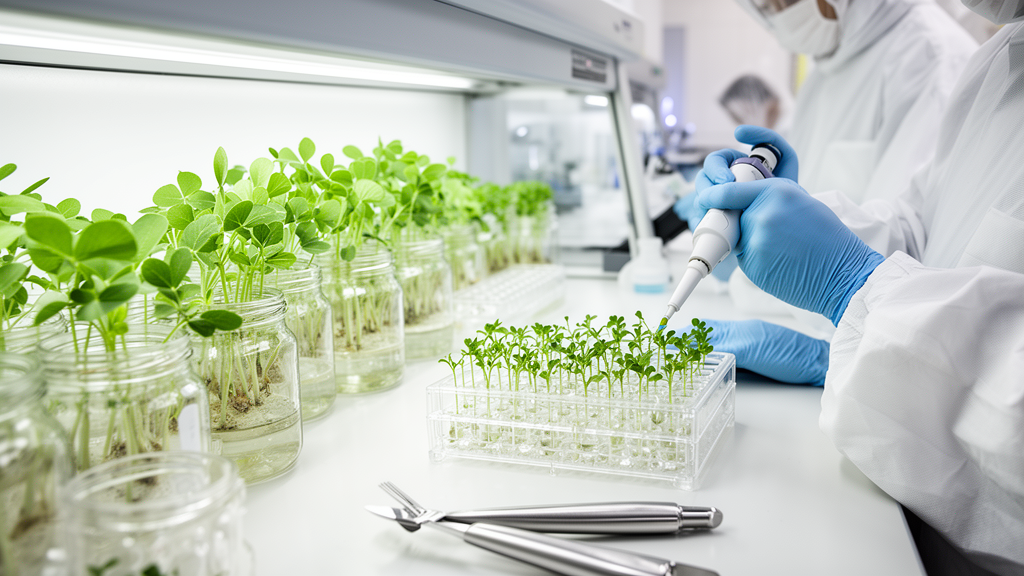
Image Credits: AI Generated
DOI: 10.1186/s12870-026-09922-8
Keywords: alfalfa, somatic embryogenesis, plant regeneration, genetic transformation, tissue culture, CRISPR/Cas9, elite cultivars, callus induction, molecular breeding, broadly, applicable, somatic
Cite Scienmag News
Juliet Wilcox. (October 26, 2026). Alfalfa tissue-culture platform speeds regeneration and elite-cultivar transformation. Scienmag. https://scienmag.com/alfalfa-tissue-culture-platform-speeds-regeneration-and-elite-cultivar-transformation/
Juliet Wilcox. "Alfalfa tissue-culture platform speeds regeneration and elite-cultivar transformation." Scienmag, 26 October 2026, https://scienmag.com/alfalfa-tissue-culture-platform-speeds-regeneration-and-elite-cultivar-transformation/. Accessed 26 October 2026.
Juliet Wilcox. "Alfalfa tissue-culture platform speeds regeneration and elite-cultivar transformation." Scienmag. October 26, 2026. https://scienmag.com/alfalfa-tissue-culture-platform-speeds-regeneration-and-elite-cultivar-transformation/


