

Sunday, October 25, 2026
Science
No Result
View All Result
  • Login
  • HOME
  • SCIENCE NEWS
  • CONTACT US
  • HOME
  • SCIENCE NEWS
  • CONTACT US
No Result
View All Result
Scienmag
No Result
View All Result
Home Science News

Paroxetine-Derived Compounds Show Promise Against Parasite Purine Enzyme

October 25, 2026
in Science News
Drew Townsend
By Drew Townsend Scienmag Editorial Profile - Cell Biology
Reading Time: 2 mins read
0
Paroxetine-Derived Compounds Show Promise Against Parasite Purine Enzyme

Paroxetine-Derived Compounds Show Promise Against Parasite Purine Enzyme

65
SHARES
587
VIEWS
Share on FacebookShare on Twitter
ADVERTISEMENT

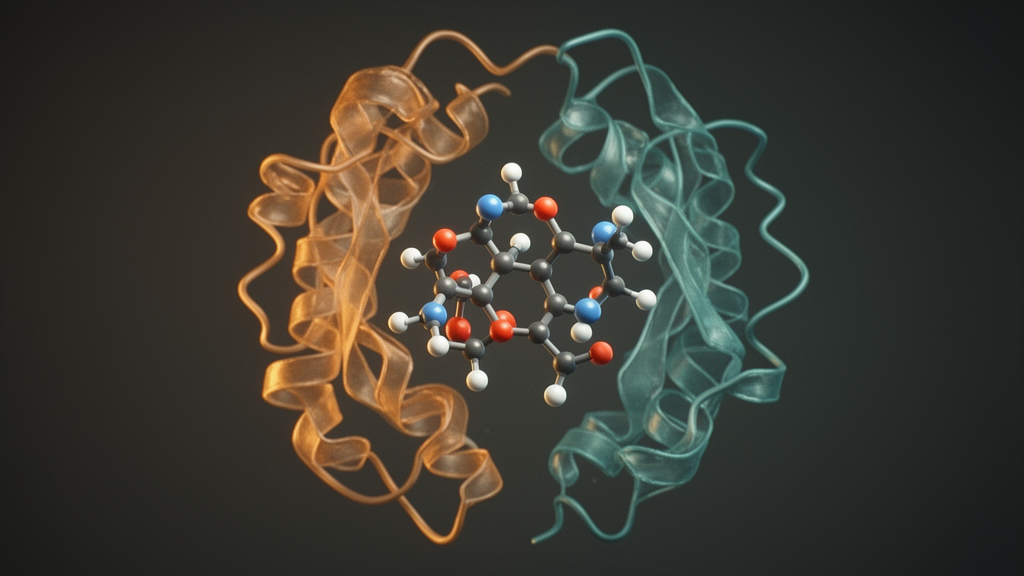
A new series of carbothioamide derivatives of paroxetine has shown measurable inhibitory activity against hypoxanthine-guanine-xanthine phosphoribosyltransferase (HGXPRT), a central enzyme of the purine salvage pathway in protozoan parasites including Plasmodium. Because these parasites are purine auxotrophs that depend on scavenging purines to build their nucleic acids, blocking this salvage route offers a way to starve the pathogen of essential DNA and RNA building blocks. The study identified seventeen candidate inhibitors as potential starting points for anti-parasitic drug development.

The compounds were prepared through a single-step chemical transformation in which paroxetine was reacted with a series of substituted phenyl isothiocyanates. All seventeen derivatives were purified and their structures confirmed using mass spectrometry, FT-IR, UV spectroscopy, and proton and carbon-13 NMR.

When tested in an in vitro UV-based spectrophotometric assay, every compound inhibited HGXPRT, with IC50 values ranging from 19.0 to 76.9 µM. The most active analogue, compound 13, achieved an IC50 of 19.0 ± 2.09 µM, though this remained less potent than the reference inhibitor 9-deazaguanine, which recorded 12.00 ± 1.0 µM in the same assay.

To understand how the compounds engage the enzyme, the team carried out biophysical measurements, molecular docking and molecular dynamics simulations. These analyses suggested that the derivatives bind not at the catalytic center but at a putative allosteric site of the enzyme.

The simulations were used to assess the stability of the predicted enzyme-inhibitor complexes, complementing the docking and biophysical data on how the inhibitors interact with HGXPRT.

Safety profiling formed the final layer of the evaluation. In silico ADMET analysis and an in vitro MTT cytotoxicity assay indicated that the compounds are largely non-cytotoxic, an encouraging early signal for a series intended for further optimization.

The authors position these molecules as hit compounds against HGXPRT that warrant continued investigation as potential anti-parasitic drug leads. Because the work is at the biochemical and computational stage, with enzyme inhibition measured in vitro rather than in infected animals or patients, the findings mark an early but concrete step in the search for new antiparasitic candidates.

Overall, the study demonstrates that a chemically accessible paroxetine scaffold, modified with simple one-step chemistry, can yield compounds that interfere with a metabolic pathway that protozoan parasites rely on, while showing largely non-cytotoxic profiles in the assays performed so far.

Subject of Research: HGXPRT-targeted carbothioamide paroxetine analogues as potential antiparasitic inhibitors

Article Title: Carbothioamide functionalized paroxetine analogues as antiparasitic agents targeting the hypoxanthine-guanine-xanthine phosphoribosyltransferase enzyme: Synthesis, characterization, biochemical, biophysical, and in silico studies

Article References: Hammal, L., Ali, M., Zafar, N., Mari, S. H., Zafar, H., Wahab, A.-T., Siddiqui, H., Javaid, S., & Choudhary, M. I. (2026). Carbothioamide functionalized paroxetine analogues as antiparasitic agents targeting the hypoxanthine-guanine-xanthine phosphoribosyltransferase enzyme: Synthesis, characterization, biochemical, biophysical, and in silico studies. PLOS One, 21(10), e0359519. https://doi.org/10.1371/journal.pone.0359519

Image Credits: AI Generated

DOI: 10.1371/journal.pone.0359519

Keywords: HGXPRT, paroxetine analogues, carbothioamides, purine salvage pathway, antiparasitic agents, enzyme inhibition, molecular docking, ADMET, cytotoxicity, Plasmodium, Carbothioamide, functionalized

Cite Scienmag News

Drew Townsend. (October 25, 2026). Paroxetine-Derived Compounds Show Promise Against Parasite Purine Enzyme. Scienmag. https://scienmag.com/paroxetine-derived-compounds-show-promise-against-parasite-purine-enzyme/

Drew Townsend. "Paroxetine-Derived Compounds Show Promise Against Parasite Purine Enzyme." Scienmag, 25 October 2026, https://scienmag.com/paroxetine-derived-compounds-show-promise-against-parasite-purine-enzyme/. Accessed 25 October 2026.

Drew Townsend. "Paroxetine-Derived Compounds Show Promise Against Parasite Purine Enzyme." Scienmag. October 25, 2026. https://scienmag.com/paroxetine-derived-compounds-show-promise-against-parasite-purine-enzyme/


Tags: ADMETanti-parasitic drug developmentantiparasitic agentsCarbothioamidecarbothioamide compound synthesiscarbothioamidescytotoxicityenzyme inhibitionenzyme inhibition assays for protozoafunctionalizedHGXPRTHGXPRT enzyme inhibitionmolecular dockingmolecular docking and dynamics in drug designnovel compounds against parasitic protozoaparoxetine analoguesparoxetine derivatives as anti-parasitic enzyme inhibitorsPlasmodiumPlasmodium purine metabolismpurine analogs for parasite treatmentpurine salvage pathwaypurine salvage pathway in protozoan parasitesspectrophotometric assay for enzyme activitystructure-activity relationship of paroxetine derivatives
Share26Tweet16
Previous Post

Pistachio shells turned into glowing carbon dots with antioxidant and antibacterial power in five minutes

Next Post

Graded graphene fabric sensor detects pressure from air to underwater

Related Posts

Graded graphene fabric sensor detects pressure from air to underwater
Technology and Engineering

Graded graphene fabric sensor detects pressure from air to underwater

October 25, 2026
Pistachio shells turned into glowing carbon dots with antioxidant and antibacterial power in five minutes
Chemistry

Pistachio shells turned into glowing carbon dots with antioxidant and antibacterial power in five minutes

October 25, 2026
Hong Kong’s record longevity hides a birthplace gap in later-life survival
Medicine

Hong Kong’s record longevity hides a birthplace gap in later-life survival

October 25, 2026
Ivonescimab Extends Overall Survival Over Pembrolizumab in PD-L1-Positive Advanced Lung Cancer
Cancer

Ivonescimab Extends Overall Survival Over Pembrolizumab in PD-L1-Positive Advanced Lung Cancer

October 25, 2026
Precision priming, not spraying, may unlock salicylic acid for crops
Agriculture

Precision priming, not spraying, may unlock salicylic acid for crops

October 25, 2026
New Algorithm Brings Controllable Individual Fairness Guarantees to Job Recommendations
Technology and Engineering

New Algorithm Brings Controllable Individual Fairness Guarantees to Job Recommendations

October 25, 2026
Next Post
Graded graphene fabric sensor detects pressure from air to underwater

Graded graphene fabric sensor detects pressure from air to underwater

  • Mothers who receive childcare support from maternal grandparents show more optimized

    Mothers who receive childcare support from maternal grandparents show more parental warmth, finds NTU Singapore study

    27656 shares
    Share 11059 Tweet 6912
  • University of Seville Breaks 120-Year-Old Mystery, Revises a Key Einstein Concept

    1061 shares
    Share 424 Tweet 265
  • Bee body mass, pathogens and local climate influence heat tolerance

    682 shares
    Share 273 Tweet 171
  • Researchers record first-ever images and data of a shark experiencing a boat strike

    546 shares
    Share 218 Tweet 137
  • Groundbreaking Clinical Trial Reveals Lubiprostone Enhances Kidney Function

    531 shares
    Share 212 Tweet 133
Science

Embark on a thrilling journey of discovery with Scienmag.com—your ultimate source for cutting-edge breakthroughs. Immerse yourself in a world where curiosity knows no limits and tomorrow’s possibilities become today’s reality!

RECENT NEWS

  • Graded graphene fabric sensor detects pressure from air to underwater
  • Paroxetine-Derived Compounds Show Promise Against Parasite Purine Enzyme
  • Pistachio shells turned into glowing carbon dots with antioxidant and antibacterial power in five minutes
  • Hong Kong’s record longevity hides a birthplace gap in later-life survival

Categories

  • Agriculture
  • Anthropology
  • Archaeology
  • Athmospheric
  • Biology
  • Biotechnology
  • Blog
  • Bussines
  • Cancer
  • Chemistry
  • Climate
  • Earth Science
  • Editorial Policy
  • Marine
  • Mathematics
  • Medicine
  • Pediatry
  • Policy
  • Psychology & Psychiatry
  • Science Education
  • Science News
  • Social Science
  • Space
  • Technology and Engineering

Subscribe to Blog via Email

Enter your email address to subscribe to this blog and receive notifications of new posts by email.

Join 5,151 other subscribers

© 2025 Scienmag - Science Magazine

Welcome Back!

Login to your account below

Forgotten Password?

Retrieve your password

Please enter your username or email address to reset your password.

Log In
No Result
View All Result
  • HOME
  • SCIENCE NEWS
  • CONTACT US

© 2025 Scienmag - Science Magazine

Discover more from Science

Subscribe now to keep reading and get access to the full archive.

Continue reading