


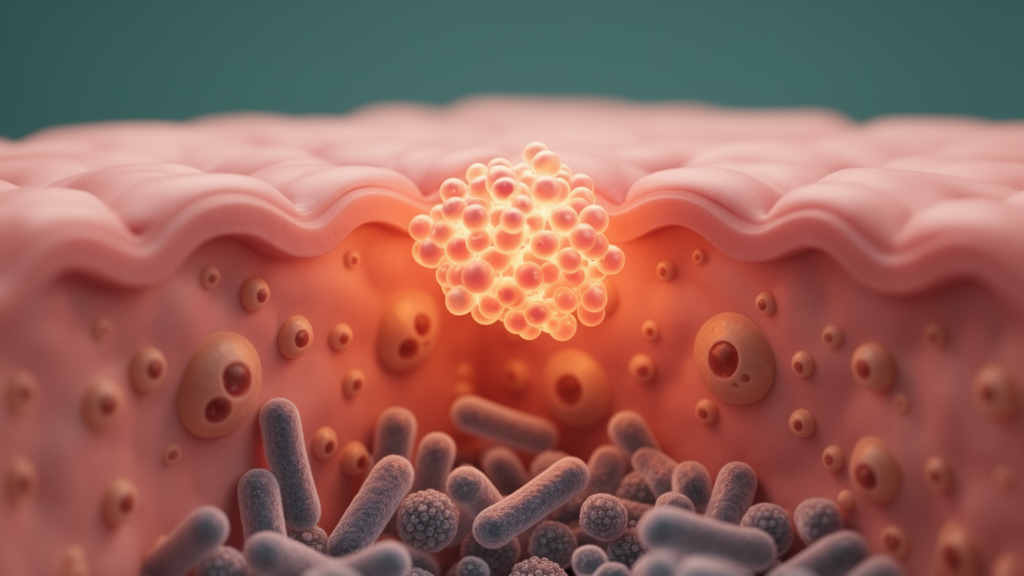
In a study published in Gut Pathogens, researchers report that Oxysterol Binding Protein-Like 3, or OSBPL3, is elevated in colorectal tumor tissue and tracks with poor prognosis. When the team suppressed the gene in mouse models of the disease, tumors grew more slowly, and the animals’ gut microbiota shifted in a striking way: two bacterial groups, Eubacterium ruminantium and Roseomonas, became more abundant. Transferring those bacteria back into mice was associated with a higher proportion of CD8-positive T cells inside tumors and reduced tumor growth, hinting that OSBPL3’s effects on cancer may travel, at least in part, through the microbial residents of the gut.
The investigation began with data mining. The authors combed public databases to characterize OSBPL3’s role in colorectal cancer, then validated its prognostic value using clinical samples assessed by immunohistochemistry.
Functional assays in cell lines followed: reducing OSBPL3 expression curbed cancer cell proliferation, migration, and invasion while increasing apoptosis, the programmed cell death that tumors typically evade.
To test whether these effects held in a living system, the researchers used an orthotopic model, in which tumors are established in the colon itself rather than under the skin, capturing a more faithful tumor environment.
The study’s distinctive move was to connect this molecular biology to the gut ecosystem. After knocking down OSBPL3 in vivo, the team collected feces, blood, and colorectal tissue from the mice and applied a multi-omics strategy: 16S rRNA sequencing to profile the microbiota, metabolomics to map metabolic pathways, and transcriptomics to identify differentially expressed genes. This triangulation pointed to specific microbial candidates linked to OSBPL3 status, chief among them Eubacterium ruminantium and Roseomonas, which the researchers then verified in further in vitro and in vivo experiments.
Those verification experiments produced the study’s most provocative finding. When the two bacterial species were administered to mice, the tumors showed an increased proportion of intratumoral CD8-positive T cells, the cytotoxic lymphocytes that many immunotherapies try to recruit, and tumor growth was reduced. The authors are careful with their language here: the data suggest an association between these microbes and remodeling of the tumor immune microenvironment, not a proven causal mechanism. How OSBPL3, an intracellular lipid-binding protein, communicates with gut bacteria in the first place remains an open question, though the metabolomic and transcriptomic shifts documented in the study offer starting points for future mechanistic work.
The broader significance lies in what the findings imply for personalized medicine. If abnormal OSBPL3 expression is closely tied to gut microbiota dysbiosis and immune microenvironment changes in colorectal cancer, then a patient’s microbial profile might eventually help stratify who responds to which therapy, and microbiome-targeted approaches could complement existing treatments. The authors position Eubacterium ruminantium and Roseomonas as key microbiota associated with OSBPL3-related immune remodeling and a basis for further therapeutic investigation.
For now, the evidence comes from cell lines, clinical correlations, and mouse models, so the leap to human patients requires the usual caution. But the study links a specific molecular lever, OSBPL3, to gut microbiota shifts and immune microenvironment changes in colorectal cancer, and it nominates a concrete starting point for work on microbiome-informed strategies against the disease.
Subject of Research: The role of OSBPL3 in colorectal cancer progression through gut microbiota and tumor immune microenvironment modulation
Article Title: OSBPL3 regulates colorectal cancer progression by modulating gut microbiota and tumor immune microenvironment
Article References: Wang, C., Liang, W., Zhong, J., Wei, J., Zhou, C., Ma, C., Liao, Y., Gao, Y., He, C., Ma, Y., Zhao, J., & He, Y. (2026). OSBPL3 regulates colorectal cancer progression by modulating gut microbiota and tumor immune microenvironment. Gut Pathogens. https://doi.org/10.1186/s13099-026-00891-9
Image Credits: AI Generated
DOI: 10.1186/s13099-026-00891-9
Keywords: OSBPL3, colorectal cancer, gut microbiota, tumor immune microenvironment, Eubacterium ruminantium, Roseomonas, CD8-positive T cells, multi-omics, orthotopic mouse model, prognosis, immunotherapy, Gut Pathogens
Cite Scienmag News
Nathaniel Bowman. (October 25, 2026). OSBPL3 Shapes Colorectal Cancer Progression Through Gut Microbes and Immune Microenvironment. Scienmag. https://scienmag.com/osbpl3-shapes-colorectal-cancer-progression-through-gut-microbes-and-immune-microenvironment/
Nathaniel Bowman. "OSBPL3 Shapes Colorectal Cancer Progression Through Gut Microbes and Immune Microenvironment." Scienmag, 25 October 2026, https://scienmag.com/osbpl3-shapes-colorectal-cancer-progression-through-gut-microbes-and-immune-microenvironment/. Accessed 25 October 2026.
Nathaniel Bowman. "OSBPL3 Shapes Colorectal Cancer Progression Through Gut Microbes and Immune Microenvironment." Scienmag. October 25, 2026. https://scienmag.com/osbpl3-shapes-colorectal-cancer-progression-through-gut-microbes-and-immune-microenvironment/


