


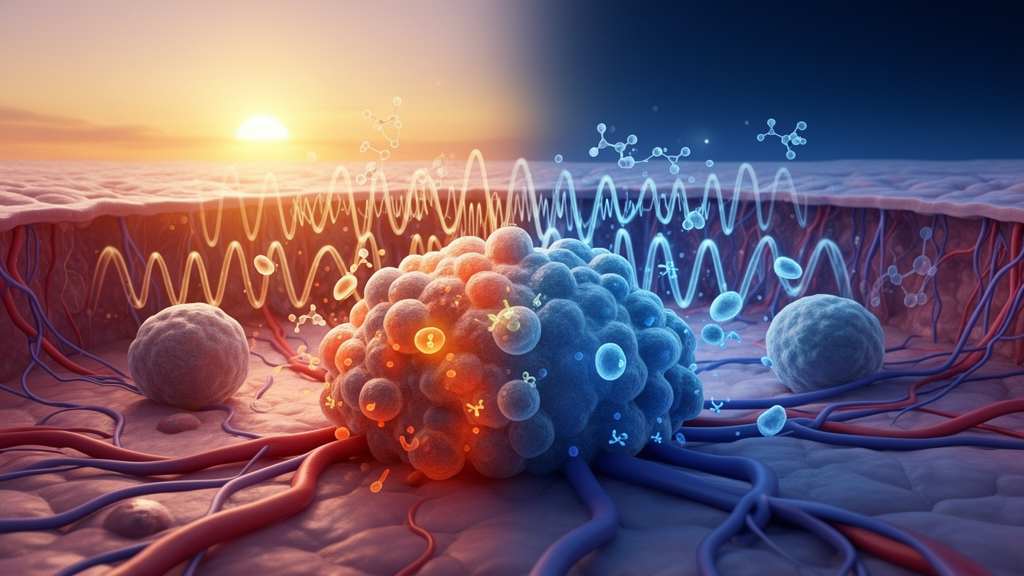
A 2026 review identifies disruption of cellular timekeeping as an important feature associated with cancer development and progression, highlighting links among circadian-clock genes, altered metabolism, and tumor survival. Rather than reporting a new experiment or clinical trial, the review examines how cancer-related changes in gene expression and cellular timing may affect processes that maintain cellular homeostasis. Its central focus is the network built around four core clock genes—CLOCK, BMAL1, PER, and CRY—which together form part of a 24-hour regulatory system. The review argues that understanding these connections may offer new directions for biomarker discovery, precision oncology, and therapeutic research, although the supplied abstract does not present new clinical efficacy results.
The circadian clock helps coordinate the timing of the cell cycle, metabolism, DNA repair, and apoptosis, all processes relevant to the survival and proliferation of cancer cells. Disrupted circadian rhythms are common in cancer, where they can alter gene expression and cause cellular events to become mistimed. The review associates this disruption with excessive growth, genetic instability, and resistance to cell death. These observations support a mechanistic connection between disturbed timing and the altered cellular state of malignancy, but the abstract does not establish that clock dysfunction alone causes these features in every tumor or specify the extent to which each outcome has been demonstrated in humans, animals, or laboratory models.
Metabolic reprogramming forms a major part of the proposed connection. Cancer cells can display enhanced glycolysis, increased lipid production, and modified mitochondrial activity, while circadian-clock genes participate in the regulation of metabolic programs. Irregular clock-gene function can therefore coincide with metabolic changes that facilitate tumor development and survival. The review describes metabolic reprogramming and circadian disruption as linked processes involved in tumor growth, rather than reporting a single new measurement that establishes a causal sequence for a particular cancer. Its synthesis places altered cellular metabolism between the disruption of timekeeping and the continued viability of malignant cells.
The proposed effects are not confined to the behavior of cancer cells themselves. Circadian circuits are also connected with angiogenesis, inflammation, and immunological responses, all of which can influence the environment surrounding a tumor and the development of metastatic progression. By affecting both tumor-cell characteristics and tissue-level conditions, disrupted timekeeping may participate in several stages of cancer biology. The review presents this as part of a complex molecular framework for understanding tumor progression; it does not provide a new measurement of metastasis, a comparative patient outcome, or evidence that targeting these pathways has already produced clinical benefit.
One clinical strategy highlighted by the review is chronotherapy, the practice of administering therapy according to biological rhythms. Scheduling treatment in line with circadian biology is proposed as a possible means of increasing therapeutic efficacy while reducing toxicity. The review also identifies circadian circuits as potential territory for biomarker development and precision-oncology strategies. These are presented as prospective implications rather than results from a new treatment study: the abstract supplies no trial population, dosing schedule, response rate, toxicity measurement, or survival outcome, and it does not show that clock-based scheduling is ready for routine clinical use. The review’s main contribution is thus a mechanistic synthesis, identifying an interconnected set of clock, metabolic, and tumor-related processes that may warrant further investigation as routes toward more targeted cancer care.
Subject of Research: Circadian clock disruption, cancer metabolism, and tumor progression
Article Title: Disruption of cellular timekeeping in cancer: links between circadian clocks, metabolism, and tumor progression
Article References: Karim, Z., Guha, L., Manna, P., Gowda BH, A., Gupta, A. K., & Hakeem, K. R. (2026). Disruption of cellular timekeeping in cancer: links between circadian clocks, metabolism, and tumor progression. Molecular Biology Reports, 53(1), Article 1490. https://doi.org/10.1007/s11033-026-12675-0
Image Credits: AI Generated
DOI: 10.1007/s11033-026-12675-0
Keywords: circadian rhythms, cancer metabolism, tumor progression, clock genes, chronotherapy, angiogenesis, cancer immunity, precision oncology, Disruption, cellular, timekeeping, cancer
Cite Scienmag News
Nathaniel Bowman. (October 24, 2026). Review Connects Circadian Clock Disruption With Cancer Metabolism and Progression. Scienmag. https://scienmag.com/review-connects-circadian-clock-disruption-with-cancer-metabolism-and-progression/
Nathaniel Bowman. "Review Connects Circadian Clock Disruption With Cancer Metabolism and Progression." Scienmag, 24 October 2026, https://scienmag.com/review-connects-circadian-clock-disruption-with-cancer-metabolism-and-progression/. Accessed 24 October 2026.
Nathaniel Bowman. "Review Connects Circadian Clock Disruption With Cancer Metabolism and Progression." Scienmag. October 24, 2026. https://scienmag.com/review-connects-circadian-clock-disruption-with-cancer-metabolism-and-progression/


