

Saturday, October 24, 2026
Science
No Result
View All Result
  • Login
  • HOME
  • SCIENCE NEWS
  • CONTACT US
  • HOME
  • SCIENCE NEWS
  • CONTACT US
No Result
View All Result
Scienmag
No Result
View All Result
Home Science News Climate

Gold Nanoparticles Pile Up in Tadpoles When Aquatic Plants Share the Water

October 24, 2026
in Climate
Sloane Callahan
By Sloane Callahan Scienmag Editorial Profile - Climate Mitigation
Reading Time: 2 mins read
0
Gold Nanoparticles Pile Up in Tadpoles When Aquatic Plants Share the Water

Gold Nanoparticles Pile Up in Tadpoles When Aquatic Plants Share the Water

65
SHARES
587
VIEWS
Share on FacebookShare on Twitter
ADVERTISEMENT

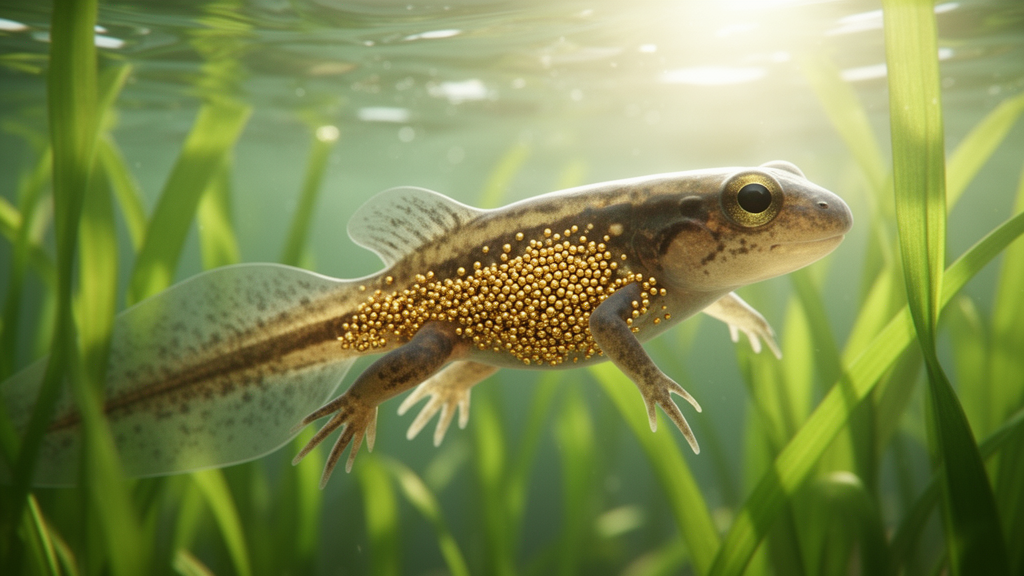
Gold nanoparticles, increasingly used in industrial and biomedical applications, may behave differently in freshwater systems when aquatic vegetation is present than single-species tests suggest. A study published in Ecotoxicology reports that larvae of the toad Rhinella arenarum accumulated markedly more gold when they shared their water with the aquatic plant Lemna minor than when they were exposed to the nanoparticles alone. The plants themselves also accumulated gold under every exposure condition tested, pointing to a role for aquatic vegetation in nanoparticle dynamics in freshwater systems.

The research team, which included Gabriela Svartz, Elizabeth Acosta, María Jazmín Penelas and Emmanuel de la Fournière, ran three sets of 96-hour laboratory bioassays. In the first, tadpoles and plants were exposed individually to gold nanoparticles at concentrations of 1 and 10 milligrams per litre. In the second, larvae and plants were exposed simultaneously.

In the third, larvae were placed in clean water with plants that had already been contaminated, testing whether the metal could move through a simple plant-to-larvae route. Gold concentrations were quantified in both organisms, and accumulation factors were calculated. The simultaneous-exposure results were the most striking.

Accumulation factors in the larvae reached 6,666 ± 1,020 litres per kilogram at 1 milligram per litre and 10,089 ± 760 litres per kilogram at 10 milligrams per litre, markedly higher than in the individual-exposure trials. The authors interpret this pattern as evidence that the presence of aquatic vegetation enhances the availability of the nanoparticles to the amphibians. Trophic transfer also occurred, but less efficiently.

Tadpoles that encountered gold only by ingesting previously contaminated plants still accumulated the metal, although at lower levels than larvae exposed directly in the water. This indicates that a dietary route from plants can contribute to nanoparticle accumulation in tadpoles even when the surrounding medium is clean, but that direct aqueous exposure transfers the particles more effectively. Lemna minor took up gold under both isolated and simultaneous exposure conditions, confirming the authors' description of aquatic plants as nanoparticle reservoirs in aquatic systems.

The study was conducted in laboratory bioassays over a 96-hour window at two nanoparticle concentrations, so the findings reflect short-term uptake under controlled conditions rather than effects on survival, development or wild populations; the measured endpoints concern gold accumulation and transfer only, and no toxic outcomes are reported. Gold nanoparticles are increasingly used in industrial and biomedical applications, raising concerns about their release into aquatic environments and their potential effects on non-target organisms. Within that context, the results demonstrate that aquatic vegetation can significantly modulate nanoparticle transfer and availability in freshwater amphibians.

Subject of Research: Accumulation and trophic transfer of gold nanoparticles in amphibian larvae and the aquatic plant Lemna minor under direct and plant-mediated exposure scenarios

Article Title: Gold nanoparticle accumulation in amphibian larvae under direct and plant-mediated exposure scenarios

Article References: Svartz, G., Acosta, E., Penelas, M. J., & de la Fournière, E. (2026). Gold nanoparticle accumulation in amphibian larvae under direct and plant-mediated exposure scenarios. Ecotoxicology, 35(9), Article 195. https://doi.org/10.1007/s10646-026-03185-7

Image Credits: AI Generated

DOI: 10.1007/s10646-026-03185-7

Keywords: gold nanoparticles, Rhinella arenarum, Lemna minor, ecotoxicology, amphibian larvae, trophic transfer, freshwater, bioaccumulation, nanomaterials, aquatic plants, Gold, nanoparticle

Cite Scienmag News

Sloane Callahan. (October 24, 2026). Gold Nanoparticles Pile Up in Tadpoles When Aquatic Plants Share the Water. Scienmag. https://scienmag.com/gold-nanoparticles-pile-up-in-tadpoles-when-aquatic-plants-share-the-water/

Sloane Callahan. "Gold Nanoparticles Pile Up in Tadpoles When Aquatic Plants Share the Water." Scienmag, 24 October 2026, https://scienmag.com/gold-nanoparticles-pile-up-in-tadpoles-when-aquatic-plants-share-the-water/. Accessed 24 October 2026.

Sloane Callahan. "Gold Nanoparticles Pile Up in Tadpoles When Aquatic Plants Share the Water." Scienmag. October 24, 2026. https://scienmag.com/gold-nanoparticles-pile-up-in-tadpoles-when-aquatic-plants-share-the-water/


Tags: amphibian larvaeaquatic plant nanoparticle uptakeaquatic plantsbioaccumulationbioaccumulation of nanoparticles in amphibian larvaeecotoxicologyecotoxicology of gold nanoparticleseffects of aquatic vegetation on nanoparticle behaviorenvironmental impact of gold nanoparticles in aquatic systemsfreshwatergoldGold nanoparticle accumulation in freshwater tadpolesgold nanoparticlesimplications of nanopinfluence of aquatic plants on nanoparticle bioavailabilitylaboratory bioassays on nanoparticle exposureLemna minornanomaterialsnanoparticlenanoparticle transfer pathways through aquatic plantsplant-mediated nanoparticle transfer in freshwaterRhinella arenarumrole of Lemna minor in nanoparticle dynamicstrophic transfer
Share26Tweet16
Previous Post

Dual-Drug Nanovesicle Gel Cuts Eye Pressure in Rabbits, Offering a New Glaucoma Strategy

Next Post

Beyond stuck or staying: the many ways people choose to remain on a sinking delta island

Related Posts

Beyond stuck or staying: the many ways people choose to remain on a sinking delta island
Climate

Beyond stuck or staying: the many ways people choose to remain on a sinking delta island

October 24, 2026
Coastal Bangladesh farmers diversify crops to survive salt, but benefits are unevenly shared
Climate

Coastal Bangladesh farmers diversify crops to survive salt, but benefits are unevenly shared

October 24, 2026
Antibiotic-Metal Complexes Prove More Toxic to Freshwater Algae Than Either Contaminant Alone
Climate

Antibiotic-Metal Complexes Prove More Toxic to Freshwater Algae Than Either Contaminant Alone

October 24, 2026
Cigarette Filter Nanoplastics Rapidly Alter the Blood Chemistry of Amazon’s Tambaqui Fish
Climate

Cigarette Filter Nanoplastics Rapidly Alter the Blood Chemistry of Amazon’s Tambaqui Fish

October 24, 2026
Photographs from all ten Zambian provinces frame climate change through local eyes
Climate

Photographs from all ten Zambian provinces frame climate change through local eyes

October 24, 2026
Coal Still Drives Poland’s Emissions, Study of 2000–2023 Finds
Climate

Coal Still Drives Poland’s Emissions, Study of 2000–2023 Finds

October 24, 2026
Next Post
Beyond stuck or staying: the many ways people choose to remain on a sinking delta island

Beyond stuck or staying: the many ways people choose to remain on a sinking delta island

  • Mothers who receive childcare support from maternal grandparents show more optimized

    Mothers who receive childcare support from maternal grandparents show more parental warmth, finds NTU Singapore study

    27656 shares
    Share 11059 Tweet 6912
  • University of Seville Breaks 120-Year-Old Mystery, Revises a Key Einstein Concept

    1061 shares
    Share 424 Tweet 265
  • Bee body mass, pathogens and local climate influence heat tolerance

    682 shares
    Share 273 Tweet 171
  • Researchers record first-ever images and data of a shark experiencing a boat strike

    546 shares
    Share 218 Tweet 137
  • Groundbreaking Clinical Trial Reveals Lubiprostone Enhances Kidney Function

    531 shares
    Share 212 Tweet 133
Science

Embark on a thrilling journey of discovery with Scienmag.com—your ultimate source for cutting-edge breakthroughs. Immerse yourself in a world where curiosity knows no limits and tomorrow’s possibilities become today’s reality!

RECENT NEWS

  • Chlorinated paraffin pollutants push liquid chromatography mass spectrometry to its limits
  • Adaptive sampling brings rapid whole-genome profiling to pediatric cancer diagnosis
  • Beyond stuck or staying: the many ways people choose to remain on a sinking delta island
  • Gold Nanoparticles Pile Up in Tadpoles When Aquatic Plants Share the Water

Categories

  • Agriculture
  • Anthropology
  • Archaeology
  • Athmospheric
  • Biology
  • Biotechnology
  • Blog
  • Bussines
  • Cancer
  • Chemistry
  • Climate
  • Earth Science
  • Editorial Policy
  • Marine
  • Mathematics
  • Medicine
  • Pediatry
  • Policy
  • Psychology & Psychiatry
  • Science Education
  • Science News
  • Social Science
  • Space
  • Technology and Engineering

Subscribe to Blog via Email

Enter your email address to subscribe to this blog and receive notifications of new posts by email.

Join 5,152 other subscribers

© 2025 Scienmag - Science Magazine

Welcome Back!

Login to your account below

Forgotten Password?

Retrieve your password

Please enter your username or email address to reset your password.

Log In
No Result
View All Result
  • HOME
  • SCIENCE NEWS
  • CONTACT US

© 2025 Scienmag - Science Magazine

Discover more from Science

Subscribe now to keep reading and get access to the full archive.

Continue reading