


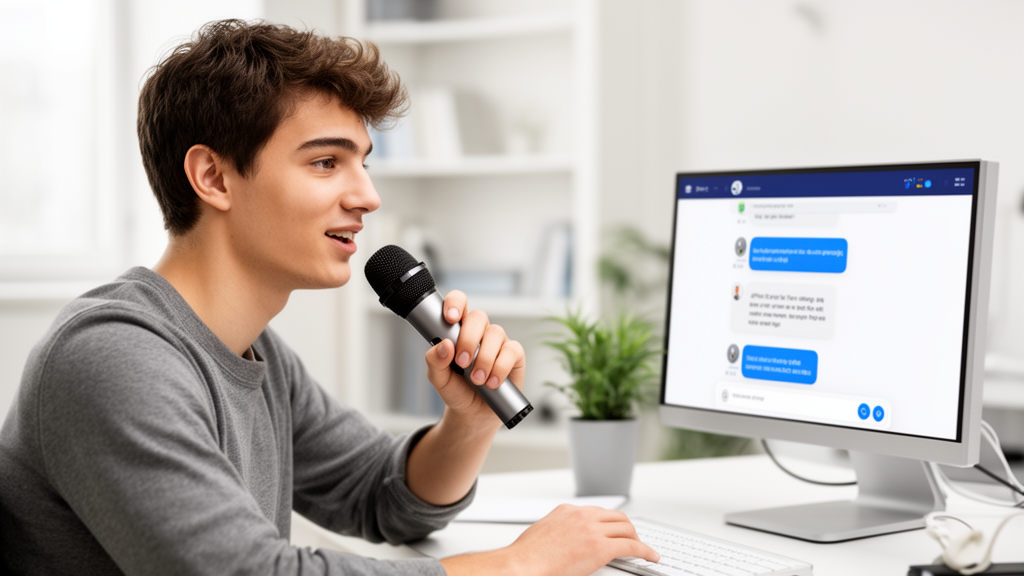
Chinese students learning English as a foreign language who practiced speaking with an AI chatbot called EAP Talk achieved higher speaking scores, reported greater willingness to communicate, and showed reduced speaking anxiety compared with classmates who studied the same material without the tool, according to a study published in BMC Psychology. The research, led by Xue Wang, examined how an AI-supported speaking application affected three intertwined dimensions of foreign language learning: measurable speaking proficiency, the anxiety learners feel when speaking, and their willingness to communicate, often abbreviated as WTC. The findings are reported as associations observed between the two study groups rather than as proof of a universal effect, and the author frames them within activity theory, a framework for analyzing how learners, tools, and instructional settings interact.
The study followed a pretest–posttest design with an experimental group and a control group. A total of 113 Chinese EFL students were initially recruited, with 58 assigned to the experimental group and 55 to the control group. Before any intervention began, all participants completed pretests measuring their speaking ability, their level of speaking anxiety, and their willingness to communicate, establishing a baseline for each construct.
After four multivariate outliers were identified and excluded, all of them from the experimental group, the primary analytic sample consisted of 109 learners, split into 54 students in the experimental group and 55 in the control group. The experimental group then received AI-supported speaking practice through EAP Talk, an AI-based speaking assessment and feedback application that enabled iterative practice and delivered immediate automated feedback. The control group covered the same instructional material but without access to the tool.
Following the treatment period, both groups completed post-tests assessing the same three outcomes, allowing the researcher to compare how the two conditions differed once the intervention ended. The posttest comparisons revealed notable differences between the two groups, with the magnitude of the effects varying across outcomes. Willingness to communicate showed a medium effect size, speaking anxiety showed a large effect size, and speaking skill showed a very large effect size.
Taken together, the results suggest that the EAP Talk intervention was associated with improved speaking performance and greater willingness to communicate, as well as reduced speaking anxiety among the participating EFL students. The author also conducted a sensitivity analysis using the full sample of 113 participants, including the four excluded outliers. Those full-sample results were consistent in direction with the primary analysis, although the effect for speaking anxiety was smaller in magnitude.
This indicates that the pattern of findings was not driven by the exclusion decisions, and that the direction of the results held whether or not the outlier cases were retained in the analysis. A distinctive feature of the study is its theoretical framing. Activity theory served as the structure for investigating how the AI chatbot influenced the different dimensions of speaking.
Applying this lens allowed the researcher to analyze the complicated interactions between the technological tool and the learners' proficiency, anxiety, and communicative behavior. Importantly, the author notes that activity theory is used here as an interpretive lens rather than as a directly tested explanatory model, meaning the theory helps situate the results within broader relationships among learners, tools, and instructional context but was not itself subjected to formal hypothesis testing. Several caveats accompany the findings.
The article was shared as an early-access version of peer-reviewed, accepted research, citable with a permanent DOI but subject to further edits before the final version of record appears. The evidence comes from a single intervention with Chinese EFL students using one specific application, so the reported effect sizes describe this sample and setting rather than establishing how AI chatbots perform across other learner populations, languages, or platforms. The comparison also rests on group differences at posttest within a pretest–posttest structure, and the abstract reports the outcomes as associations with the intervention.
Within those limits, the study adds quantitative evidence that an AI-based speaking and feedback tool can coincide with measurable gains in speaking skill, a medium-sized increase in willingness to communicate, and a large reduction in speaking anxiety.
Subject of Research: Effects of an AI chatbot on EFL students' speaking skills, speaking anxiety, and willingness to communicate
Article Title: The use of AI chatbot on efl students’ speaking skills, speaking anxiety, and willingness to communicate: through the lens of activity theory
Article References: Wang, X. (2026). The use of AI chatbot on efl students’ speaking skills, speaking anxiety, and willingness to communicate: through the lens of activity theory. BMC Psychology. https://doi.org/10.1186/s40359-026-05838-y
Image Credits: AI Generated
DOI: 10.1186/s40359-026-05838-y
Keywords: AI chatbot, EFL, speaking skills, speaking anxiety, willingness to communicate, activity theory, EAP Talk, language learning, automated feedback, BMC Psychology, chatbot, students
Cite Scienmag News
Glenn Wilkins. (October 24, 2026). AI chatbot practice linked to stronger EFL speaking and lower anxiety. Scienmag. https://scienmag.com/ai-chatbot-practice-linked-to-stronger-efl-speaking-and-lower-anxiety/
Glenn Wilkins. "AI chatbot practice linked to stronger EFL speaking and lower anxiety." Scienmag, 24 October 2026, https://scienmag.com/ai-chatbot-practice-linked-to-stronger-efl-speaking-and-lower-anxiety/. Accessed 24 October 2026.
Glenn Wilkins. "AI chatbot practice linked to stronger EFL speaking and lower anxiety." Scienmag. October 24, 2026. https://scienmag.com/ai-chatbot-practice-linked-to-stronger-efl-speaking-and-lower-anxiety/


