


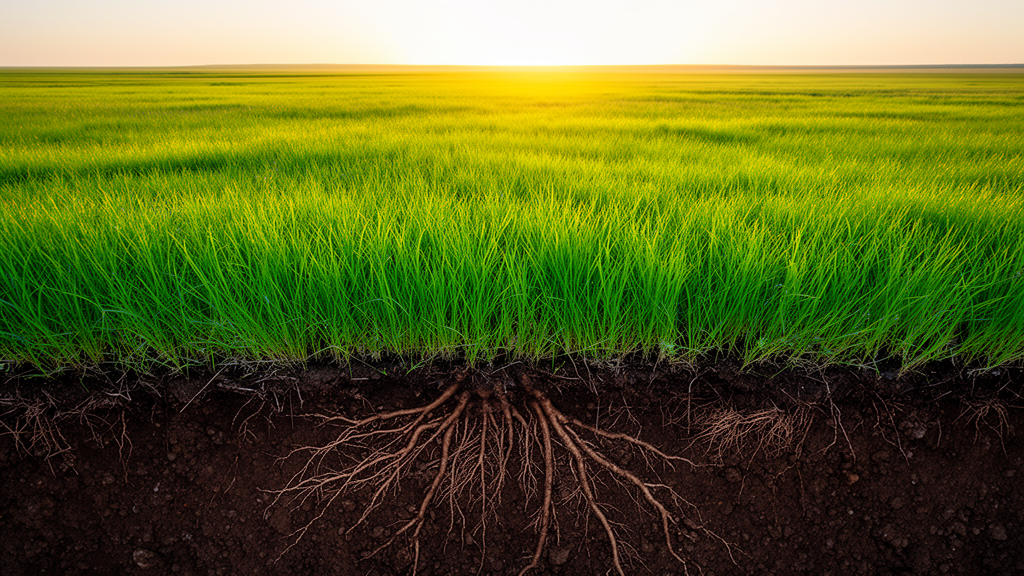
Grasslands, savannas, and shrublands can store enormous quantities of carbon, yet the standards that govern global climate finance were built almost entirely around forests, leaving these open ecosystems with no pathway into carbon markets or climate funds. That is the central warning of a policy brief published on 23 October 2026 in the journal Plants, People, Planet by a team of Brazilian and international researchers, led by Franciele Peixoto, an environmental analyst for the state of Goiás in Brazil, with contributions from ecologist Amy Zanne of the Cary Institute of Ecosystem Studies and plant ecologist Natashi Pilon of the State University of Campinas.
The authors argue that open ecosystems, defined as nonforested landscapes such as grasslands, shrublands, and savannas, provide critical services including carbon storage, water supply, and biodiversity conservation, but remain structurally excluded from the mechanisms designed to pay for protecting nature. “All of the standards and methods for carbon markets are based on forested areas, so there is no way right now to include grasslands, savannas, and other open ecosystems,” Peixoto said. “Open ecosystems are under threat and continue to be neglected by climate policies that focus exclusively on forests and trees.”
The technical problem is one of measurement and certification. Climate finance tools such as REDD+, a United Nations initiative that pays developing nations to protect and sustainably manage their forests to reduce carbon emissions, were developed specifically for forested landscapes. Their methodologies quantify carbon in tree trunks and branches, and their certification frameworks have no parameters for the belowground carbon that dominates in grassy systems. Because open ecosystems do not fit these measurement and certification frameworks, “projects in open ecosystems cannot issue credits or access resources from climate funds,” the authors write. The policy brief calls for carbon credit methodologies to be revised to include parameters for measuring and including belowground carbon storage, particularly in deep soils and root systems, instead of just in tree trunks and branches.
The scale of what is being excluded is illustrated by Brazil’s Cerrado, the most biodiverse savanna in the world, home to more than a thousand animal species and more than ten thousand plant species. Research by Zanne and other coauthors has demonstrated that Cerrado soils can store six times as much carbon per hectare as the vegetation of the Amazon rainforest. Open ecosystems like the Cerrado can store as much as 1,200 tons of carbon per hectare. Crucially, the permanence of that carbon differs fundamentally from forest carbon: whereas trees in the Amazon can grow back in decades to centuries, some of the carbon in Cerrado soil has been there for as long as 20,000 years and cannot be replaced quickly once lost.
The Cerrado also underpins Brazil’s water security in ways that are frequently misunderstood. It serves as the headwaters for two-thirds of Brazil’s major waterways, including the Amazon River itself. “People tend to think of forests as being important for the water supply, but actually, open ecosystems can be as or even more important,” said Pilon. “In open ecosystems, the plants take up less water, so more water infiltrates into the soil and replenishes groundwater. It is this water that supplies the Cerrado and other ecosystems like the Amazon in the region. It is important that society and the government understand how important the Cerrado is for Brazil’s water security.” The hydrological mechanism is straightforward: because grassland and savanna vegetation consumes less water than dense forest, more rainfall percolates into the soil and recharges the aquifers that feed regional river systems.
These services are not unique to the Cerrado. The authors note that open ecosystems around the world deliver similar benefits to people and the environment while remaining largely neglected and misunderstood. The undervaluation has deep historical roots. “When the Europeans were mapping the land in Brazil, the forests were ‘good’ because they had wood, but in the Cerrado, it was difficult to produce food without Indigenous knowledge or modern technology, fires would happen, and the trees were smaller and twisted — so they considered it a wasteland,” Pilon explained. That colonial-era perception, the authors argue, persists today in the relative scarcity of scientific data about open ecosystems and the absence of public policies and conservation programs aimed at them.
The consequences of that neglect are now visible on the ground. More than 46 percent of the Cerrado’s original land cover has already been cleared for crops and pastures, according to a study published in 2022. In Brazil, the Cerrado is effectively treated as expendable. “The Cerrado is considered the biome that can be sacrificed to protect the Amazon,” said Zanne. “So instead of cutting down more rainforest, agribusinesses are converting massive amounts of Cerrado to grow soybeans to feed to livestock — without realizing that they’re going to lose the Amazon by drying out these biomes.” Beyond agricultural conversion, open ecosystems are also targeted by tree-planting programs that would disrupt or destroy these natural ecosystems and their carbon stocks, a threat the authors single out even when such projects are well intentioned, because afforestation of grasslands can threaten regional water supply, biodiversity, and soil carbon.
The policy brief grew out of a document the authors presented at COP30, the 2025 climate conference held in Brazil, drafted because, as Peixoto put it, “nobody was talking about open ecosystems and the importance of these areas for carbon storage.” The team has since carried its message to COP16, the global biodiversity summit in Colombia, and COP30, with tangible results. Following the inclusion of open ecosystems in the COP16 agenda, achieved through the authors and a broad network of collaborators across Brazil, Brazil’s Ministry of the Environment established a working group to develop a national strategy for the conservation and restoration of open ecosystems. That strategy will also consider incorporating these ecosystems into climate policies, acknowledging their role in climate mitigation, adaptation, and biodiversity conservation.
The authors outline a sequence of steps they consider essential. The first is helping people recognize the benefits open ecosystems provide, through greater investment in environmental education and public communication about the Cerrado’s role in climate security, water availability, and human well-being. At the international level, they call for the revision of carbon credit methodologies to capture belowground carbon. Domestically, they urge Brazil to create and strengthen federal and state legislation, increase funding for managing, monitoring, licensing, and restoring open ecosystems, and build a strategy that includes these areas in national climate and biodiversity targets and carbon quantification systems. Pilon adds that it is essential to protect these areas from tree-planting projects, which may be well intentioned but threaten the region’s water supply, biodiversity, and carbon stocks.
The researchers continue to study how the Cerrado functions in order to inform restoration and conservation practices, and through a government program called Campos do Cerrado, Peixoto, Pilon, and colleagues are raising awareness among policymakers and the public, with public interest in the Cerrado growing as a result. Peixoto cautions that systemic change will take time. “Transforming a global system that was not designed to account for open ecosystems will not happen overnight,” she said. “Today, there is broad recognition of this limitation, but recognition alone is not enough. What matters now is moving from awareness to action, and these initiatives represent an important first step — not only for the Cerrado, but for open ecosystems around the world.”
Subject of Research: Exclusion of carbon-rich open ecosystems such as Brazil's Cerrado from forest-based climate finance and carbon market mechanisms
Article Title: Massive carbon stocks in grasslands are ignored by climate finance
Article References: Massive carbon stocks in grasslands are ignored by climate finance. Original publication (Bibliographic details unavailable.)
Image Credits: AI Generated
DOI: Not provided
Keywords: grasslands, savannas, Cerrado, carbon storage, climate finance, REDD+, carbon markets, soil carbon, water security, biodiversity, Brazil, conservation policy
Cite Scienmag News
Margaret Porter. (October 23, 2026). Grasslands Hold Vast Carbon Stocks but Climate Finance Overlooks Them. Scienmag. https://scienmag.com/grasslands-hold-vast-carbon-stocks-but-climate-finance-overlooks-them/
Margaret Porter. "Grasslands Hold Vast Carbon Stocks but Climate Finance Overlooks Them." Scienmag, 23 October 2026, https://scienmag.com/grasslands-hold-vast-carbon-stocks-but-climate-finance-overlooks-them/. Accessed 23 October 2026.
Margaret Porter. "Grasslands Hold Vast Carbon Stocks but Climate Finance Overlooks Them." Scienmag. October 23, 2026. https://scienmag.com/grasslands-hold-vast-carbon-stocks-but-climate-finance-overlooks-them/


