


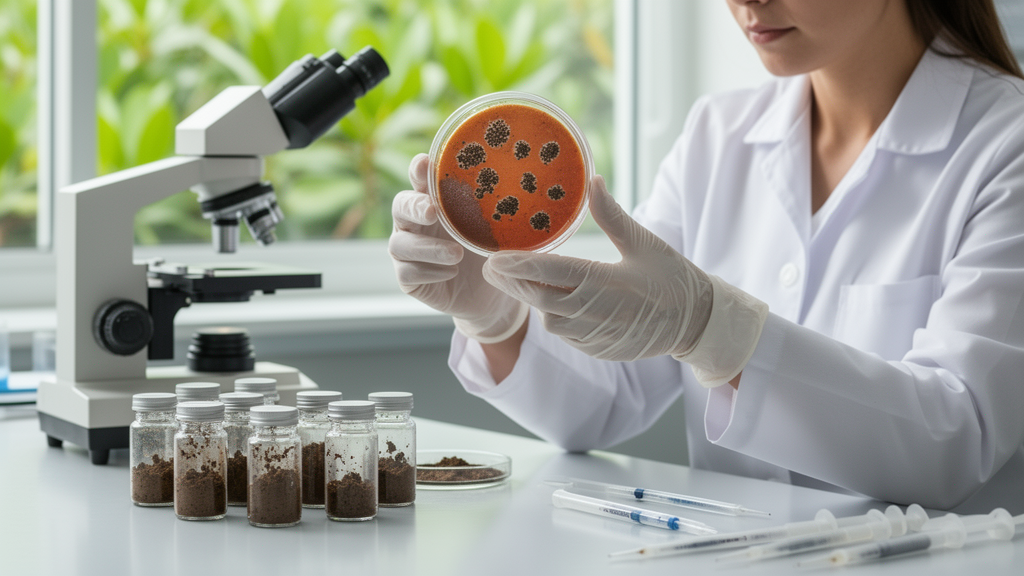
Mangrove forests, the tangled intertidal ecosystems that line roughly seventy percent of the world’s tropical and subtropical coasts, are proving to be far more than coastal buffers against erosion and storms. A systematic review published in Discover Oceans has consolidated nearly four decades of research on the Actinomycetia, a class of bacteria renowned for making antibiotics, and found that mangrove-dwelling members of this group represent a valuable yet underexplored reservoir of bioactive molecules. Drawing on 289 studies published between 1988 and 2025, the analysis reveals a striking picture: these bacteria, recovered from sediments and from inside mangrove plant tissues, produce metabolites with antimicrobial, anticancer, antioxidant, quorum-quenching and antibiofilm activities, while the true extent of their biosynthetic capacity remains largely hidden.
The review, led by Greeshma James and colleagues, systematically searched Google Scholar, Web of Science, Scopus and PubMed using combinations of keywords targeting mangrove actinomycetia, their taxonomy and their biological activities. From an initial pool of roughly 316 records, the authors filtered the literature down to 289 studies that reported Actinomycetia isolated from mangrove sediments, rhizosphere soils or plant tissues, together with data on taxonomic diversity, novel species or bioactive potential. The scope matters, because until now the field has consisted largely of scattered single-isolate or single-compound reports, with little synthesis of larger patterns in taxonomic diversity, geographic distribution, habitat specificity and functional potential.
Across mangrove ecosystems in India, China, Malaysia, Bangladesh, Indonesia and Brazil, a consistent pattern emerges in sediment communities: the genera Streptomyces, Micromonospora, Nocardia and Actinomadura dominate reported isolates. This prevalence reflects both ecology and methodology. Streptomyces species are genuinely well adapted to the harsh, fluctuating conditions of mangrove sediments, but conventional culture techniques also favour fast-growing, sporulating taxa, making Streptomyces disproportionately easy to isolate. Rare genera such as Actinoplanes, Nonomuraea, Microbispora and Catellatospora appear far less frequently in cultivation-based studies, while molecular surveys have repeatedly shown that the real diversity of mangrove Actinomycetia exceeds what petri dishes recover. 16S rRNA gene analyses have uncovered genera including Leifsonia, Sinomonas, Terrabacter and Streptacidiphilus that standard culturing methods rarely capture, suggesting that current diversity estimates are substantially biased toward the cultivable fraction.
Geographic and seasonal variation adds further texture. Indian mangroves such as Pichavaram, the Sundarbans, Bhitarkanika and Muthupet show strong Streptomyces dominance with diversity peaking during pre-monsoon periods, apparently under more favourable physicochemical conditions. Chinese mangroves yield comparatively higher diversity of additional genera including Agromyces, Microbacterium and Rhodococcus, while Malaysian mangroves stand out for a notable proportion of isolates identified as entirely new species, hinting that Southeast Asian mangroves may be hotspots for taxonomic novelty. Vertical distribution follows the environmental gradients: abundance is highest in surface sediment layers and decreases with depth, tracking oxygen, organic matter and nutrient availability.
Endophytic Actinomycetia, those living inside the roots, stems and leaves of mangrove trees, form a parallel but less-studied frontier. These communities are consistently dominated by Streptomyces, followed by Micromonospora, Nocardiopsis, Pseudonocardia, Actinomadura and Nocardia, but they show lower apparent diversity and greater host specificity than sediment communities, indicating selective colonization shaped by plant-microbe interactions. Some Streptomyces species are repeatedly associated with particular host trees such as Kandelia candel and Bruguiera gymnorrhiza, suggesting co-evolutionary relationships. Novel species such as Micromonospora sonneratiae and Phycicoccus endophyticus have been described from mangrove plants, and surveys in Vietnam and Malaysia have added genera such as Salinispora to the endophytic roster. The review notes, however, that the functional role of these endophytes in host stress tolerance and disease resistance remains mechanistically unconfirmed at the molecular level.
The bioactivity data are where the biotechnological promise becomes vivid. Mangrove-derived isolates have shown inhibitory activity against Gram-positive and Gram-negative bacteria, fungi and clinically important pathogens including Staphylococcus aureus, Escherichia coli, Pseudomonas aeruginosa and Candida albicans, with reports extending to drug-resistant strains such as methicillin-resistant S. aureus. On the molecular level, this antimicrobial capacity is attributed to biosynthetic gene clusters encoding polyketide synthases and non-ribosomal peptide synthetases, the enzymatic assembly lines behind many structurally diverse secondary metabolites. Genomic analyses have found that mangrove strains often carry far more of these clusters than the number of metabolites actually recovered under standard laboratory conditions, implying large reservoirs of silent biosynthetic pathways waiting to be switched on.
Cytotoxic and anticancer activities add another dimension. Extracts and purified metabolites from mangrove Actinomycetia have been reported to inhibit human cancer cell lines including breast (MCF-7), lung (A549), cervical (HeLa), liver (HepG2) and colon (HT-29) cells, with compounds spanning polyketides, peptides, alkaloids, anthraquinones and macrolides that can induce apoptosis and disrupt cell proliferation pathways. The authors are careful to flag a major caveat here: most of these results come from crude extract assays on cultured cell lines, and in vitro cytotoxicity is an unqualified indicator of therapeutic value, since broadly cytotoxic compounds can look impressive against cancer cells without any selectivity. Few studies have purified the active compounds, confirmed mechanisms of action, or tested selectivity against normal cells, and the review stresses that interpretation demands caution alongside in vivo validation.
Two further activities remain the least explored. Quorum quenching, the interference with the chemical signalling by which bacteria coordinate virulence and biofilm formation in a population-density-dependent manner, has been demonstrated for mangrove Streptomyces, Nocardiopsis and Micromonospora, chiefly through inhibition or degradation of N-acyl homoserine lactone signalling molecules. Closely linked antibiofilm effects have been reported against pathogens such as S. aureus and P. aeruginosa, with metabolites suppressing both biofilm formation and established biofilms. These mechanisms are especially attractive because they disarm pathogens without imposing the strong selective pressure that drives antibiotic resistance, a pressing concern given the global burden of antimicrobial resistance. Yet the evidence base is thin: most data come from crude extracts, standardized quantitative assays are lacking, and links between specific compounds and dual quorum-quenching-plus-antibiofilm mechanisms remain scarce.
The review identifies overlapping reasons why so much of this potential stays locked away. Culture-dependent methods capture only a fraction of the diversity, favouring fast-growing taxa while slow-growing and unculturable species go uncharacterized. Many newly reported mangrove Actinomycetia lack the phylogenetic and genomic data needed to firmly establish them as new species. Metagenomics and amplicon sequencing have repeatedly revealed greater taxonomic complexity, with Actinomycetota emerging as a prevalent or co-dominant phylum in mangrove sediments and abundant but rarely expressed biosynthetic gene clusters, yet such omics approaches remain applied only patchily in mangroves. The authors point to an integrated toolkit as the path forward: genome-mining platforms such as antiSMASH and PRISM to predict biosynthetic gene clusters, metatranscriptomics and metaproteomics to identify which pathways are actually active, metabolomics platforms such as GNPS to characterize the molecules produced, and bioassay-guided fractionation to move from crude extract activity to purified compounds with defined mechanisms.
The overall message is one of substantial, quantifiable promise paired with systematic underdevelopment. Roughly two-thirds of antibiotics in clinical use derive from Actinomycetia, and an estimated 10,000 antimicrobials have been isolated from the class overall, with each species predicted to carry genes for nearly 20 secondary metabolites. Mangrove adaptations to salinity swings, tidal regimes, anaerobic sediments and nutrient gradients are expected to shape distinctive metabolic chemistry, and the discovery of so many novel species from these habitats supports that expectation. Translating that promise into drugs, however, will require moving decisively beyond zone-of-inhibition screening toward compound-level characterization, selectivity testing, mechanistic studies and scalable production. The review’s authors frame mangrove Actinomycetia as an important raw material for natural product discovery, one that could yield new weapons against antimicrobial resistance, cancer and other diseases, provided that microbiology, genomics, metabolomics, synthetic biology and bioinformatics are brought to bear on these ecosystems together.
Subject of Research: Diversity and bioactive metabolites of Actinomycetia in mangrove ecosystems
Article Title: Uncovering diversity and bioactivity of mangrove Actinomycetia through systematic analysis
Article References: James, G., Joseph, R., Puthiyedathu, S. T., & Vattiringal Jayadradhan, R. K. (2026). Uncovering diversity and bioactivity of mangrove Actinomycetia through systematic analysis. Discover Oceans, 3(1), Article 72. https://doi.org/10.1007/s44289-026-00176-8
Image Credits: AI Generated
DOI: 10.1007/s44289-026-00176-8
Keywords: mangroves, Actinomycetia, Streptomyces, natural products, antimicrobial resistance, biosynthetic gene clusters, endophytes, bioprospecting, metagenomics, quorum quenching, anticancer compounds, systematic review
Cite Scienmag News
Morgan Morrow. (October 23, 2026). Mangrove Microbes Emerge as Untapped Source of Antibiotic and Anticancer Compounds. Scienmag. https://scienmag.com/mangrove-microbes-emerge-as-untapped-source-of-antibiotic-and-anticancer-compounds/
Morgan Morrow. "Mangrove Microbes Emerge as Untapped Source of Antibiotic and Anticancer Compounds." Scienmag, 23 October 2026, https://scienmag.com/mangrove-microbes-emerge-as-untapped-source-of-antibiotic-and-anticancer-compounds/. Accessed 23 October 2026.
Morgan Morrow. "Mangrove Microbes Emerge as Untapped Source of Antibiotic and Anticancer Compounds." Scienmag. October 23, 2026. https://scienmag.com/mangrove-microbes-emerge-as-untapped-source-of-antibiotic-and-anticancer-compounds/


