

Friday, October 23, 2026
Science
No Result
View All Result
  • Login
  • HOME
  • SCIENCE NEWS
  • CONTACT US
  • HOME
  • SCIENCE NEWS
  • CONTACT US
No Result
View All Result
Scienmag
No Result
View All Result
Home Science News Earth Science

Langmuir circulation scheme outperforms wave orbital mixing in northwestern Pacific model

October 23, 2026
in Earth Science
Violet Maxwell
By Violet Maxwell Scienmag Editorial Profile - Natural Hazards
Reading Time: 3 mins read
0
Langmuir circulation scheme outperforms wave orbital mixing in northwestern Pacific model

Langmuir circulation scheme outperforms wave orbital mixing in northwestern Pacific model

65
SHARES
587
VIEWS
Share on FacebookShare on Twitter
ADVERTISEMENT

Choosing the right way to represent ocean waves inside an ocean model can make the difference between a realistic simulation and a badly biased one, according to a new evaluation of two wave-induced mixing schemes in the northwestern Pacific. The study, published in Ocean Dynamics, compared a scheme based on Langmuir circulation with one based on wave orbital motion during the stratified seasons of 2018, testing each against a control run with no wave-induced mixing at all.

Non-breaking waves stir the upper ocean even when they never crest, and regional ocean models need a parameterization to capture this turbulence. The Langmuir circulation scheme represents non-local mixing driven by the interaction of surface waves with wind forcing, while the wave orbital motion scheme treats mixing locally, relying only on wave parameters to describe turbulence generated by the orbital velocities of passing waves.

Both schemes enhanced vertical mixing in the upper 100 meters of the model ocean relative to the control experiment. But their performance diverged sharply. The Langmuir circulation scheme improved the simulation of the mixed layer depth, the boundary between wind-stirred surface water and the stratified water beneath, and generally showed better agreement with satellite and in-situ observations than the control run.

The wave orbital motion scheme told a different story. It overestimated vertical mixing, producing an overly deep mixed layer and a pronounced cold bias in sea surface temperature, particularly in the northern part of the model domain, where the simulation chilled the surface even though observations did not show such cooling.

The researchers traced the source of the problem to a fundamental limitation of wave-based parameterizations. Their analysis showed that the wave orbital velocity and the turbulent Langmuir number, a scale that compares wind-driven and wave-driven turbulence, were nearly uncorrelated, because the Langmuir number incorporates both wave and wind effects. That means wave parameters alone cannot characterize non-breaking wave-induced mixing, which provides a physical explanation for why the orbital motion scheme overestimates turbulence.

The lesson is that mixing under stratified conditions depends on the combined effects of surface waves and local wind forcing, not on wave state by itself. The Langmuir circulation formulation, by including both wave and wind information, adapts to varying conditions and delivers a more realistic representation of upper-ocean mixing, including in cases where the mixed layer is shallow.

The practical implication for modelers is direct: purely wave-driven formulations risk stirring the simulated upper ocean too vigorously, biasing mixed layer depth and sea surface temperature, while schemes grounded in the joint wave-wind dynamics of Langmuir circulation better capture the observed structure of the upper ocean in this region.

The study compared two representative schemes over the stratified seasons of a single year in one regional domain, so the results describe this model configuration and period rather than a universal verdict on wave mixing physics. Even so, the evaluation offers clear guidance for regional ocean modeling in the northwestern Pacific.

Subject of Research: Evaluation of non-breaking wave-induced mixing parameterization schemes in a northwestern Pacific regional ocean model

Article Title: Evaluation of wave-induced mixing schemes in a northwestern pacific ocean model

Article References: Liu, T., Hirose, N., Yoshikawa, Y., & Lee, E. (2026). Evaluation of wave-induced mixing schemes in a northwestern pacific ocean model. Ocean Dynamics, 76(11), Article 115. https://doi.org/10.1007/s10236-026-01872-x

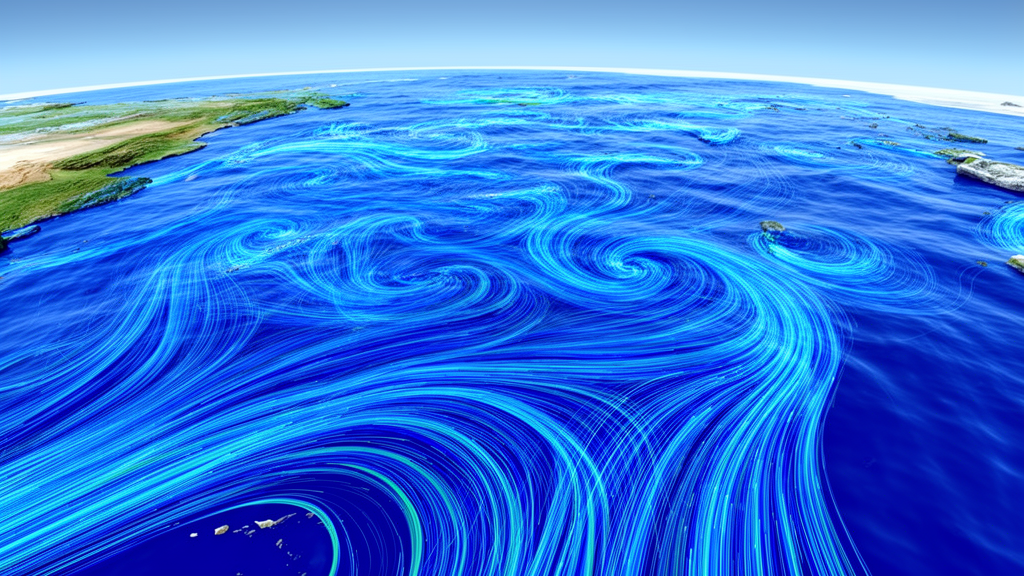
Image Credits: AI Generated

DOI: 10.1007/s10236-026-01872-x

Keywords: ocean modeling, wave-induced mixing, Langmuir circulation, mixed layer depth, sea surface temperature, northwestern Pacific, turbulent Langmuir number, upper ocean turbulence, parameterization, Ocean Dynamics, Evaluation, wave-induced

Cite Scienmag News

Violet Maxwell. (October 23, 2026). Langmuir circulation scheme outperforms wave orbital mixing in northwestern Pacific model. Scienmag. https://scienmag.com/langmuir-circulation-scheme-outperforms-wave-orbital-mixing-in-northwestern-pacific-model/


Violet Maxwell. "Langmuir circulation scheme outperforms wave orbital mixing in northwestern Pacific model." Scienmag, 23 October 2026, https://scienmag.com/langmuir-circulation-scheme-outperforms-wave-orbital-mixing-in-northwestern-pacific-model/. Accessed 23 October 2026.

Violet Maxwell. "Langmuir circulation scheme outperforms wave orbital mixing in northwestern Pacific model." Scienmag. October 23, 2026. https://scienmag.com/langmuir-circulation-scheme-outperforms-wave-orbital-mixing-in-northwestern-pacific-model/

Tags: evaluationimpact of wave schemes on ocean simulation accuracyLangmuir circulationLangmuir circulation in ocean modelingmixed layer depthmixed layer depth predictionnon-local versus local wave mixingNorth Pacific ocean dynamicsNorthwestern Pacificocean dynamicsocean modelingocean wave-induced turbulenceparameterizationsatellite and in situ ocean observationssea surface temperaturestratified ocean modelingturbulent Langmuir numberupper ocean mixing parameterizationupper ocean turbulencevertical mixing in ocean modelswave orbital motion mixing schemeswave-driven turbulence simulationwave-inducedwave-induced mixing
Share26Tweet16
Previous Post

Three New Measures Quantify Dynamical Coherence of Quantum Channels

Next Post

Most Healthcare Workers in Southern Nigeria Know the Basics of Blood-Borne Infections, but Gaps Persist

Related Posts

Fracture Roughness and Reservoir Heterogeneity Reshape Shale Gas Production Forecasts
Earth Science

Fracture Roughness and Reservoir Heterogeneity Reshape Shale Gas Production Forecasts

October 23, 2026
Eco-innovation and sustainable rural transformation in emerging markets
Earth Science

Eco-innovation and sustainable rural transformation in emerging markets

October 23, 2026
Single Red Sea storm briefly lowered reef biophony, recordings show
Earth Science

Single Red Sea storm briefly lowered reef biophony, recordings show

October 22, 2026
Modeled Seismic Interaction Alters Fragility of Adjacent Masonry Building Clusters
Earth Science

Modeled Seismic Interaction Alters Fragility of Adjacent Masonry Building Clusters

October 22, 2026
Review maps context-specific acoustic design for Nigerian public buildings
Earth Science

Review maps context-specific acoustic design for Nigerian public buildings

October 22, 2026
Arctic Fjord Sediments Yield Putative Mercury-Resistance DNA
Earth Science

Arctic Fjord Sediments Yield Putative Mercury-Resistance DNA

October 22, 2026
Next Post
Most Healthcare Workers in Southern Nigeria Know the Basics of Blood-Borne Infections, but Gaps Persist

Most Healthcare Workers in Southern Nigeria Know the Basics of Blood-Borne Infections, but Gaps Persist

  • Mothers who receive childcare support from maternal grandparents show more optimized

    Mothers who receive childcare support from maternal grandparents show more parental warmth, finds NTU Singapore study

    27656 shares
    Share 11059 Tweet 6912
  • University of Seville Breaks 120-Year-Old Mystery, Revises a Key Einstein Concept

    1061 shares
    Share 424 Tweet 265
  • Bee body mass, pathogens and local climate influence heat tolerance

    682 shares
    Share 273 Tweet 171
  • Researchers record first-ever images and data of a shark experiencing a boat strike

    546 shares
    Share 218 Tweet 137
  • Groundbreaking Clinical Trial Reveals Lubiprostone Enhances Kidney Function

    531 shares
    Share 212 Tweet 133
Science

Embark on a thrilling journey of discovery with Scienmag.com—your ultimate source for cutting-edge breakthroughs. Immerse yourself in a world where curiosity knows no limits and tomorrow’s possibilities become today’s reality!

RECENT NEWS

  • New Marker Lets Scientists Pull Neuron Vesicles Out of Blood and Spinal Fluid
  • AI Subtyping Suggests Polycystic Ovarian Syndrome Is Four Distinct Conditions
  • Task Structure Shapes How Autism Language Differences Show Up in Girls and Boys
  • Most Healthcare Workers in Southern Nigeria Know the Basics of Blood-Borne Infections, but Gaps Persist

Categories

  • Agriculture
  • Anthropology
  • Archaeology
  • Athmospheric
  • Biology
  • Biotechnology
  • Blog
  • Bussines
  • Cancer
  • Chemistry
  • Climate
  • Earth Science
  • Editorial Policy
  • Marine
  • Mathematics
  • Medicine
  • Pediatry
  • Policy
  • Psychology & Psychiatry
  • Science Education
  • Science News
  • Social Science
  • Space
  • Technology and Engineering

Subscribe to Blog via Email

Enter your email address to subscribe to this blog and receive notifications of new posts by email.

Join 5,151 other subscribers

© 2025 Scienmag - Science Magazine

Welcome Back!

Login to your account below

Forgotten Password?

Retrieve your password

Please enter your username or email address to reset your password.

Log In
No Result
View All Result
  • HOME
  • SCIENCE NEWS
  • CONTACT US

© 2025 Scienmag - Science Magazine

Discover more from Science

Subscribe now to keep reading and get access to the full archive.

Continue reading