

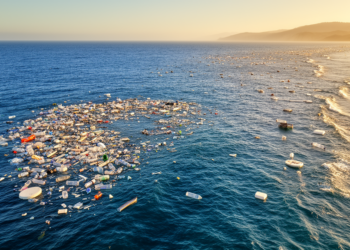
Particle density decides whether ocean debris joins the Great Pacific Garbage Patch or drifts to Asia
A modeling study in Ocean Dynamics shows that the heaviest buoyant particles gather in the Great Pacific Garbage Patch while ...
A modeling study in Ocean Dynamics shows that the heaviest buoyant particles gather in the Great Pacific Garbage Patch while ...
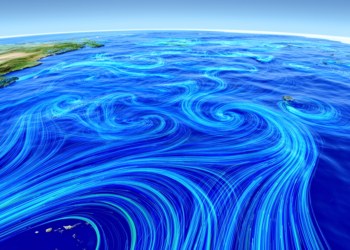
A northwestern Pacific model comparison found that a Langmuir circulation mixing scheme better matched observations than a wave orbital motion ...

A seven-year study of Thailand's Bang Pakong estuary shows that tidal distortion strengthens each monsoon season, with shallow-water tidal constituents ...
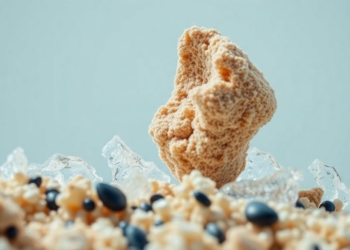
Laboratory wave-tank experiments show that floating pumice normally drifts with the waves but can reverse direction and travel backward once ...
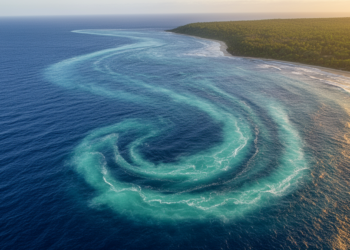
A new climate modeling study shows that ocean dynamics amplify and prolong the remote warming effects of large-scale reforestation, particularly ...

High-resolution simulations of the Baltic Sea show that storm-driven winds generate widespread submesoscale eddies and fronts in the deep basin, ...
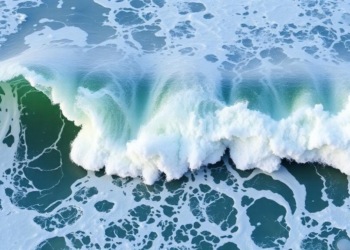
A laboratory study shows that the directions of breaking ocean waves are encoded in whitecap geometry, with narrower wave spectra ...

A new laboratory-driven framework in Ocean Dynamics delivers unified, physically grounded predictions for the height, amplitude, attenuation, and energy of ...
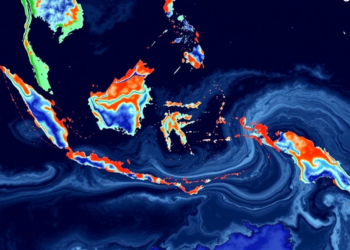
A new Ocean Dynamics study finds that the Interdecadal Pacific Oscillation strongly controls the depth of thermocline and halocline boundaries ...
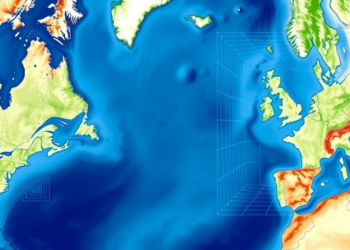
Dutch researchers show that assimilating satellite altimeter wave height data with a Deterministic Ensemble Kalman Filter cuts significant wave height ...


Embark on a thrilling journey of discovery with Scienmag.com—your ultimate source for cutting-edge breakthroughs. Immerse yourself in a world where curiosity knows no limits and tomorrow’s possibilities become today’s reality!