


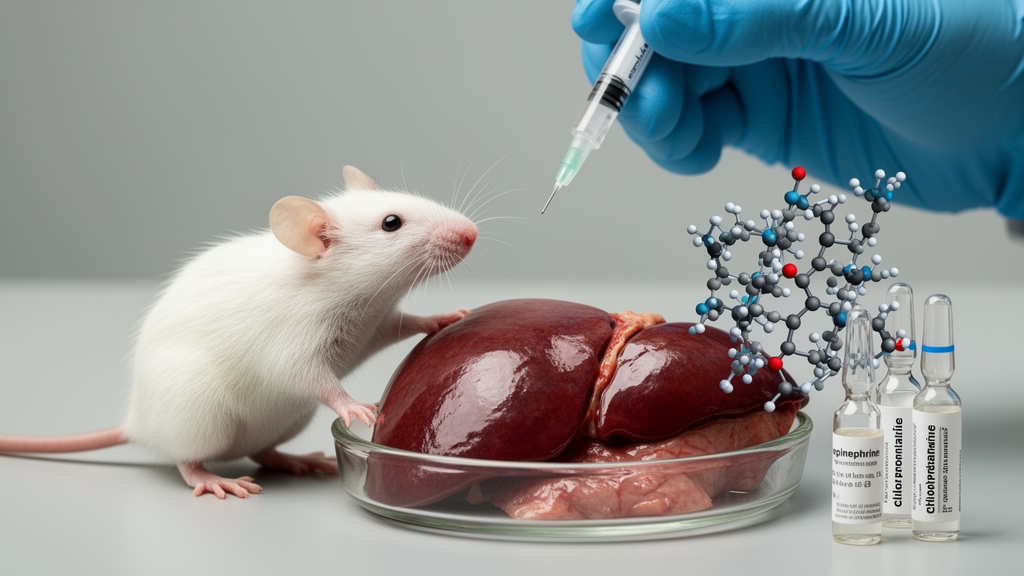
Epinephrine increased the expression of several components of the liver’s thioredoxin system and strengthened chlorpromazine’s protection against drug-induced acute liver injury in mice, according to a preclinical study in BMC Pharmacology and Toxicology . The researchers administered a low dose of epinephrine to C57BL/6 mice before inducing acute liver injury with N-acetyl-para-aminophenol, or APAP, and giving the animals a subtoxic dose of chlorpromazine. They found that epinephrine enhanced the expression of thioredoxin-1, thioredoxin-like protein 1 and thioredoxin reductase 1 in the liver.
The combination reduced liver injury and enhanced chlorpromazine’s protective effect, improving liver biomarkers, resolving inflammation, attenuating oxidative stress and restoring hepatic tissue architecture. Acute liver injury is characterized by rapid hepatic necrosis and compromised liver function. In drug-induced injury, depletion of glutathione and excessive production of reactive oxygen species can disturb the liver’s redox homeostasis.
The thioredoxin system, which comprises thioredoxin, thioredoxin reductase and NADPH, contributes to preserving that balance. The study tested the hypothesis that epinephrine-mediated boosting of this system could provide sufficient protection when combined with chlorpromazine in an experimental model of drug-induced acute liver injury. The animal experiments therefore focused on a biological mechanism: whether increasing expression of selected thioredoxin-system components before APAP exposure could improve the tissue response and augment the effect of chlorpromazine.
Parallel experiments in hepatoma cell lines examined the subcellular and molecular changes associated with epinephrine and chlorpromazine treatment. Epinephrine increased thioredoxin reductase 1 expression in those cells, while activation of the thioredoxin system was associated with overexpression of beta-arrestin 1, thioredoxin-like protein 1 and cAMP-response element-binding protein 1. The researchers described these changes as mirroring their involvement in thioredoxin-mediated protection.
Taken together, the mouse and cell experiments indicate that sensitization of the cytosolic thioredoxin system was associated with improved outcomes in the APAP injury model and with molecular changes consistent with the proposed protective pathway. The study reported significant improvement in liver biomarkers, resolution of inflammation, reduced oxidative stress and restoration of hepatic histological architecture in the treated mice. These findings link the molecular changes in the thioredoxin system with both biochemical measures of injury and the microscopic preservation of liver structure.
The results are preclinical and do not establish a treatment for human acute liver injury. Chlorpromazine was not evaluated here as a human therapy, and the findings do not show that epinephrine or the same drug combination should be used to prevent or treat toxic liver injury in people. The experiments also do not establish that a comparable dosing schedule would be safe or effective outside the mouse and hepatoma-cell models.
Rather, the study provides experimental evidence that epinephrine-enhanced expression of the cytosolic thioredoxin system strengthened chlorpromazine protection against APAP-induced hepatotoxicity under the conditions tested.
Subject of Research: Preclinical enhancement of thioredoxin-system expression in drug-induced acute liver injury
Article Title: Epinephrine-mediated sensitization of thioredoxin 1 enhances chlorpromazine protection against acute hepatotoxicity
Article References: Hessien, M., Donia, T., Khedr, S., Salim, E. I., Shamaa, M. M., Ismail, D. F., Hammady, M., Thirunavukkarasu, M., Watters, A., Taylor, N., Tabll, A., Hassan, M. H., & Maulik, N. (2026). Epinephrine-mediated sensitization of thioredoxin 1 enhances chlorpromazine protection against acute hepatotoxicity. BMC Pharmacology and Toxicology. https://doi.org/10.1186/s40360-026-01225-w
Image Credits: AI Generated
DOI: 10.1186/s40360-026-01225-w
Keywords: epinephrine, thioredoxin-1, thioredoxin reductase 1, chlorpromazine, acute liver injury, drug-induced hepatotoxicity, oxidative stress, acetaminophen injury, mouse model, hepatoma cells, Epinephrine-mediated, sensitization
Cite Scienmag News
Ophelia Keating. (October 22, 2026). Epinephrine boosts thioredoxin expression and strengthens chlorpromazine liver protection in mice. Scienmag. https://scienmag.com/epinephrine-boosts-thioredoxin-expression-and-strengthens-chlorpromazine-liver-protection-in-mice/
Ophelia Keating. "Epinephrine boosts thioredoxin expression and strengthens chlorpromazine liver protection in mice." Scienmag, 22 October 2026, https://scienmag.com/epinephrine-boosts-thioredoxin-expression-and-strengthens-chlorpromazine-liver-protection-in-mice/. Accessed 22 October 2026.
Ophelia Keating. "Epinephrine boosts thioredoxin expression and strengthens chlorpromazine liver protection in mice." Scienmag. October 22, 2026. https://scienmag.com/epinephrine-boosts-thioredoxin-expression-and-strengthens-chlorpromazine-liver-protection-in-mice/


