

Thursday, October 22, 2026
Science
No Result
View All Result
  • Login
  • HOME
  • SCIENCE NEWS
  • CONTACT US
  • HOME
  • SCIENCE NEWS
  • CONTACT US
No Result
View All Result
Scienmag
No Result
View All Result
Home Science News

Computational screen identifies naringenin as a CXCR4-binding candidate

October 22, 2026
in Science News
Louis Brooks
By Louis Brooks Scienmag Editorial Profile - Medicinal Chemistry
Reading Time: 2 mins read
0
Computational screen identifies naringenin as a CXCR4-binding candidate

Computational screen identifies naringenin as a CXCR4-binding candidate

65
SHARES
587
VIEWS
Share on FacebookShare on Twitter
ADVERTISEMENT

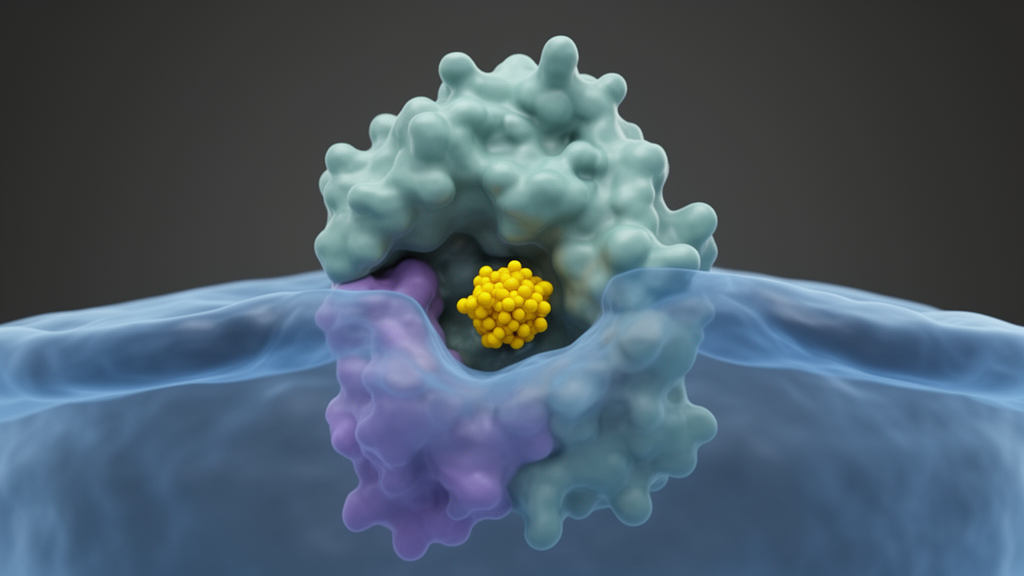
A multi-stage computational study has prioritized naringenin, a plant-derived compound, as a candidate for binding the human chemokine receptor CXCR4, a protein implicated in the invasive, inflammatory and pro-survival mechanisms shared by endometriosis and ovarian cancer. The finding is an in silico prioritization rather than proof of therapeutic activity: the researchers performed no receptor-binding assays, functional experiments or animal studies, so the candidate’s effects in either disease remain unverified.

The researchers built a human CXCR4 model with SWISS-MODEL, reporting 98.2% template coverage and 100% sequence identity, and used the co-crystallized ligand IT1t to define the receptor’s docking cavity. Eighteen phytochemicals were then screened through ligand-guided docking. Naringenin produced the most favorable predicted docking score, at −6.361 kcal/mol, compared with −5.927 kcal/mol for apigenin and −5.155 kcal/mol for IT1t. Its modeled interactions involved Tyr116, Arg188 and Tyr255, three amino-acid residues within the predicted ligand-binding site.

The analysis combined docking with pharmacokinetic and toxicity predictions, pharmacophore mapping, density functional theory and two independent 100-nanosecond molecular-dynamics simulations of CXCR4 complexes containing naringenin, apigenin or IT1t. Across measures including root-mean-square deviation of atomic coordinates, solvent-accessible surface area, radius of gyration, hydrogen bonding, principal component analysis, free-energy landscape analysis and dynamic cross-correlation maps, the naringenin complexes showed comparatively consistent structural behavior. MM/GBSA binding-energy estimates were also more favorable for naringenin than apigenin in both simulation replicas, while its calculated HOMO–LUMO energy gap was wider than that of apigenin.

Predicted drug-likeness, solubility and gastrointestinal absorption were described as acceptable for naringenin, but the study also modeled a median lethal dose of 2,000 mg/kg and assigned it to toxicity class 4. That estimate underscores a central limitation: favorable computational scores for receptor interactions do not establish safety or biological efficacy. Together, the results identify naringenin as the most coherent candidate to test experimentally among the 18 compounds examined, but the research does not demonstrate that it binds CXCR4 in cells, alters CXCR4 signaling, reduces endometriosis or inhibits ovarian cancer progression. Those questions require biochemical binding, functional and in vivo validation before the compound’s medical relevance can be assessed.

Subject of Research: Computational identification of phytochemical candidates predicted to bind human CXCR4.

Article Title: Computational identification of natural CXCR4-binding candidates relevant to endometriosis and ovarian cancer progression

Article References: Karageçili, S., Inan, D., & Ali, N. (2026). Computational identification of natural CXCR4-binding candidates relevant to endometriosis and ovarian cancer progression. PLOS One, 21(10), e0359833. https://doi.org/10.1371/journal.pone.0359833

Image Credits: AI Generated

DOI: 10.1371/journal.pone.0359833

Keywords: CXCR4, naringenin, apigenin, endometriosis, ovarian cancer, molecular docking, molecular dynamics, phytochemicals, computational biology, Computational, identification, natural

Cite Scienmag News

Louis Brooks. (October 22, 2026). Computational screen identifies naringenin as a CXCR4-binding candidate. Scienmag. https://scienmag.com/computational-screen-identifies-naringenin-as-a-cxcr4-binding-candidate/

Louis Brooks. "Computational screen identifies naringenin as a CXCR4-binding candidate." Scienmag, 22 October 2026, https://scienmag.com/computational-screen-identifies-naringenin-as-a-cxcr4-binding-candidate/. Accessed 22 October 2026.

Louis Brooks. "Computational screen identifies naringenin as a CXCR4-binding candidate." Scienmag. October 22, 2026. https://scienmag.com/computational-screen-identifies-naringenin-as-a-cxcr4-binding-candidate/


Tags: apigeninchemokine receptor-targeted therapycomputationalcomputational biologycomputational drug discoveryCXCR4CXCR4 receptor bindingendometriosisidentificationin silico screening for endometriosis and ovarian cancermolecular dockingmolecular docking of phytochemicalsmolecular dynamicsmolecular dynamics simulation of CXCR4 complexesnaringeninnaringenin as CXCR4 ligandnaturalnatural compounds in cancer and inflammatory diseaseOvarian cancerpharmacokinetic and toxicity predictionphytochemicalsplant-derived chemokine receptor modulatorsreceptor-binding site analysisstructure-based drug design
Share26Tweet16
Previous Post

Research report: Geospatial approaches to mapping invasive alien plants: the neglected role of soil in remote sensing and GIS-based distribution models

Next Post

Seven LMU Researchers Receive ERC Starting Grants

Related Posts

Physics-informed graph model flags leapfrog tripping risk in simulated PV plants
Science News

Physics-informed graph model flags leapfrog tripping risk in simulated PV plants

October 22, 2026
Seven LMU Researchers Receive ERC Starting Grants
Social Science

Seven LMU Researchers Receive ERC Starting Grants

October 22, 2026
Research report: Geospatial approaches to mapping invasive alien plants: the neglected role of soil in remote sensing and GIS-based distribution models
Science News

Research report: Geospatial approaches to mapping invasive alien plants: the neglected role of soil in remote sensing and GIS-based distribution models

October 22, 2026
Hybrid influence model improves spam webpage detection in web-network tests
Mathematics

Hybrid influence model improves spam webpage detection in web-network tests

October 22, 2026
Structured Exercise Raises Circulating BDNF After Menopause, Meta-Analysis Finds
Science News

Structured Exercise Raises Circulating BDNF After Menopause, Meta-Analysis Finds

October 22, 2026
Neurotechnology accelerator links commercialization gaps to concrete deliverables
Medicine

Neurotechnology accelerator links commercialization gaps to concrete deliverables

October 22, 2026
Next Post
Seven LMU Researchers Receive ERC Starting Grants

Seven LMU Researchers Receive ERC Starting Grants

  • Mothers who receive childcare support from maternal grandparents show more optimized

    Mothers who receive childcare support from maternal grandparents show more parental warmth, finds NTU Singapore study

    27656 shares
    Share 11059 Tweet 6912
  • University of Seville Breaks 120-Year-Old Mystery, Revises a Key Einstein Concept

    1061 shares
    Share 424 Tweet 265
  • Bee body mass, pathogens and local climate influence heat tolerance

    682 shares
    Share 273 Tweet 171
  • Researchers record first-ever images and data of a shark experiencing a boat strike

    546 shares
    Share 218 Tweet 137
  • Groundbreaking Clinical Trial Reveals Lubiprostone Enhances Kidney Function

    531 shares
    Share 212 Tweet 133
Science

Embark on a thrilling journey of discovery with Scienmag.com—your ultimate source for cutting-edge breakthroughs. Immerse yourself in a world where curiosity knows no limits and tomorrow’s possibilities become today’s reality!

RECENT NEWS

  • Physics-informed graph model flags leapfrog tripping risk in simulated PV plants
  • Seven LMU Researchers Receive ERC Starting Grants
  • Computational screen identifies naringenin as a CXCR4-binding candidate
  • Research report: Geospatial approaches to mapping invasive alien plants: the neglected role of soil in remote sensing and GIS-based distribution models

Categories

  • Agriculture
  • Anthropology
  • Archaeology
  • Athmospheric
  • Biology
  • Biotechnology
  • Blog
  • Bussines
  • Cancer
  • Chemistry
  • Climate
  • Earth Science
  • Editorial Policy
  • Marine
  • Mathematics
  • Medicine
  • Pediatry
  • Policy
  • Psychology & Psychiatry
  • Science Education
  • Science News
  • Social Science
  • Space
  • Technology and Engineering

Subscribe to Blog via Email

Enter your email address to subscribe to this blog and receive notifications of new posts by email.

Join 5,151 other subscribers

© 2025 Scienmag - Science Magazine

Welcome Back!

Login to your account below

Forgotten Password?

Retrieve your password

Please enter your username or email address to reset your password.

Log In
No Result
View All Result
  • HOME
  • SCIENCE NEWS
  • CONTACT US

© 2025 Scienmag - Science Magazine

Discover more from Science

Subscribe now to keep reading and get access to the full archive.

Continue reading