


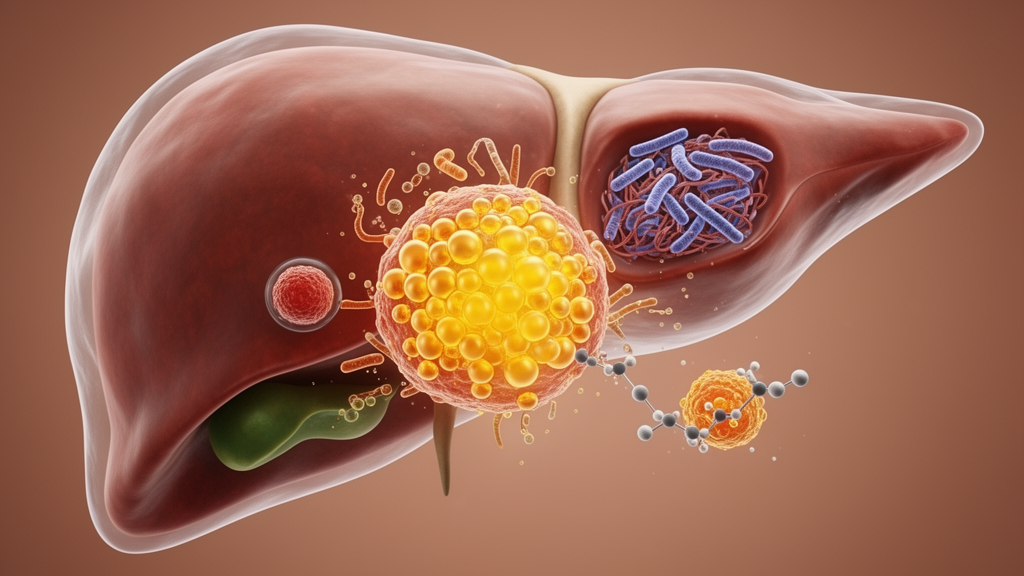
Lipid metabolism reprogramming is emerging as a central feature of hepatocellular carcinoma (HCC), the sixth most common cancer globally, according to a peer-reviewed review in the Journal of Clinical and Translational Hepatology. The analysis describes how altered lipid uptake, synthesis, oxidation and storage can support rapid tumour growth while reshaping the surrounding tissue and immune environment. It also evaluates therapeutic strategies aimed at these pathways, finding promising preclinical results but emphasizing that most metabolism-directed treatments remain in early or exploratory clinical development.
The review reports that HCC cells commonly increase lipid uptake, de novo lipogenesis, or the synthesis of fatty acids within the cell, and fatty acid oxidation, which breaks fatty acids down to generate energy. These changes provide both fuel and molecular building blocks for proliferation. Lipids also act as signalling molecules and structural components of cell membranes, allowing metabolic alterations to influence membrane composition, epigenetic regulation, oxidative stress and other processes associated with invasion and metastasis. The article notes that most patients are diagnosed when the disease is already advanced and that lipid metabolism may help determine response to treatment.
Specific transport proteins and biosynthetic enzymes offer several possible points of intervention. CD36, a membrane protein involved in fatty acid uptake, can activate Src/PI3K/Akt/mTOR signalling and has been linked to growth and metastasis. It may also preferentially promote uptake of monounsaturated fatty acids. Fatty acid-binding protein 5, or FABP5, can activate HIF-1, increase the expression of lipid-storage genes and suppress fatty acid oxidation; experimental inhibition of FABP5 has made tumour cells more susceptible to ferroptosis. On the synthesis side, the review highlights acetyl-CoA carboxylase, ATP citrate lyase, fatty acid synthase and stearoyl-CoA desaturase 1. High expression of lipogenesis-associated genes has been associated with poorer survival in HCC, while increased stearoyl-CoA desaturase 1 activity can raise the ratio of monounsaturated to saturated fatty acids and enhance invasive behaviour.
Reprogramming of cholesterol and phospholipid metabolism adds another layer to the disease. Stearoyl-CoA desaturase 1 inhibition and ATP citrate lyase inhibition have produced antitumour effects in experimental systems, with ATP citrate lyase inhibition also linked to stronger antitumour immunity and improved lenvatinib efficacy. Accumulation of phosphatidylcholine, palmitic acid and cholesterol may alter membrane properties, endoplasmic-reticulum stress and oxidative balance. It can also promote lipid modification of proteins through palmitoylation, a process influenced by ZDHHC-family proteins. Cholesteryl ester synthesis is regulated in part by sterol regulatory element-binding protein 2 and the enzyme sterol acyltransferase 1, which converts free cholesterol into cholesteryl esters for storage in lipid droplets. Inhibiting sterol regulatory element-binding protein 2 has reduced cholesteryl ester synthesis and worked synergistically with sorafenib in preclinical models, although the review notes a paradox: blocking cholesteryl ester synthesis may also increase arachidonic acid metabolism and thereby favour tumour development in some settings.
Lipophagy, the turnover of lipids stored in droplets, presents a further metabolic control point. The review describes evidence that PPARα-associated lipophagy can support advanced HCC, whereas inhibiting the process has promoted chemoresistance through lipid-droplet accumulation. Under conditions of glutamine deprivation, lipophagy can also preserve redox homeostasis. These apparently opposing effects illustrate why a single metabolic intervention may not produce a uniform effect across the heterogeneous lipid landscape of HCC. They also show why inhibiting one enzyme or transport mechanism can have different consequences in tumour cells, stromal cells and immune cells.
Beyond tumour cells, lipid changes can suppress or redirect immune activity, creating a microenvironment that helps the cancer evade immune control. Excess fatty acid uptake by CD36 has been associated with CD8-positive T-cell exhaustion and, in experimental settings, ferroptosis. Fatty acid oxidation supports CD8-positive T-cell function, but excessive oxidation can impair it. Regulatory T cells can be recruited through the CCL20/CCR6 axis, and CD36 inhibition has shown synergy with anti-PD-1 treatment in models. In natural killer and NKT cells, long-chain acylcarnitine accumulation can restrain NKT-cell proliferation, while cholesteryl ester accumulation can promote lipid peroxidation and impair NKT-cell function. The review also reports that elevated serum cholesteryl ester enhanced natural killer-cell activity in mice, underscoring the difficulty of predicting the immune consequences of altering systemic or local lipid levels.
Myeloid cells and cancer-associated fibroblasts also undergo lipid-dependent changes. Lipid accumulation can shift tumour-associated macrophages from a more inflammatory M1 state toward an M2 state. Oxidized low-density lipoprotein and cholesteryl esters can support TREM2-positive macrophages that promote invasion and CD8-positive T-cell dysfunction, while FABP5 can drive M2 polarization through PPARγ. Although M2 macrophages rely on fatty acid oxidation and can express PD-L1, inhibiting that oxidation has shifted macrophages toward a more antitumour phenotype in experimental work. Pro-tumour cancer-associated fibroblasts can increase fatty acid synthase, acetyl-CoA carboxylase and stearoyl-CoA desaturase 1 and release lipids that support tumour growth. CD36-positive fibroblasts expressing macrophage inhibitory factor can suppress T-cell immunity, and CAF-derived extracellular vesicles have been linked to proliferation, metastasis, drug tolerance and resistance to ferroptosis. These findings identify stromal metabolism as an active component of HCC rather than a passive surrounding structure.
Several lipid-directed interventions have entered clinical testing, although the evidence remains preliminary. PLT012, an anti-CD36 antibody, is described as being in a phase I trial and has received US Food and Drug Administration Fast Track designation. Another CD36-targeting candidate, VT1021, is also being tested, with the review reporting a disease control rate of 42.9% in a clinical trial. Preclinical findings have also examined FASN inhibition, which can increase MHC class I expression and potentially improve the activity of immune checkpoint inhibitors. Orlistat has sensitized sorafenib-resistant HCC models, while inhibition of stearoyl-CoA desaturase 1 has worked synergistically with tyrosine kinase inhibitors. Statins, which inhibit cholesterol synthesis, have shown promise in laboratory combination strategies, including resensitization of tumour cells to sorafenib, and nanoparticle delivery may improve the efficacy of metabolic interventions. Results with statins in patients have been mixed, however, with early studies suggesting a survival benefit but later trials producing less consistent evidence.
The review’s central conclusion is that lipid metabolism is both a source of metabolic support for HCC and a mechanism connecting tumour cells with immune and stromal cells. Agents that suppress cholesteryl ester synthesis or inhibit lipid-biosynthetic enzymes have shown synergy with established anticancer drugs in preclinical systems, but translation into routine care remains limited. Direct manipulation of metabolic pathways can trigger compensatory mechanisms and may damage the metabolic integrity of beneficial immune cells. Clinical studies are constrained by small samples, heterogeneous patient populations, uncertainty about effective intratumour exposure and the broad effects of drugs such as statins. The authors therefore call for larger trials, more precise selection of patients whose tumours have identifiable lipid alterations and more rigorous study designs. Preclinical promise is substantial, but the review concludes that metabolism-targeted therapy is not yet an established clinical approach for most people with HCC.
Subject of Research: Lipid metabolism reprogramming and therapeutic strategies in hepatocellular carcinoma
Article Title: Advances in lipid metabolism reprogramming in hepatocellular carcinoma
Article References: Advances in lipid metabolism reprogramming in hepatocellular carcinoma. Original publication (Bibliographic details unavailable.)
Image Credits: AI Generated
DOI: Not provided
Keywords: hepatocellular carcinoma, lipid metabolism, tumour microenvironment, immune evasion, lipophagy, CD36, fatty acid oxidation, lipogenesis, cancer-associated fibroblasts, metabolic therapy, Advances, lipid
Cite Scienmag News
Nathaniel Bowman. (October 21, 2026). Lipid metabolism reprogramming offers emerging routes to treating liver cancer. Scienmag. https://scienmag.com/lipid-metabolism-reprogramming-offers-emerging-routes-to-treating-liver-cancer/
Nathaniel Bowman. "Lipid metabolism reprogramming offers emerging routes to treating liver cancer." Scienmag, 21 October 2026, https://scienmag.com/lipid-metabolism-reprogramming-offers-emerging-routes-to-treating-liver-cancer/. Accessed 21 October 2026.
Nathaniel Bowman. "Lipid metabolism reprogramming offers emerging routes to treating liver cancer." Scienmag. October 21, 2026. https://scienmag.com/lipid-metabolism-reprogramming-offers-emerging-routes-to-treating-liver-cancer/


