

Wednesday, October 21, 2026
Science
No Result
View All Result
  • Login
  • HOME
  • SCIENCE NEWS
  • CONTACT US
  • HOME
  • SCIENCE NEWS
  • CONTACT US
No Result
View All Result
Scienmag
No Result
View All Result
Home Science News Earth Science

Lab assays find Ganges water extracts show mutagenic and genotoxic effects

October 21, 2026
in Earth Science
Violet Maxwell
By Violet Maxwell Scienmag Editorial Profile - Natural Hazards
Reading Time: 3 mins read
0
Lab assays find Ganges water extracts show mutagenic and genotoxic effects

Lab assays find Ganges water extracts show mutagenic and genotoxic effects

65
SHARES
587
VIEWS
Share on FacebookShare on Twitter
ADVERTISEMENT

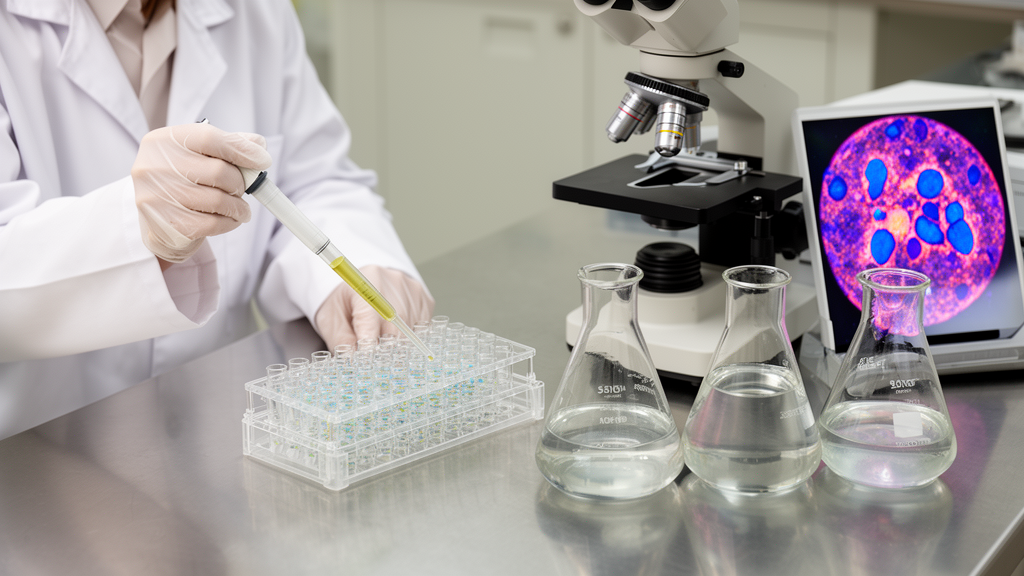
Laboratory testing found that solvent extracts of Ganges River water containing pharmaceuticals, antibiotics, phenolic substances, siloxanes and hormone-disrupting agents produced mutagenic, DNA-damaging and plant-growth effects in a 2026 study published in Environmental Monitoring and Assessment. Gas chromatography–mass spectrometry detected spironolactone, nalmefene, desmethylverapamil, bisphenol B, aminopterin and minocycline in hexane and chloroform extracts of the sampled water. The research combined chemical profiling with bacterial and plant bioassays and computer modelling; it assessed laboratory responses to mixtures rather than health outcomes in people exposed to the river.

The study’s bacterial tests detected a concentration-dependent mutagenic response in the Ames Salmonella reversion assay. The measured reversion response exceeded twice the spontaneous reversion frequency in the reported test conditions. Chloroform extracts generated a significantly stronger response with strain TA98 than with strain TA100, which the authors interpreted as evidence that frameshift mutagens were prevalent among the test samples.

DNA-repair-deficient Escherichia coli K-12 mutants also declined in survival after six hours of exposure. The recA and lexA mutants were more sensitive than their wild-type counterparts, providing further evidence of DNA-damaging potential. Because the assays tested mixed solvent extracts, they did not establish which individual contaminant produced each response or how the compounds interacted.

Plant assays showed effects on cell division, chromosomes and early growth. In Allium cepa, or onion, the mitotic index decreased from 51.63% to 20.62% across the tested concentration range, while the frequency of chromosomal abnormalities increased from 2.33% to 26.17%. The study’s highlights specifically reported chromosomal aberrations reaching 26.17% at 100% extract concentration.

In Vigna radiata, or mung bean, seeds exposed to the extracts showed reduced germination and seedling growth. Root-tip damage was also observed, and confocal microscopy detected reduced viability in root cells. These measurements indicate inhibition of plant growth and cellular injury under the assay conditions, but they do not by themselves identify the mechanism responsible for every observed effect.

Computational analysis complemented the laboratory results by examining possible molecular interactions. Docking calculations followed by 100-nanosecond molecular-dynamics simulations indicated stable binding between selected contaminants and molecular targets involved in nucleotide biosynthesis, DNA replication, topological regulation and cell division. The models therefore identified plausible routes through which the bioactive compounds might interfere with DNA-related processes and mitosis.

Stable interactions in a simulation remain predictions that require biological confirmation: the analysis did not demonstrate that the compounds reached the corresponding targets in living organisms or that any single interaction caused the effects seen in the bacterial and plant assays. Taken together, the results provide convergent evidence that the tested Ganges River water extracts contain chemically diverse emerging contaminants with mutagenic, genotoxic and phytotoxic activity in the selected laboratory systems. The research scope is limited to chemical identification, controlled bioassays and computational modelling of sampled water extracts.

It did not directly measure human exposure, clinical effects or the distribution of contaminants throughout the river, and its findings should not be interpreted as evidence that drinking untreated river water causes illness.

Subject of Research: Laboratory assessment of mutagenic, genotoxic and phytotoxic effects of emerging contaminants in Ganges River water extracts.

Article Title: Cyto-genotoxic potential and in silico analysis of emerging contaminants of the Ganges River water

Article References: Akhtar, S., & Malik, A. (2026). Cyto-genotoxic potential and in silico analysis of emerging contaminants of the Ganges River water. Environmental Monitoring and Assessment, 198(11), Article 1235. https://doi.org/10.1007/s10661-026-16073-8

Image Credits: AI Generated

DOI: 10.1007/s10661-026-16073-8

Keywords: Ganges River, emerging contaminants, mutagenicity, genotoxicity, Ames assay, DNA repair, chromosomal abnormalities, plant growth inhibition, molecular docking, molecular dynamics, Cyto-genotoxic, potential

Cite Scienmag News

Violet Maxwell. (October 21, 2026). Lab assays find Ganges water extracts show mutagenic and genotoxic effects. Scienmag. https://scienmag.com/lab-assays-find-ganges-water-extracts-show-mutagenic-and-genotoxic-effects/

Violet Maxwell. "Lab assays find Ganges water extracts show mutagenic and genotoxic effects." Scienmag, 21 October 2026, https://scienmag.com/lab-assays-find-ganges-water-extracts-show-mutagenic-and-genotoxic-effects/. Accessed 21 October 2026.

Violet Maxwell. "Lab assays find Ganges water extracts show mutagenic and genotoxic effects." Scienmag. October 21, 2026. https://scienmag.com/lab-assays-find-ganges-water-extracts-show-mutagenic-and-genotoxic-effects/


Tags: Ames assaybacterial bioassays for water safetychemical profiling of water contaminantschromosomal abnormalitiescomputer modeling of water toxin interactionsCyto-genotoxicdetection of endocrine disruptors in river waterDNA damage from river water pollutantsDNA repairemerging contaminantsenvironmental mutagens in GangesGanges RiverGanges River water contaminationgenotoxicitygenotoxicity of pharmaceutical pollutantsimpact of river water pollutants on DNA repair mechanismsmolecular dockingmolecular dynamicsmutagenic effects of water extractsmutagenicitymutagenicity testing using Ames assayplant growth inhibitionplant-growth impact of water pollutantspotential
Share26Tweet16
Previous Post

China nutrition week survey links professional knowledge with engagement and appraisal

Next Post

Single-Center Study Finds Final-Year Medical OSCE Feasible at Scale

Related Posts

Liquid nitrogen soaking lowers methane uptake and swelling across three coal ranks
Earth Science

Liquid nitrogen soaking lowers methane uptake and swelling across three coal ranks

October 21, 2026
Single-Reagent Colorimetry Distinguishes Arsenic Species in Central India
Earth Science

Single-Reagent Colorimetry Distinguishes Arsenic Species in Central India

October 21, 2026
Expert-informed model maps CSR and HRM links in generative AI workplaces
Earth Science

Expert-informed model maps CSR and HRM links in generative AI workplaces

October 21, 2026
Decision tool finds crop patterns balancing profit, water and nitrogen
Earth Science

Decision tool finds crop patterns balancing profit, water and nitrogen

October 21, 2026
Rocky hideaways may save Japan’s northern pikas from climate warming
Earth Science

Research report: Mapping fine-scale distribution of the northern pika Ochotona hyperborea considering duality in microhabitat thermal conditions

October 20, 2026
Hidden frogs of New Guinea: DNA and calls reveal hundreds of unnamed species
Earth Science

Research report: Molecular and acoustic evidence for large-scale underestimation of frog species diversity on New Guinea

October 20, 2026
Next Post
Single-Center Study Finds Final-Year Medical OSCE Feasible at Scale

Single-Center Study Finds Final-Year Medical OSCE Feasible at Scale

  • Mothers who receive childcare support from maternal grandparents show more optimized

    Mothers who receive childcare support from maternal grandparents show more parental warmth, finds NTU Singapore study

    27656 shares
    Share 11059 Tweet 6912
  • University of Seville Breaks 120-Year-Old Mystery, Revises a Key Einstein Concept

    1061 shares
    Share 424 Tweet 265
  • Bee body mass, pathogens and local climate influence heat tolerance

    682 shares
    Share 273 Tweet 171
  • Researchers record first-ever images and data of a shark experiencing a boat strike

    546 shares
    Share 218 Tweet 137
  • Groundbreaking Clinical Trial Reveals Lubiprostone Enhances Kidney Function

    531 shares
    Share 212 Tweet 133
Science

Embark on a thrilling journey of discovery with Scienmag.com—your ultimate source for cutting-edge breakthroughs. Immerse yourself in a world where curiosity knows no limits and tomorrow’s possibilities become today’s reality!

RECENT NEWS

  • Prospective multi-cohort LSTM predicts depressive symptoms in older adults
  • Single-Center Study Finds Final-Year Medical OSCE Feasible at Scale
  • Lab assays find Ganges water extracts show mutagenic and genotoxic effects
  • China nutrition week survey links professional knowledge with engagement and appraisal

Categories

  • Agriculture
  • Anthropology
  • Archaeology
  • Athmospheric
  • Biology
  • Biotechnology
  • Blog
  • Bussines
  • Cancer
  • Chemistry
  • Climate
  • Earth Science
  • Editorial Policy
  • Marine
  • Mathematics
  • Medicine
  • Pediatry
  • Policy
  • Psychology & Psychiatry
  • Science Education
  • Science News
  • Social Science
  • Space
  • Technology and Engineering

Subscribe to Blog via Email

Enter your email address to subscribe to this blog and receive notifications of new posts by email.

Join 5,150 other subscribers

© 2025 Scienmag - Science Magazine

Welcome Back!

Login to your account below

Forgotten Password?

Retrieve your password

Please enter your username or email address to reset your password.

Log In
No Result
View All Result
  • HOME
  • SCIENCE NEWS
  • CONTACT US

© 2025 Scienmag - Science Magazine

Discover more from Science

Subscribe now to keep reading and get access to the full archive.

Continue reading