


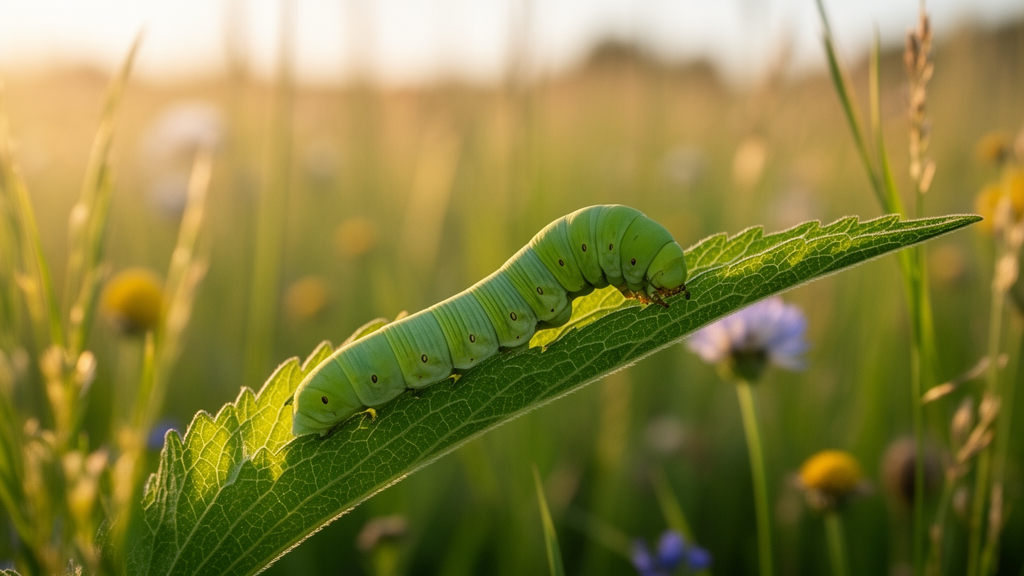
A literature-based review has compiled a provisional checklist of the larval foodplants used by European butterflies, documenting 4,080 butterfly–plant relationships under currently accepted plant names. The review covers 471 European butterfly species with known foodplants and identifies 25 additional species for which larval foodplants remain unknown. The authors describe the checklist as an initial step toward a more fully documented database, with errors and corrections still possible as evidence improves.
The review is a synthesis of published records rather than a new field survey or laboratory experiment. The authors began with larval foodplant lists from major European butterfly references, including Tshikolovets, Tolman and Lewington, and added or updated information for Aporia crataegi, Pieris rapae and the genus Melitaea. They then searched the scientific literature for records concerning the species in the initial list. Where possible, primary sources were preferred, particularly records in which larvae were found using a plant in the wild. Records based only on breeding experiments were generally excluded unless no other information was available, and entries judged to be incorrect were removed.
Plant nomenclature was standardized using version 4 of the World Checklist of Vascular Plants, with additional checks through Plants of the World Online, the World Checklist itself, GBIF, the World Flora Online and consultation with the Royal Botanic Gardens, Kew. The procedure addressed accepted names, synonyms, homotypic synonyms, names with differing authorities and suspected typographical errors. A database constraint prevented duplicate relationships when an original source listed both an accepted name and a synonym. The resulting set expanded from an initial 1,977 relationships to 4,080 records.
The checklist records plant species where possible, while plant records that could not be identified beyond a genus are retained at generic level. It treats butterfly subspecies outside Europe as out of scope and otherwise uses species-level treatment; plant subspecies are not separately recorded. Among the 1,506 plant species listed, 86 records were identified only to genus, across 40 genera, mostly grasses. The full scientific names, plant families and orders, and supporting references are provided in the supplementary spreadsheet accompanying the paper.
Poaceae was the most frequently represented plant family, with larval foodplants recorded for 150 butterfly species. Fabaceae followed with 93 species, Rosaceae with 52, Cyperaceae with 45 and Brassicaceae with 31. Among individual plant species, Festuca ovina was recorded for 68 butterfly species, Festuca rubra for 40 and Poa annua for 39. These totals describe the frequency of records in the compiled checklist; they do not measure the quality of the foodplants for larval development.
Foodplant breadth varied substantially among the 471 species with known diets. More than half, or 255 species, used no more than five recorded foodplant species, and 92 were classified as monophagous, meaning they fed on one plant species throughout their range. Pieris rapae had 82 recorded foodplant species in Europe and Vanessa cardui had 77. For plant-family use, 331 butterfly species were recorded using one family, 84 using two and 29 using three. Celastrina argiolus had the broadest recorded spread, with plants in 19 families.
The review identifies substantial limitations in the underlying evidence. Reference quality varied, and the authors state that many records cannot be verified except when another source provides the same information. Plants may also be difficult to identify accurately from vegetative material alone, sometimes requiring flowers, fruits or seeds. Ambiguous plant names without authorities can prevent inclusion: a record naming Vicia angustifolia for Leptidea sinapis could not be assigned because it might refer to Vicia lathyroides or Vicia sativa, while Vicia setifolia has a South American distribution and was excluded from that possibility.
Taxonomic and geographic complications also limit interpretation. The separation of Polyommatus icarus from P. celina complicates attribution of foodplant records, while sympatric species such as Leptidea juvernica, L. sinapis and L. reali may share, partly share or differ in their foodplants. The authors cite research proposing splits of Muschampia proto, Zegris eupheme and Hyponephele lupina, and provide regional references for the proposed species while those taxonomic changes remain under investigation. For the five endemic Canary Island graylings, the only available foodplant information came from breeding experiments, so the single grass recorded for them is explicitly noted as requiring confirmation of use in the wild.
The authors caution that a list of foodplants does not show where a species uses different plants in different regions, which plants support high larval survival, or whether occasional use represents a preference. A species classified as oligophagous may use one plant in one habitat and several in another, making regional lists important for identifying plants used locally. The authors recommend that future records specify full scientific plant names, verify them against the World Checklist of Vascular Plants, and document the date, location, altitude, abundance, larval stage and methods used to identify larvae and plants. The checklist is therefore a provisional research resource that consolidates current evidence while making its unresolved records and gaps explicit.
Subject of Research: Literature review of European butterfly larval foodplants
Article Title: A provisional checklist of European butterfly larval foodplants
Article References: Clarke, H. E. (2022). A provisional checklist of European butterfly larval foodplants. Nota Lepidopterologica, 45, 139-167. https://doi.org/10.3897/nl.45.72017
Image Credits: AI Generated
DOI: 10.3897/nl.45.72017
Keywords: butterflies, larval foodplants, European fauna, host plants, taxonomy, conservation, biodiversity, plant nomenclature, literature review, provisional, checklist, European
Cite Scienmag News
Margaret Porter. (October 21, 2026). Literature review compiles 4,080 European butterfly–larval foodplant relationships. Scienmag. https://scienmag.com/literature-review-compiles-4080-european-butterfly-larval-foodplant-relationships/
Margaret Porter. "Literature review compiles 4,080 European butterfly–larval foodplant relationships." Scienmag, 21 October 2026, https://scienmag.com/literature-review-compiles-4080-european-butterfly-larval-foodplant-relationships/. Accessed 21 October 2026.
Margaret Porter. "Literature review compiles 4,080 European butterfly–larval foodplant relationships." Scienmag. October 21, 2026. https://scienmag.com/literature-review-compiles-4080-european-butterfly-larval-foodplant-relationships/


