


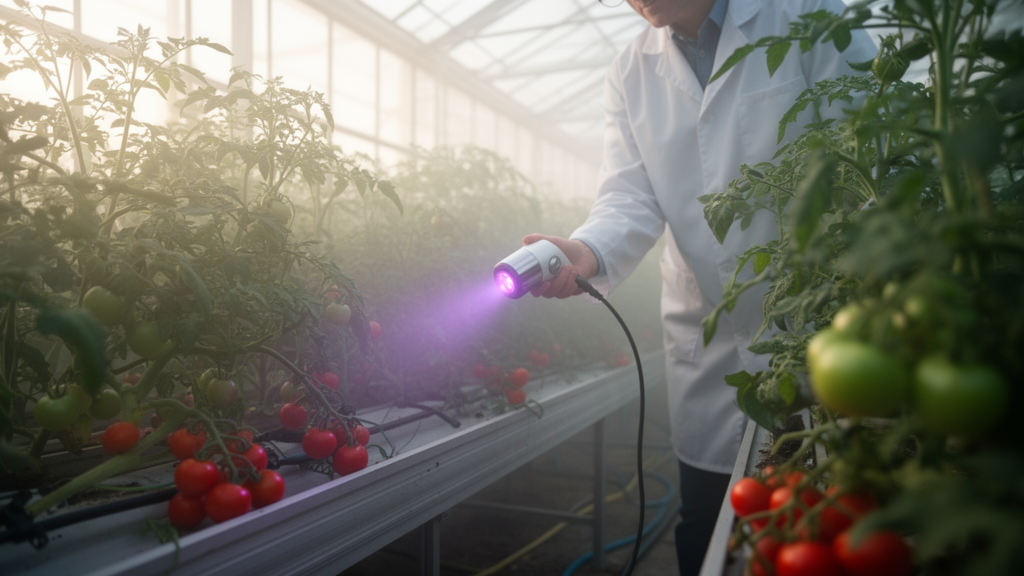
In a greenhouse experiment involving tomato brown rugose fruit virus (ToBRFV), cold argon plasma-activated water treatments were associated with reduced symptom severity and improved measures of tomato vegetative growth. The 5-minute treatment differed significantly from the control group in the reported results, with a strong positive correlation among tomato growth traits. The experiment tested plasma-activated water applied for 3, 5 and 10 minutes under greenhouse conditions.
Researchers assessed ToBRFV symptom severity, vegetative growth parameters, the activity of enzymatic and non-enzymatic antioxidants, and the expression of genes associated with pathogenesis. Principal component analysis was used to examine multivariate patterns in growth and antioxidant data across plasma treatments. The abstract reports that the 5-minute treatment produced the greatest differentiation in the principal component analysis.
Plasma-treated plants showed higher antioxidant-related measurements and a lower oxidative-stress index reported as MDA than controls. Peak antioxidant activity and accumulation of defense compounds were observed 14 days after inoculation. The abstract also reports significant increases and peak expression of three defense-related genes: PR1, encoding pathogenesis-related protein 1; PR2, encoding β-1,3-glucanase; and PR5, encoding a thaumatin-like protein.
The reported peak in gene expression occurred particularly in plasma-treated plants 14 days after inoculation. The authors interpreted the results as evidence that plasma treatment can elicit a coordinated defense response in tomato plants. The study concludes that cold plasma may offer a non-chemical approach for eliciting plant defenses, mitigating ToBRFV severity and enhancing plant growth indices in greenhouse cultivation systems.
The reported findings concern greenhouse conditions and plasma-activated water treatments applied for 3, 5 and 10 minutes.
Subject of Research: Effects of cold argon plasma-activated water on ToBRFV symptoms, tomato growth, antioxidants and defense-gene expression in a greenhouse experiment
Article Title: A novel strategy for controlling tomato brown rugose fruit virus and enhancing tomato growth in greenhouses: cold plasma as a non-thermal inhibitor
Article References: Pakbaz, S., Hasanvand, E., & Barjasteh, A. (2026). A novel strategy for controlling tomato brown rugose fruit virus and enhancing tomato growth in greenhouses: cold plasma as a non-thermal inhibitor. BMC Plant Biology. https://doi.org/10.1186/s12870-026-10003-z
Image Credits: AI Generated
DOI: 10.1186/s12870-026-10003-z
Keywords: tomato brown rugose fruit virus, cold plasma, plasma-activated water, greenhouse tomato, plant defense, antioxidants, defense genes, pathogenesis, vegetative growth, novel, strategy, controlling
Cite Scienmag News
Kristina Jarvis. (October 20, 2026). Greenhouse study links 5-minute cold argon plasma-activated water treatment with reduced ToBRFV symptoms and improved tomato growth measures. Scienmag. https://scienmag.com/greenhouse-study-links-5-minute-cold-argon-plasma-activated-water-treatment-with-reduced-tobrfv-symptoms-and-improved-tomato-growth-measures/
Kristina Jarvis. "Greenhouse study links 5-minute cold argon plasma-activated water treatment with reduced ToBRFV symptoms and improved tomato growth measures." Scienmag, 20 October 2026, https://scienmag.com/greenhouse-study-links-5-minute-cold-argon-plasma-activated-water-treatment-with-reduced-tobrfv-symptoms-and-improved-tomato-growth-measures/. Accessed 20 October 2026.
Kristina Jarvis. "Greenhouse study links 5-minute cold argon plasma-activated water treatment with reduced ToBRFV symptoms and improved tomato growth measures." Scienmag. October 20, 2026. https://scienmag.com/greenhouse-study-links-5-minute-cold-argon-plasma-activated-water-treatment-with-reduced-tobrfv-symptoms-and-improved-tomato-growth-measures/


