


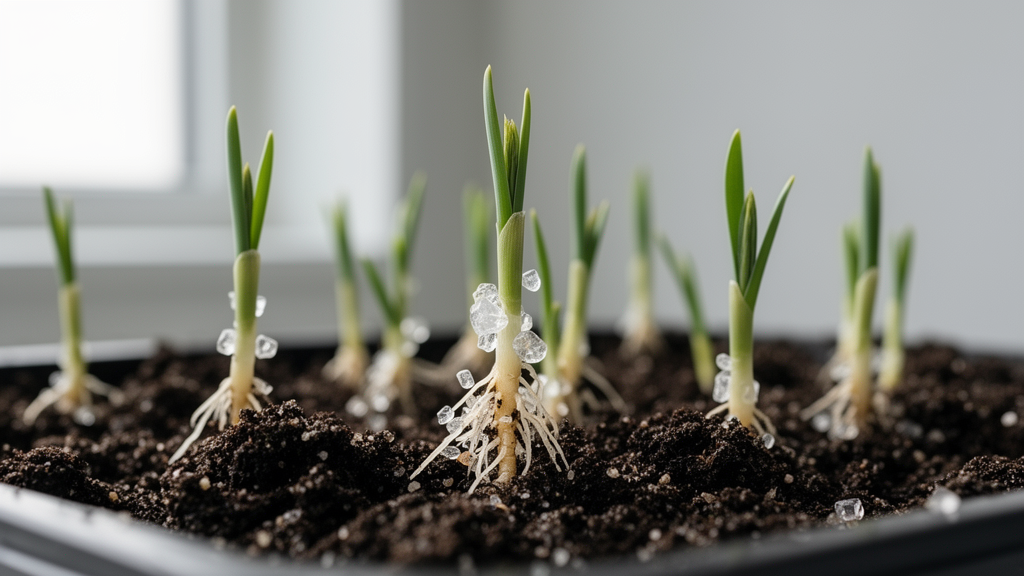
An experimental wheat study reported that a combined treatment of polystyrene microplastics at 50 mg/L and molybdenum VI oxide at 0.01% significantly enhanced several measured seed-germination outcomes. According to the available abstract, the treatment improved germination rate, final germination percentage and the coefficient of velocity of germination. The abstract does not provide numerical effect sizes, uncertainty estimates or detailed statistical comparisons, so the magnitude of the improvements cannot be assessed from the supplied evidence.
The study examined how polystyrene microplastics and trace elements jointly affected wheat physiology, with particular attention to physiological growth, seed germination and secondary-metabolite production in leaves. To identify low-dose trace-element concentrations that maximize secondary-metabolite production, the researchers used response surface methodology. This was a model-based optimization within the conditions tested; the abstract does not establish that an identified concentration would produce the same response in other environmental or experimental settings.
Metabolomic analysis revealed substantial alterations in amino-acid, fatty-acid and energy metabolism. Transcriptomic analysis identified specific genes associated with secondary-metabolite production and plant-defense mechanisms. The available abstract does not specify the full treatment structure, statistical methods, individual gene results or whether every measured metabolite and transcript showed a statistically significant response.
The findings are limited to the reported wheat experiment and do not demonstrate equivalent effects in field conditions, changes in crop yield, or long-term consequences for plant health and development. The authors characterize the work as a foundation for future research on long-term effects of interactions between microplastics and trace elements in plants. The supplied evidence does not establish broader agricultural consequences or clinical relevance.
Subject of Research: Experimental effects of polystyrene microplastics and trace elements on wheat germination, metabolism and associated genes
Article Title: Synergistic effects of polystyrene microplastics and trace elements on wheat (Triticum aestivum L.) physiology: implications for seed germination, metabolites production, and transcriptomic insights
Article References: Kousar, M., Hashmi, Q. A., & Park, J. (2026). Synergistic effects of polystyrene microplastics and trace elements on wheat (Triticum aestivum L.) physiology: implications for seed germination, metabolites production, and transcriptomic insights. BMC Plant Biology. https://doi.org/10.1186/s12870-026-10147-y
Image Credits: AI Generated
DOI: 10.1186/s12870-026-10147-y
Keywords: wheat, seed germination, polystyrene microplastics, trace elements, molybdenum, secondary metabolites, metabolomics, transcriptomics, plant defense, response surface methodology, Synergistic, effects
Cite Scienmag News
Alan Morgan. (October 20, 2026). Polystyrene microplastics with molybdenum improved wheat seed germination in an experimental study. Scienmag. https://scienmag.com/polystyrene-microplastics-with-molybdenum-improved-wheat-seed-germination-in-an-experimental-study/
Alan Morgan. "Polystyrene microplastics with molybdenum improved wheat seed germination in an experimental study." Scienmag, 20 October 2026, https://scienmag.com/polystyrene-microplastics-with-molybdenum-improved-wheat-seed-germination-in-an-experimental-study/. Accessed 20 October 2026.
Alan Morgan. "Polystyrene microplastics with molybdenum improved wheat seed germination in an experimental study." Scienmag. October 20, 2026. https://scienmag.com/polystyrene-microplastics-with-molybdenum-improved-wheat-seed-germination-in-an-experimental-study/


