

Tuesday, October 20, 2026
Science
No Result
View All Result
  • Login
  • HOME
  • SCIENCE NEWS
  • CONTACT US
  • HOME
  • SCIENCE NEWS
  • CONTACT US
No Result
View All Result
Scienmag
No Result
View All Result
Home Science News Earth Science

Nigeria study finds stronger associations between green innovation, renewable power and lower climate pressure

October 20, 2026
in Earth Science
Sloane Callahan
By Sloane Callahan Scienmag Editorial Profile - Climate Mitigation
Reading Time: 2 mins read
0
Green Innovation and Clean Power Ease Climate Pressure in Nigeria—Most When Stress Peaks

Green Innovation and Clean Power Ease Climate Pressure in Nigeria—Most When Stress Peaks

65
SHARES
587
VIEWS
Share on FacebookShare on Twitter
ADVERTISEMENT

A study of annual Nigerian data from 1990 to 2023 found that green innovation and renewable energy transition were associated with lower climate pressure in both the short and long run, with stronger estimated associations at higher levels of climate pressure. The findings, summarized in the abstract of an open-access article published in Discover Sustainability on 7 October 2026, come from a quantile autoregressive distributed lag analysis of one African economy.

The researchers measured climate pressure as ecological footprint per capita, defined in the abstract as the biologically productive land and sea area needed to support a population’s consumption and absorb its waste. They used internet users as a share of the population as a proxy for green innovation and the share of renewable electricity generation as a proxy for renewable energy transition. The QARDL model was used to estimate short-run, long-run and error-correction relationships across the distribution of climate pressure rather than only at the mean.

The reported long-run elasticities varied across the distribution. For green innovation, estimates ranged from -0.087 at the tenth percentile to -0.198 at the ninetieth percentile. For renewable energy transition, they ranged from -0.054 to -0.141. These model-based estimates indicate that the negative associations were more pronounced in observations with higher climate pressure. The authors described the environmental gains as significant at those higher levels, but the estimates do not by themselves establish that either factor caused the modeled changes. A Toda-Yamamoto causality test suggested a unidirectional relationship from green innovation to climate pressure.

Because the available evidence is the article abstract rather than the complete study, it does not provide uncertainty intervals, detailed diagnostics, estimates for every quantile or a full account of the model’s robustness. The proxies also do not identify which specific dimensions of internet use or renewable electricity generation account for the estimated associations. The analysis relies on national annual data over 34 years and covers only Nigeria, limiting direct interpretation beyond that setting. The authors called for prioritizing digital infrastructure, clean technology and renewable energy deployment, particularly during periods of high environmental stress, but the abstract does not provide a direct evaluation of such policies.

Subject of Research: Quantile analysis of green innovation and renewable energy transition in relation to climate pressure in Nigeria

Article Title: Quantifying the heterogeneous impacts of green innovation and renewable energy transition on climate pressure in Nigeria

Article References: Iormom, B. I. (2026). Quantifying the heterogeneous impacts of green innovation and renewable energy transition on climate pressure in Nigeria. Discover Sustainability. https://doi.org/10.1007/s43621-026-04916-w

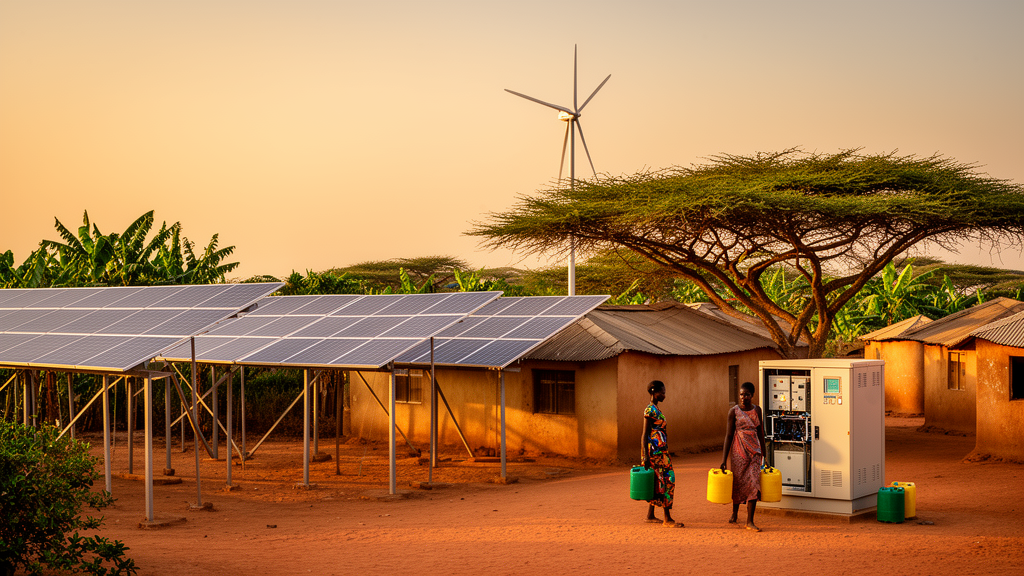
Image Credits: AI Generated

DOI: 10.1007/s43621-026-04916-w

Keywords: Nigeria, climate pressure, green innovation, renewable energy, QARDL, ecological footprint, quantile regression, causality testing, sustainable development, Quantifying, heterogeneous, impacts

Cite Scienmag News

Sloane Callahan. (October 20, 2026). Nigeria study finds stronger associations between green innovation, renewable power and lower climate pressure. Scienmag. https://scienmag.com/nigeria-study-finds-stronger-associations-between-green-innovation-renewable-power-and-lower-climate-pressure/


Sloane Callahan. "Nigeria study finds stronger associations between green innovation, renewable power and lower climate pressure." Scienmag, 20 October 2026, https://scienmag.com/nigeria-study-finds-stronger-associations-between-green-innovation-renewable-power-and-lower-climate-pressure/. Accessed 20 October 2026.

Sloane Callahan. "Nigeria study finds stronger associations between green innovation, renewable power and lower climate pressure." Scienmag. October 20, 2026. https://scienmag.com/nigeria-study-finds-stronger-associations-between-green-innovation-renewable-power-and-lower-climate-pressure/

Tags: causality testingclimate pressuredigital innovation and climate change Nigeriaecological footprintecological footprint analysis Nigeriaecological footprint Nigeriaenvironmental policy Nigeriagreen innovationgreen innovation impact Nigeriaheterogeneousimpactslong-term climate strategies NigeriaNigeriaNigeria climate pressure reductionQARDLquantifyingquantile autoregressive distributed lag Nigeriaquantile regressionRenewable Energyrenewable energy adoption Nigeriarenewable energy transition Nigeriarenewable power and climate mitigationSustainable Developmentsustainable development Nigeria
Share26Tweet16
Previous Post

Two-miRNA serum signature discriminates invasive ductal breast carcinoma in case-control cohorts

Next Post

Cross-sectional survey identifies disaster-preparedness gaps among emergency nurses at two Peshawar hospitals

Related Posts

Farmers in Eastern Congo Sense a Shifting Climate — and the Data Partly Agrees
Earth Science

Survey finds gaps between farmers’ climate perceptions and South-Kivu rainfall trends

October 20, 2026
Plastic Bottles Turned Hydrogen Sponges: Recipe Tweaks Reshape PET-Derived MOFs
Earth Science

Laboratory study examines how synthesis and activation conditions affect PET-derived MIL-53(Al)

October 20, 2026
Satellites and Smart Maps Reveal Where Water Hides Beneath Northern Uganda
Earth Science

Mapping groundwater potential zones using GIS, remote sensing and analytical hierarchy process (AHP) in Pader and Kitgum Districts, Uganda

October 20, 2026
Jujube Seed Waste Transformed Into High-Performance Epoxy Composites
Earth Science

Laboratory study finds strength and wear trade-offs in jujube-seed epoxy composites

October 20, 2026
Sugarcane Molasses Holds the Key to Cheaper Ethanol, Review Finds
Earth Science

Review identifies fermentation variables and optimization priorities for sugarcane-molasses ethanol

October 20, 2026
Machine Learning Meets Econometrics to Map Europe’s Path to Sustainable Development
Earth Science

An intersection of machine learning and advanced econometric techniques to analyse sustainable development in Europe through resource efficiency, institutional quality, and ICT

October 20, 2026
Next Post
Emergency Nurses in Peshawar Show Gaps in Disaster Training, Study Finds

Cross-sectional survey identifies disaster-preparedness gaps among emergency nurses at two Peshawar hospitals

  • Mothers who receive childcare support from maternal grandparents show more optimized

    Mothers who receive childcare support from maternal grandparents show more parental warmth, finds NTU Singapore study

    27656 shares
    Share 11059 Tweet 6912
  • University of Seville Breaks 120-Year-Old Mystery, Revises a Key Einstein Concept

    1061 shares
    Share 424 Tweet 265
  • Bee body mass, pathogens and local climate influence heat tolerance

    682 shares
    Share 273 Tweet 171
  • Researchers record first-ever images and data of a shark experiencing a boat strike

    546 shares
    Share 218 Tweet 137
  • Groundbreaking Clinical Trial Reveals Lubiprostone Enhances Kidney Function

    531 shares
    Share 212 Tweet 133
Science

Embark on a thrilling journey of discovery with Scienmag.com—your ultimate source for cutting-edge breakthroughs. Immerse yourself in a world where curiosity knows no limits and tomorrow’s possibilities become today’s reality!

RECENT NEWS

  • Fine mapping refines chromosome 3 QTL associated with heat tolerance in maize tassels
  • MiR-323b-5p regulates the development of childhood asthma by targeting the RNF24 gene
  • Cross-sectional survey identifies disaster-preparedness gaps among emergency nurses at two Peshawar hospitals
  • Nigeria study finds stronger associations between green innovation, renewable power and lower climate pressure

Categories

  • Agriculture
  • Anthropology
  • Archaeology
  • Athmospheric
  • Biology
  • Biotechnology
  • Blog
  • Bussines
  • Cancer
  • Chemistry
  • Climate
  • Earth Science
  • Editorial Policy
  • Marine
  • Mathematics
  • Medicine
  • Pediatry
  • Policy
  • Psychology & Psychiatry
  • Science Education
  • Science News
  • Social Science
  • Space
  • Technology and Engineering

Subscribe to Blog via Email

Enter your email address to subscribe to this blog and receive notifications of new posts by email.

Join 5,150 other subscribers

© 2025 Scienmag - Science Magazine

Welcome Back!

Login to your account below

Forgotten Password?

Retrieve your password

Please enter your username or email address to reset your password.

Log In
No Result
View All Result
  • HOME
  • SCIENCE NEWS
  • CONTACT US

© 2025 Scienmag - Science Magazine

Discover more from Science

Subscribe now to keep reading and get access to the full archive.

Continue reading