

Tuesday, October 20, 2026
Science
No Result
View All Result
  • Login
  • HOME
  • SCIENCE NEWS
  • CONTACT US
  • HOME
  • SCIENCE NEWS
  • CONTACT US
No Result
View All Result
Scienmag
No Result
View All Result
Home Science News Marine

Fish study links aged PLA microplastics to blood-cell changes

October 20, 2026
in Marine
Violet Maxwell
By Violet Maxwell Scienmag Editorial Profile - Natural Hazards
Reading Time: 3 mins read
0
Fish study links aged PLA microplastics to blood-cell changes

Fish study links aged PLA microplastics to blood-cell changes

65
SHARES
587
VIEWS
Share on FacebookShare on Twitter
ADVERTISEMENT

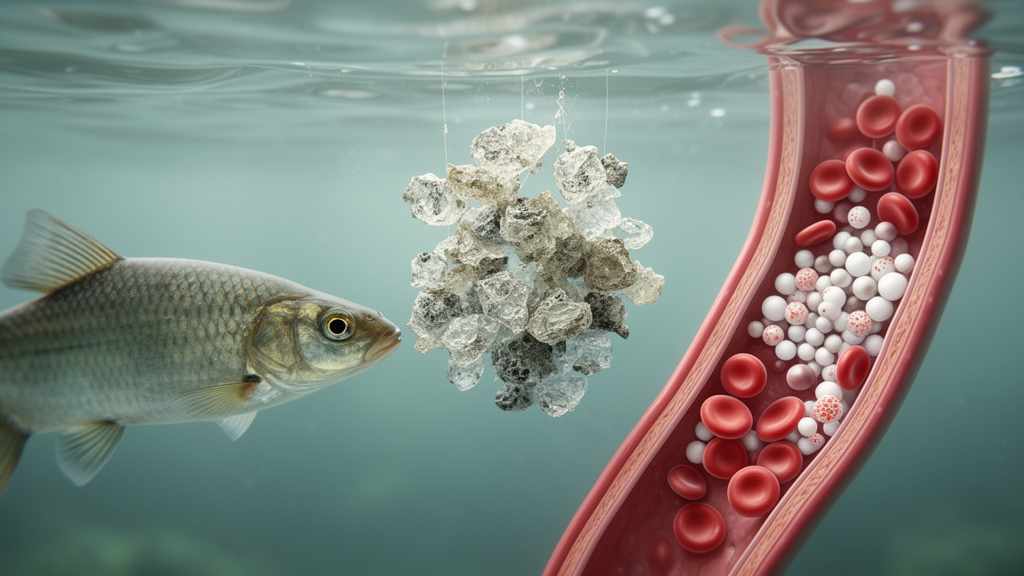
An experiment in rainbow trout found that exposure to biodegradable polylactic acid, or PLA, microplastics was associated with changes in the balance and activity of several blood-cell populations, including cells involved in immune defense. Fish exposed to particles aged under simulated sunlight showed more noticeable changes in red-blood-cell shape and distinct shifts in immune-related activity than fish exposed to newly prepared particles, according to researchers Difei Tong and Wen-Xiong Wang. The peer-reviewed findings were published in Environmental Chemistry and Ecotoxicology and indicate that the biological response to a biodegradable plastic may vary with the condition of its particles after environmental exposure.

The study examined blood as a potential indicator of responses to microplastics. Blood contains different cell populations and travels throughout the body, allowing the researchers to assess changes across immune-related cells as well as red blood cells rather than examining only one internal organ. To make tiny PLA particles visible under a microscope, Tong and Wang used fluorescent labels, then examined how the particles interacted with blood cells.

For a more detailed view of the responses of individual cell populations, the researchers used single-cell RNA sequencing to characterize gene activity in blood cells. This analysis revealed changes in the balance and activity of several types of blood cells following PLA microplastic exposure, particularly among cells associated with immune defense. The researchers also reported evidence suggesting that exposure could affect how blood cells communicate with one another.

These observations were experimental associations in rainbow trout; the release did not establish that PLA particles caused a specific disease mechanism, and the results do not show that comparable effects occur in humans or across all biodegradable plastics. Environmental aging was central to the findings. The researchers prepared aged PLA particles by exposing the material to simulated sunlight before conducting the blood-cell comparisons.

Samples from fish exposed to these aged particles showed more pronounced changes in red-blood-cell shape, together with distinct differences in immune-related activity. Because the cellular responses differed between aged and newly prepared particles, evaluating PLA only in its original condition may not fully represent its behavior after environmental alteration. The results do not establish that sunlight aging always increases the hazards of biodegradable plastics; instead, they show that the particle condition changed the cellular responses observed under the conditions tested.

Tong and Wang said the work could encourage broader use of blood-based approaches for investigating environmental pollutants. Because different blood-cell populations respond to stress, examining them may provide a wider view of an organism’s response to microplastics and help researchers identify potential hazards. The authors also said the results underline the need to consider how biodegradable materials change as they age rather than treating biodegradability alone as assurance of safety.

The evidence remains limited to the experimental species, PLA formulation, exposure conditions and analytical methods used in this study, so the findings do not provide a general measure of risk to people or a universal ranking of biodegradable plastics. The authors declared that they had no known competing financial interests or personal relationships that could have influenced the work.

Subject of Research: Experimental blood-cell responses in rainbow trout exposed to biodegradable PLA microplastics

Article Title: Scientists uncover hidden risks of biodegradable plastics through fish blood

Article References: Scientists uncover hidden risks of biodegradable plastics through fish blood. Original publication (Bibliographic details unavailable.)

Image Credits: AI Generated

DOI: Not provided

Keywords: PLA microplastics, rainbow trout, blood cells, single-cell RNA sequencing, immune response, environmental aging, microplastics, ecotoxicology, cellular stress, Scientists, uncover, hidden

Cite Scienmag News

Violet Maxwell. (October 20, 2026). Fish study links aged PLA microplastics to blood-cell changes. Scienmag. https://scienmag.com/fish-study-links-aged-pla-microplastics-to-blood-cell-changes/

Violet Maxwell. "Fish study links aged PLA microplastics to blood-cell changes." Scienmag, 20 October 2026, https://scienmag.com/fish-study-links-aged-pla-microplastics-to-blood-cell-changes/. Accessed 20 October 2026.

Violet Maxwell. "Fish study links aged PLA microplastics to blood-cell changes." Scienmag. October 20, 2026. https://scienmag.com/fish-study-links-aged-pla-microplastics-to-blood-cell-changes/


Tags: biodegradable PLA microplastics impact on immune cellsblood cellsblood-cell changes due to aged versus fresh microplasticscellular stressecotoxicologyenvironmental agingenvironmental aging of microplastics and biological responseenvironmental implicationsfluorescent labeling of microplastics for microscopy analysishiddenImmune responseimmune system alterations from microplastic exposuremicroplastic pollution effects on fish blood cellsmicroplasticsPLA microplasticsrainbow troutrainbow trout as model for microplastic exposurered blood cell morphology changes from microplasticsscientistsSingle-Cell RNA Sequencingsingle-cell RNA sequencing in ecotoxicology studiesuncoveruse of blood as indicator for microplastic toxicity
Share26Tweet16
Previous Post

Research report: Molecular representation of benzene and phenol secondary organic aerosols

Next Post

Whey protein-cellulose nanofiber emulsion improves capsaicin bioaccessibility in laboratory study

Related Posts

Seasonal cycle in surface seawater isotopic composition
Marine

Seasonal cycle in surface seawater isotopic composition

October 20, 2026
Review identifies northern Australia as a green sawfish stronghold
Marine

Review identifies northern Australia as a green sawfish stronghold

October 20, 2026
Open-source R package streamlines spatial ocean data mapping
Marine

Open-source R package streamlines spatial ocean data mapping

October 19, 2026
Juvenile Striped Bass Hold Steady at Average Abundance in Virginia Waters for 2026
Marine

Juvenile Striped Bass Hold Steady at Average Abundance in Virginia Waters for 2026

October 19, 2026
From Courtrooms to Prevention: Rethinking the Human Right to Water
Marine

From Courtrooms to Prevention: Rethinking the Human Right to Water

October 19, 2026
Electrochemical Water Separation Study Calls for a New Way to Measure Ion Selectivity
Marine

Electrochemical Water Separation Study Calls for a New Way to Measure Ion Selectivity

October 19, 2026
Next Post
Whey protein-cellulose nanofiber emulsion improves capsaicin bioaccessibility in laboratory study

Whey protein-cellulose nanofiber emulsion improves capsaicin bioaccessibility in laboratory study

  • Mothers who receive childcare support from maternal grandparents show more optimized

    Mothers who receive childcare support from maternal grandparents show more parental warmth, finds NTU Singapore study

    27656 shares
    Share 11059 Tweet 6912
  • University of Seville Breaks 120-Year-Old Mystery, Revises a Key Einstein Concept

    1061 shares
    Share 424 Tweet 265
  • Bee body mass, pathogens and local climate influence heat tolerance

    682 shares
    Share 273 Tweet 171
  • Researchers record first-ever images and data of a shark experiencing a boat strike

    546 shares
    Share 218 Tweet 137
  • Groundbreaking Clinical Trial Reveals Lubiprostone Enhances Kidney Function

    531 shares
    Share 212 Tweet 133
Science

Embark on a thrilling journey of discovery with Scienmag.com—your ultimate source for cutting-edge breakthroughs. Immerse yourself in a world where curiosity knows no limits and tomorrow’s possibilities become today’s reality!

RECENT NEWS

  • Whey protein-cellulose nanofiber emulsion improves capsaicin bioaccessibility in laboratory study
  • Fish study links aged PLA microplastics to blood-cell changes
  • Research report: Molecular representation of benzene and phenol secondary organic aerosols
  • Blended telehealth course raises health students’ confidence and acceptance

Categories

  • Agriculture
  • Anthropology
  • Archaeology
  • Athmospheric
  • Biology
  • Biotechnology
  • Blog
  • Bussines
  • Cancer
  • Chemistry
  • Climate
  • Earth Science
  • Editorial Policy
  • Marine
  • Mathematics
  • Medicine
  • Pediatry
  • Policy
  • Psychology & Psychiatry
  • Science Education
  • Science News
  • Social Science
  • Space
  • Technology and Engineering

Subscribe to Blog via Email

Enter your email address to subscribe to this blog and receive notifications of new posts by email.

Join 5,150 other subscribers

© 2025 Scienmag - Science Magazine

Welcome Back!

Login to your account below

Forgotten Password?

Retrieve your password

Please enter your username or email address to reset your password.

Log In
No Result
View All Result
  • HOME
  • SCIENCE NEWS
  • CONTACT US

© 2025 Scienmag - Science Magazine

Discover more from Science

Subscribe now to keep reading and get access to the full archive.

Continue reading