


Biological remediation can degrade polychlorinated biphenyls, or PCBs, in contaminated soil, but a review concludes that promising laboratory results remain difficult to translate into effective field-scale treatment. The analysis identifies limited bioavailability, strong dependence on site conditions and scalability problems as central constraints, while finding growing support for combining biological and mild physicochemical approaches. The review synthesizes peer-reviewed original research published between 1993 and 2026.
Its scope covers four biological pathways: phytotechnologies, microbial degradation under aerobic and anaerobic conditions, fungal-mediated biotransformation and algal phycoremediation. PCBs remain difficult contaminants because they are hydrophobic, chemically stable and resistant to biological degradation. Their long-standing production ban has therefore not eliminated the environmental and technical challenge of treating contaminated soils.
Reliance on published studies may also introduce bias, particularly because journals often favor positive results. The review therefore distinguishes promising biological performance under controlled conditions from demonstrated effectiveness in operational field settings. Plant–microbe interactions receive particular emphasis in the analysis.
The authors also examine the emerging role of multiomics approaches, including metagenomics and transcriptomics, in elucidating degradation mechanisms and optimizing remediation performance. Growing evidence suggests that biological methods may work better when integrated with mild physicochemical techniques such as electrokinetic biostimulation and nano-enabled bioremediation. The review reports that these combinations can enhance PCB bioavailability and degradation efficiency.
It does not establish that one combined strategy will be equally effective across sites; instead, it calls for system-level, site-specific treatment frameworks. Closing the gap between laboratory success and field-scale implementation remains the central challenge identified by the authors.
Subject of Research: Biological remediation of polychlorinated biphenyl-contaminated soils
Article Title: Biological PCB remediation in soils requires integrated and site-specific strategies for effective field-scale application
Article References: Asghari, Z., Zarezadeh, S., Ghotbi-Ravandi, A. A., & Sedighi, M. (2026). Biological PCB remediation in soils requires integrated and site-specific strategies for effective field-scale application. Discover Sustainability. https://doi.org/10.1007/s43621-026-04770-w
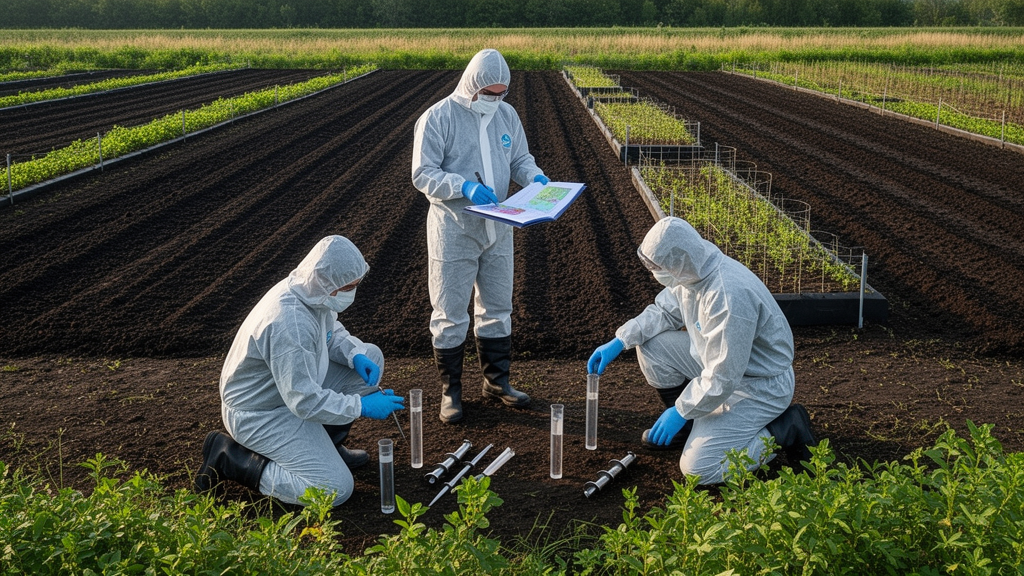
Image Credits: AI Generated
DOI: 10.1007/s43621-026-04770-w
Keywords: PCBs, soil contamination, biological remediation, bioremediation, bioavailability, phytoremediation, microbial degradation, electrokinetics, multiomics, field-scale treatment, Biological, remediation
Cite Scienmag News
Savannah Blake. (October 20, 2026). Review maps limits of biological PCB soil remediation at field scale. Scienmag. https://scienmag.com/review-maps-limits-of-biological-pcb-soil-remediation-at-field-scale/
Savannah Blake. "Review maps limits of biological PCB soil remediation at field scale." Scienmag, 20 October 2026, https://scienmag.com/review-maps-limits-of-biological-pcb-soil-remediation-at-field-scale/. Accessed 20 October 2026.
Savannah Blake. "Review maps limits of biological PCB soil remediation at field scale." Scienmag. October 20, 2026. https://scienmag.com/review-maps-limits-of-biological-pcb-soil-remediation-at-field-scale/


