

Tuesday, October 20, 2026
Science
No Result
View All Result
  • Login
  • HOME
  • SCIENCE NEWS
  • CONTACT US
  • HOME
  • SCIENCE NEWS
  • CONTACT US
No Result
View All Result
Scienmag
No Result
View All Result
Home Science News Technology and Engineering

Review links critical inclusions to fatigue in high-strength steels

October 20, 2026
in Technology and Engineering
Denise Maddox
By Denise Maddox Scienmag Editorial Profile - Mechanical Engineering
Reading Time: 2 mins read
0
Review links critical inclusions to fatigue in high-strength steels

Review links critical inclusions to fatigue in high-strength steels

65
SHARES
587
VIEWS
Share on FacebookShare on Twitter
ADVERTISEMENT

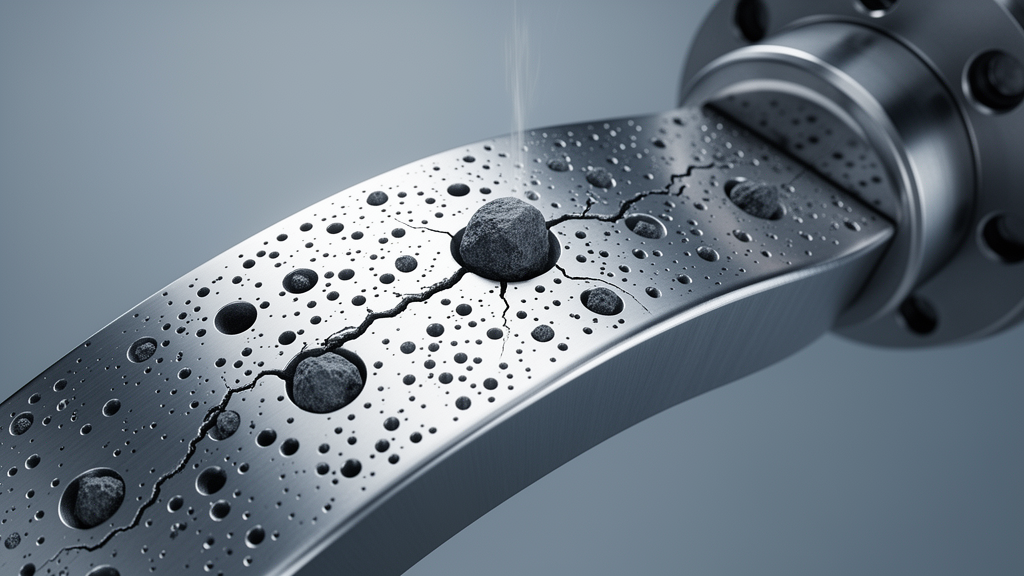
A review of inclusion-controlled fatigue concludes that the fatigue limit of high-strength steels is often governed by the maximum dangerous defect or another high-risk defect within a highly stressed volume, rather than by average cleanliness. The findings explain why nominal strength alone cannot fully characterize fatigue performance: inclusions form a statistical population that varies in size, spatial distribution and type, and their potential to initiate fatigue failure depends on more than their average abundance.

Extreme-value statistics provides the framework for examining this problem. Rather than characterizing inclusions only through average size or average cleanliness, the statistical approach focuses on the upper tail of the defect population and the occurrence of unusually harmful features. This matters because a single large or otherwise high-risk inclusion may control fatigue behavior even when the overall inclusion population appears relatively clean. The review identifies three-dimensional statistical characterization of inclusions and classification-based evaluation of critical defects as important directions for future research.

The review also finds that a defect’s harmfulness is determined by several interacting characteristics. Relevant factors include inclusion type, morphological sharpness, interfacial bonding state and local stress concentration. Size remains important, but it does not provide a complete description of danger. A material with fewer inclusions may not necessarily outperform one with more inclusions if the defects differ in type, shape or bonding conditions. The available evidence therefore supports assessing dangerous defects as classified, three-dimensional features rather than reducing risk to a single average cleanliness measure.

Strength, toughness and fatigue resistance must be considered together. Increasing strength can improve the load-bearing capacity of the steel matrix, but excessive strengthening can increase sensitivity to defects. Toughness, by contrast, can improve defect tolerance through crack-tip plastic dissipation, crack deflection and crack closure. The review therefore proposes a shift from strength-dominated fatigue design toward coordinated consideration of strength, toughness and defect tolerance, supported by multifactorial fatigue-life models and damage-tolerant design methods. These conclusions are a synthesis of the reviewed evidence rather than results from a new experimental or clinical study, and the review identifies the need for further work on critical-defect evaluation, coupled life models and engineering design methods.

Subject of Research: Inclusion-controlled fatigue in high-strength steels

Article Title: Inclusion-controlled fatigue in high-strength steels: extreme value statistics to the interplay among strength, toughness and fatigue

Article References: Li, M., Cui, B., Wei, G., Xiu, W., & Sarman, A. M. (2026). Inclusion-controlled fatigue in high-strength steels: extreme value statistics to the interplay among strength, toughness and fatigue. Journal of Materials Science, 61(41), 31472-31500. https://doi.org/10.1007/s10853-026-13600-3

Image Credits: AI Generated

DOI: 10.1007/s10853-026-13600-3

Keywords: high-strength steels, fatigue failure, non-metallic inclusions, extreme-value statistics, steel cleanliness, toughness, defect tolerance, fatigue life, Inclusion-controlled, fatigue, high-strength, steels

Cite Scienmag News

Denise Maddox. (October 20, 2026). Review links critical inclusions to fatigue in high-strength steels. Scienmag. https://scienmag.com/review-links-critical-inclusions-to-fatigue-in-high-strength-steels/

Denise Maddox. "Review links critical inclusions to fatigue in high-strength steels." Scienmag, 20 October 2026, https://scienmag.com/review-links-critical-inclusions-to-fatigue-in-high-strength-steels/. Accessed 20 October 2026.

Denise Maddox. "Review links critical inclusions to fatigue in high-strength steels." Scienmag. October 20, 2026. https://scienmag.com/review-links-critical-inclusions-to-fatigue-in-high-strength-steels/


Tags: critical defect identificationdefect size and distributiondefect toleranceextreme value statisticsextreme-value statistics in materials sciencefatiguefatigue failurefatigue failure initiationfatigue lifefatigue limitfuture research in steel fatigue analysishigh strengthhigh-risk inclusionshigh-strength steelsinclusion morphology and bondingInclusion-controlledInclusion-controlled fatigue in high-strength steelsnon-metallic inclusionsstatistical modeling of inclusionssteel cleanlinesssteelsstress concentration effectsthree-dimensional inclusion characterizationtoughness
Share26Tweet16
Previous Post

Resveratrol pretreatment accompanies fewer DBDPE-associated changes in female mice

Next Post

Pine-associated fungi yield three new genera and nine species

Related Posts

Research report: KAIST develops AI that reconstructs cloud-covered ground in satellite images with photo-like clarity
Technology and Engineering

Research report: KAIST develops AI that reconstructs cloud-covered ground in satellite images with photo-like clarity

October 20, 2026
Captive ducks break species barriers with surprising hybrids
Biology

Captive ducks break species barriers with surprising hybrids

October 20, 2026
Hot-Working Window Identified for Crack-Prone Al-20Sc Alloy
Technology and Engineering

Hot-Working Window Identified for Crack-Prone Al-20Sc Alloy

October 20, 2026
IKKε deficiency reduces osteoarthritis pain and synovitis in mice
Technology and Engineering

IKKε deficiency reduces osteoarthritis pain and synovitis in mice

October 20, 2026
Video-analysis study finds hybrid computer vision tracks soccer offside positions
Technology and Engineering

Video-analysis study finds hybrid computer vision tracks soccer offside positions

October 20, 2026
NiCoP nanoflower sensor simultaneously detects three chemical analytes
Technology and Engineering

NiCoP nanoflower sensor simultaneously detects three chemical analytes

October 20, 2026
Next Post
Pine-associated fungi yield three new genera and nine species

Pine-associated fungi yield three new genera and nine species

  • Mothers who receive childcare support from maternal grandparents show more optimized

    Mothers who receive childcare support from maternal grandparents show more parental warmth, finds NTU Singapore study

    27656 shares
    Share 11059 Tweet 6912
  • University of Seville Breaks 120-Year-Old Mystery, Revises a Key Einstein Concept

    1061 shares
    Share 424 Tweet 265
  • Bee body mass, pathogens and local climate influence heat tolerance

    682 shares
    Share 273 Tweet 171
  • Researchers record first-ever images and data of a shark experiencing a boat strike

    546 shares
    Share 218 Tweet 137
  • Groundbreaking Clinical Trial Reveals Lubiprostone Enhances Kidney Function

    531 shares
    Share 212 Tweet 133
Science

Embark on a thrilling journey of discovery with Scienmag.com—your ultimate source for cutting-edge breakthroughs. Immerse yourself in a world where curiosity knows no limits and tomorrow’s possibilities become today’s reality!

RECENT NEWS

  • Karyotype and COI sequence of Chironomus heteropilicornis from Gydan Peninsula
  • Study on soil quality in different functional zones of Sofia region
  • Pine-associated fungi yield three new genera and nine species
  • Review links critical inclusions to fatigue in high-strength steels

Categories

  • Agriculture
  • Anthropology
  • Archaeology
  • Athmospheric
  • Biology
  • Biotechnology
  • Blog
  • Bussines
  • Cancer
  • Chemistry
  • Climate
  • Earth Science
  • Editorial Policy
  • Marine
  • Mathematics
  • Medicine
  • Pediatry
  • Policy
  • Psychology & Psychiatry
  • Science Education
  • Science News
  • Social Science
  • Space
  • Technology and Engineering

Subscribe to Blog via Email

Enter your email address to subscribe to this blog and receive notifications of new posts by email.

Join 5,149 other subscribers

© 2025 Scienmag - Science Magazine

Welcome Back!

Login to your account below

Forgotten Password?

Retrieve your password

Please enter your username or email address to reset your password.

Log In
No Result
View All Result
  • HOME
  • SCIENCE NEWS
  • CONTACT US

© 2025 Scienmag - Science Magazine

Discover more from Science

Subscribe now to keep reading and get access to the full archive.

Continue reading