


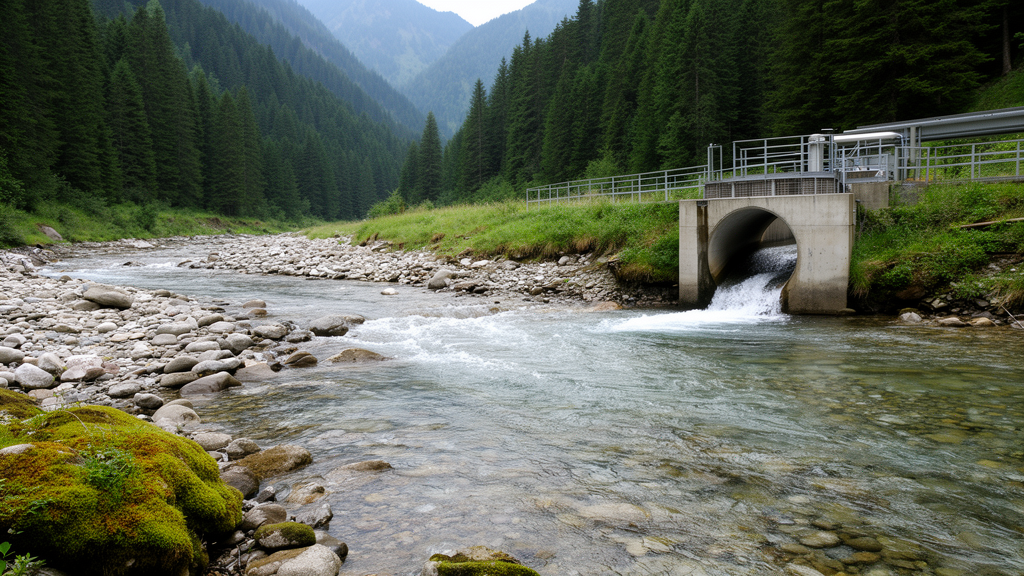
High in the mountains south of Sofia, the Iskar River quietly performs one of Bulgaria’s most consequential jobs: feeding the reservoir that supplies more than 70 percent of the capital’s drinking water. But a new study reveals that even treated wastewater is leaving a distinct chemical and microbial signature on this strategically vital waterway, raising fresh questions about how well the river can keep absorbing the pressures of urban life before that capacity runs out.
Researchers assessed the environmental impact of the discharge from the Samokov Wastewater Treatment Plant, which releases up to 44,100 cubic meters of treated effluent per day into a 10-kilometer stretch of the upper Iskar. The plant handles mixed municipal, industrial and storm wastewater from the town of Samokov using a denitrification-nitrification scheme, yet the team found that its outfall still measurably alters the river’s chemistry, microbial communities and sediment dynamics in ways that standard monitoring programs may be missing.
The study, published in BioRisk, combined chemical analyses, microbiological counts, fluorescent imaging of bacterial activity and macroinvertebrate surveys across four sampling sites positioned above, at, and below the discharge point. Two sampling campaigns in November 2020 and March 2021 captured contrasting seasonal conditions, revealing how the river’s response to effluent shifts with flow, temperature and surrounding land use.
At the discharge site, the chemical fingerprint of urban wastewater was unmistakable. Nitrate concentrations spiked nearly 20-fold compared to the upstream reference site in November and eight-fold in March. Ammonium jumped more than 15-fold during the autumn campaign, and phosphate levels at the outfall reached 0.750 milligrams per liter in March, exceeding Bulgarian regulatory thresholds. Water temperature at the outfall was consistently higher than upstream, conductivity rose, and dissolved oxygen dropped below recommended norms for high ecological status during both seasons.
Yet the picture is not simply one of degradation. The river’s self-purification capacity, driven largely by microbial communities in the sediment, appears to absorb much of the impact within a short distance downstream. By the next sampling site at Dragushinovo village, many parameters had begun to normalize, and the ecological status of the entire river sector was assessed as “good” based on macrozoobenthos indicators, with a biotic index score of 4 at both surveyed sites.
The microbial story is more nuanced. Using a combination of CTC and DAPI fluorescent staining, the researchers distinguished metabolically active bacteria from total bacterial counts in sediment samples. They found that the fraction of live, active cells was roughly three percent at the discharge site in both seasons, compared to less than one percent upstream. Mean fluorescence intensity, a proxy for cellular metabolic activity, was up to 2.3 times higher at the site just below the plant, suggesting that the sediment microbiome downstream remains in a state of heightened biological processing long after the effluent enters the river.
Sediments also act as reservoirs for coliform bacteria, with counts reaching 3,000 to 11,000 colony-forming units per gram in the discharge zone. The researchers warn that this makes the riverbed a potential “natural depot” for opportunistic and pathogenic microorganisms, a dimension that conventional water-column monitoring entirely overlooks. Including sediment analysis in routine monitoring could therefore provide an early warning of accumulating microbial risks that might otherwise go undetected until they surface in downstream water quality.
The study also flagged seasonal spikes in heavy metals. Mercury, a priority pollutant under EU legislation, peaked at 1.42 micrograms per liter at the site below the plant in November, while copper reached 44 micrograms per liter at the outfall. These concentrations, along with elevated zinc, chromium and arsenic levels linked to post-summer anthropogenic activity, pose potential toxic risks that compound the nutrient loading from the treatment plant and surrounding agriculture.
Perhaps most striking is the finding that the current ecological status and water quality have deteriorated compared to earlier studies in the same sub-catchment. The cumulative pressure from the treatment plant, intensive agriculture, livestock breeding and untreated sewage from small villages is creating a background load that self-purification may not indefinitely absorb. Given the Iskar Reservoir’s role as Sofia’s primary drinking water source, the researchers argue that existing monitoring programs must be extended with more detailed assessment of sediment microbial communities, seasonal metal dynamics and the long-term environmental impact of wastewater discharge before the river’s buffering capacity is pushed past its limits.
The concept of self-purification that underpins the study’s findings is one of the oldest ideas in freshwater science, yet it remains difficult to quantify in regulatory terms. When nutrient-rich effluent enters a river, a cascade of physical, chemical and biological processes begins: dilution, settling of particulates, microbial degradation of organic matter, and uptake of nitrogen and phosphorus by periphyton and macrophytes. The upper Iskar’s pebble and sand substratum provides substantial surface area for these biofilms, which explains why the river can partially recover within a few kilometers of the outfall. However, self-purification is not a limitless buffer; it depends on flow regime, temperature, oxygen availability and the structural integrity of the riverbed, all of which can be disrupted by channel modification, water abstraction or climate-driven changes in seasonal discharge.
The choice of macrozoobenthos as the biological quality element reflects the requirements of the European Water Framework Directive, which structures water management across the European Union around the goal of achieving good ecological status for all surface water bodies. Benthic invertebrates are favored indicators because they integrate environmental conditions over weeks and months, respond predictably to organic pollution, and occupy a central position in river food webs. Metrics such as the biotic index assign tolerance scores to families of organisms, with pollution-sensitive taxa like mayflies and stoneflies absent from degraded reaches while tolerant groups persist. A score of 4, recorded in the study sector, sits within the band classified as good for semi-mountain river types, but the local deterioration observed immediately below the outfall illustrates how a reach can mask localized stress when assessed at the broader water-body scale.
The fluorescent techniques employed in the study deserve particular attention because they address a long-standing weakness of conventional microbiology. Standard cultivation methods detect only a small fraction of environmental bacteria, since many viable cells enter dormant or viable-but-not-culturable states that do not form colonies on agar plates. By contrast, CTC staining identifies cells with active electron transport chains, effectively flagging those that are respiring and metabolizing, while DAPI stains all cells with intact DNA regardless of activity. The combination allowed the researchers to show that the proportion of active cells, not merely total abundance, shifted in response to the effluent plume. This distinction matters because metabolically active sediment communities drive the biogeochemical transformations that constitute the biotic half of self-purification, including nitrification, denitrification and the breakdown of organic carbon.
The seasonal dimension of the findings aligns with the hydrological character of the river. The upper Iskar experiences pronounced spring high flows of 15 to 25 cubic meters per second, contrasted with summer and winter low flows of only 1 to 3 cubic meters per second. The sampling campaigns, conducted at moderate autumn and spring flows of 5 to 8 cubic meters per second, captured intermediate conditions. During low-flow periods, the same effluent volume represents a far larger share of total river discharge, so dilution capacity shrinks and concentrations of nutrients, organic matter and micropollutants rise correspondingly. This hydraulic sensitivity means that a discharge which appears tolerable in March may impose substantially greater stress in August, a timing mismatch that annual or infrequent monitoring schedules can easily miss.
The analytical rigor of the chemical measurements also strengthens the study’s conclusions. Trace element determination by inductively coupled plasma mass spectrometry offers detection limits low enough to resolve environmentally relevant concentrations of metals such as mercury, which is regulated as a priority hazardous substance under EU environmental quality standards because of its persistence, bioaccumulation potential and neurotoxicity. Validation against certified reference materials from Norway and Canada confirmed the accuracy of the measurements, an essential step when concentrations in the microgram-per-liter range carry regulatory significance. Comparisons against Bulgarian regulations for surface water characterization and for waters intended for drinking-water abstraction provided a national legal benchmark alongside the EU framework.
The downstream implications extend beyond the study reach. Iskar Reservoir, the largest in Bulgaria, functions as the terminal sink for material transported from the upper catchment, and reservoirs are particularly efficient at trapping sediments, phosphorus and associated contaminants. Chronic inputs from the river can therefore accumulate in the reservoir’s sediments over years, where they may fuel internal nutrient loading, alter algal dynamics and complicate drinking-water treatment. Elevated microbial loads arriving from upstream likewise increase the disinfection burden faced by water treatment operators, making catchment management a direct component of public health protection for the capital.
More broadly, the study contributes to a growing body of evidence that wastewater treatment plants, despite their essential role, function as continuous point sources of residual pollution rather than as barriers to it. Effluents consistently carry worse quality than receiving waters, and emerging concerns such as pharmaceutical residues, microplastics and antimicrobial resistance genes are not addressed by conventional nutrient-removal schemes. Integrating sediment microbiology, seasonal trace-element monitoring and sensitive biological indicators into routine surveillance, as the researchers propose, would bring assessment practice closer to the actual complexity of pollution and recovery dynamics in rivers that serve simultaneously as recipients of waste and sources of drinking water.
Subject of Research: Environmental impact assessment of discharge of treated wastewater effluent in Upper Iskar sub-catchment
Article Title: Environmental impact assessment of discharge of treated wastewater effluent in Upper Iskar sub-catchment
Article References: Yordanova, V., Todorova, Y., Belouhova, M., Kenderov, L., Lyubomirova, V., & Topalova, Y. (2022). Environmental impact assessment of discharge of treated wastewater effluent in Upper Iskar sub-catchment. BioRisk, 17, 59-71. https://doi.org/10.3897/biorisk.17.77381
Image Credits: AI Generated
Keywords: water quality, microbiology, environmental monitoring, Bulgaria, wastewater treatment, Environmental, impact, assessment, discharge, treated, wastewater, effluent
Cite Scienmag News
Morgan Morrow. (October 19, 2026). Treated wastewater leaves a measurable microbial fingerprint in Bulgaria’s Upper Iskar River. Scienmag. https://scienmag.com/treated-wastewater-leaves-a-measurable-microbial-fingerprint-in-bulgarias-upper-iskar-river/
Morgan Morrow. "Treated wastewater leaves a measurable microbial fingerprint in Bulgaria’s Upper Iskar River." Scienmag, 19 October 2026, https://scienmag.com/treated-wastewater-leaves-a-measurable-microbial-fingerprint-in-bulgarias-upper-iskar-river/. Accessed 19 October 2026.
Morgan Morrow. "Treated wastewater leaves a measurable microbial fingerprint in Bulgaria’s Upper Iskar River." Scienmag. October 19, 2026. https://scienmag.com/treated-wastewater-leaves-a-measurable-microbial-fingerprint-in-bulgarias-upper-iskar-river/


