


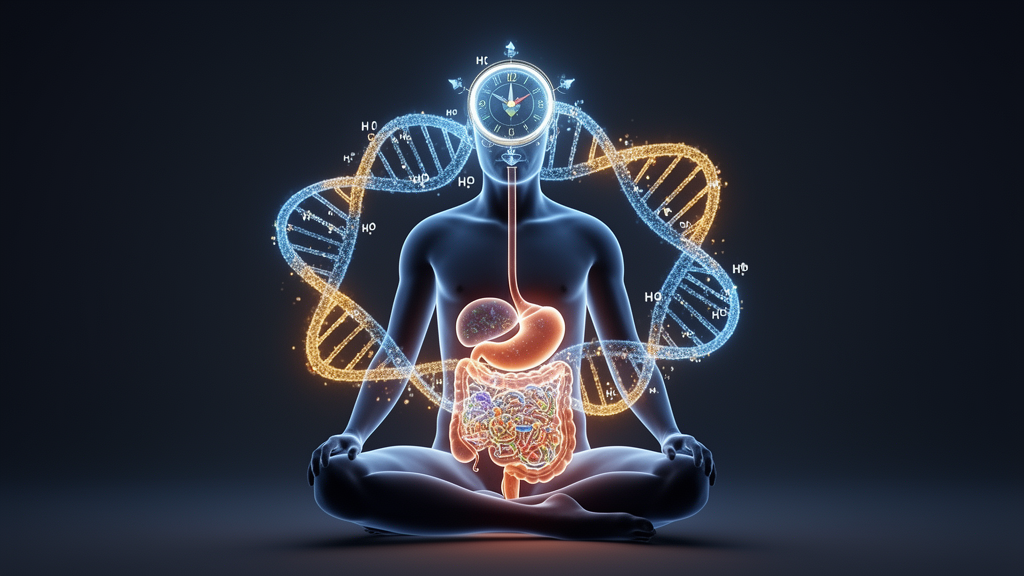
Major depressive disorder has long been framed as a disorder of mood, but a growing body of research suggests it may be better understood as a condition that reverberates across the entire body, from the trillions of microbes in the gut to the chemical tags that switch genes on and off. A new pilot study published in BMC Psychiatry has now brought three of these threads together in a single analysis, reporting preliminary evidence that disrupted sleep timing, altered gut microbial communities, and widespread changes in DNA methylation travel together in people experiencing a first depressive episode.
The research team, led by investigators affiliated with West China Hospital of Sichuan University, recruited 49 patients with first-episode, drug-naïve major depressive disorder and 35 healthy controls. Restricting the comparison to people who had never received antidepressant medication was a deliberate methodological choice, because drugs such as selective serotonin reuptake inhibitors are known to alter both gut microbial composition and epigenetic marks. By studying participants before any pharmacological intervention, the researchers aimed to capture biological signals more closely tied to the illness itself rather than to its treatment.
To quantify circadian disruption, the team used the Munich Chronotype Questionnaire, a validated self-report instrument that characterizes individual differences in sleep timing. Two derived metrics anchored the analysis: corrected mid-sleep time on free days, which estimates a person’s internal sleep phase once the constraints of workdays are removed, and social jetlag, which measures the mismatch between that internal timing and the schedule imposed by social obligations. Social jetlag has attracted increasing attention in chronobiology because it captures a form of chronic circadian misalignment that is common in modern life and has been linked to metabolic and mood disturbances in prior research.
The microbial arm of the study relied on shotgun metagenomic sequencing of fecal samples, a technique that reads the collective genomes of gut bacteria directly rather than profiling only a marker gene. This approach allows researchers to characterize microbial communities at higher resolution than targeted amplicon sequencing. Meanwhile, the epigenetic arm used reduced-representation bisulfite sequencing on peripheral blood DNA, a method that enriches for regions dense in CpG sites, the cytosine-guanine sequences where methylation changes most often influence gene regulation. Bisulfite treatment converts unmethylated cytosines into uracil, allowing methylation status at individual sites to be read out across the genome.
The first major finding concerned community structure rather than richness. Alpha diversity, which measures the number and evenness of microbial species within a single individual, was comparable between patients and controls. Beta diversity, by contrast, which quantifies differences in community composition between individuals, revealed significantly distinct gut microbial communities in the depressed group. In practical terms, patients did not necessarily carry fewer microbial species, but the identity and relative abundance of those species differed in ways that separated them from healthy participants.
To make sense of the high-dimensional microbial data, the researchers applied weighted gene co-expression network analysis, a computational framework originally developed for genomics that groups correlated features into modules and tests whether module-level behavior tracks clinical variables. When applied to the metagenomic profiles, this approach detected microbial modules whose abundance patterns were significantly correlated with the circadian parameters, suggesting that the relationship between sleep timing and gut ecology is not scattered across individual taxa but organized into coherent community-level signatures.
The methylation analysis yielded an even larger signal. Reduced-representation bisulfite sequencing identified 9,749 differentially methylated genes in the depression group, and gene ontology and KEGG pathway analyses showed that these genes were enriched in neural-related pathways, including processes tied to neurodevelopment and synaptic function. The authors are careful to frame this appropriately: peripheral blood methylation does not directly mirror methylation in brain tissue, and the enrichment patterns provide hypothesis-generating evidence for systemic associations rather than proof that the observed epigenetic changes reflect what is happening in the central nervous system.
The most striking result emerged when the three data layers were integrated. Correlation analyses linking the microbial modules, the circadian metrics, and the methylation data identified nine key metagenomic operational taxonomic units that were simultaneously associated with circadian rhythm measures and with the methylation rates of 898 differentially methylated genes related to neurodevelopment and synaptic function. This tripartite overlap is what elevates the study beyond parallel descriptions of three altered systems. It proposes a specific, testable network in which sleep timing, particular gut microbes, and the epigenetic regulation of neural genes are interconnected in depression.
Several biological mechanisms could plausibly underlie such a network. Gut microbes produce and modulate short-chain fatty acids, metabolites that influence both host metabolism and epigenetic machinery, since butyrate in particular is known to inhibit histone deacetylases and thereby affect chromatin state. Circadian disruption can alter gut microbial rhythms through feeding time and stress hormone fluctuations, and the hypothalamic-pituitary-adrenal axis provides a well-documented channel through which circadian and microbial signals can influence systemic physiology, including immune and epigenetic processes. The study was not designed to test these mechanisms directly, but the observed correlations are consistent with such frameworks.
The authors and the data itself are explicit about the study’s limits. It is a cross-sectional pilot with a modest sample size, meaning it captures associations at a single point in time and cannot establish whether circadian disruption drives microbial change, whether microbial metabolites shape methylation, whether methylation influences mood symptoms, or whether all three reflect a shared upstream cause. The findings are best read as a preliminary multi-omic network hypothesis, a map of candidate relationships that now invites longitudinal follow-up, mechanistic experiments in model systems, and replication in larger and more diverse cohorts. If the network holds up, it could point toward interventions that target sleep timing and gut ecology as complementary levers in depression care.
Subject of Research: Multi-omics associations among circadian rhythm disruption, gut microbiota, and DNA methylation in major depressive disorder
Article Title: Associations between circadian rhythm disruption, specific gut microbiota, and DNA methylation in major depressive disorder: a pilot study
Article References: Fan, H., Wang, Y., Guan, X., Yuan, Y., Xie, Q., & Dong, Z. (2026). Associations between circadian rhythm disruption, specific gut microbiota, and DNA methylation in major depressive disorder: a pilot study. BMC Psychiatry. https://doi.org/10.1186/s12888-026-08619-4
Image Credits: AI Generated
DOI: 10.1186/s12888-026-08619-4
Keywords: major depressive disorder, circadian rhythm, gut microbiota, DNA methylation, social jetlag, shotgun metagenomics, reduced-representation bisulfite sequencing, WGCNA, multi-omics, epigenetics, psychiatry, neurodevelopment
Cite Scienmag News
Glenn Wilkins. (October 19, 2026). Body Clock, Gut Microbes and DNA Methylation Converge in Depression Study. Scienmag. https://scienmag.com/body-clock-gut-microbes-and-dna-methylation-converge-in-depression-study/
Glenn Wilkins. "Body Clock, Gut Microbes and DNA Methylation Converge in Depression Study." Scienmag, 19 October 2026, https://scienmag.com/body-clock-gut-microbes-and-dna-methylation-converge-in-depression-study/. Accessed 19 October 2026.
Glenn Wilkins. "Body Clock, Gut Microbes and DNA Methylation Converge in Depression Study." Scienmag. October 19, 2026. https://scienmag.com/body-clock-gut-microbes-and-dna-methylation-converge-in-depression-study/


