


When Professor Hans Peter Schultze penned the founding editorial of a small geoscientific journal published by the Museum für Naturkunde in Berlin on 19 November 1998, he expressed a simple but ambitious hope: ‘I wish for the journal a good start and a successful commencement, with high recognition from the scientific community.’ A quarter of a century later, that wish has been fulfilled in ways few could have predicted. The journal, renamed in 2006 as ‘Fossil Record, an International Journal of Palaeontology’, has grown from a modest institutional publication into a modern, internationally recognised outlet that now sits within the top quartile of palaeontological journals worldwide. Its 25th anniversary, celebrated in 2023, has been marked with a special issue devoted to one of the most dramatic chapters in the history of life: the transition from fish to tetrapods and the conquest of land by vertebrates.
The road to this milestone was far from smooth. The early editors, Professor Gloria Arratia and Dr Dieter Korn, imposed exacting standards on article quality and impact at a time when the journal was still struggling to establish itself, and their persistence ultimately carried ‘Fossil Record’ into the Science Citation Index Expanded in 2014. The journal has maintained a tradition of publishing exclusively in English, releasing two volumes every year and subjecting every submission to the scrutiny of at least two international reviewers. More recently, it has embraced a fully open access model, a transformation supported by the museum’s Coordination Office for Scientific Publishing, which acts as a key driver of the institution’s Open Access strategy. The museum itself, through its Directorate General, has generously covered the author page charges, ensuring that financial barriers do not prevent researchers from sharing their findings with the global scientific community.
The choice of topic for the anniversary volume is no accident. The fish-to-tetrapod transition has a long and illustrious tradition at the Museum für Naturkunde, stretching back to Walter Gross (1903–1974), the eminent palaeoichthyologist and histologist who discovered and first described the Devonian tetrapod-like fish Panderichthys rhombolepis. The holotype of this pivotal species, a creature perched on the evolutionary branch leading from lobe-finned fishes toward the first four-legged land animals, is still kept at the museum. Hans-Peter Schultze and his working group continued Gross’s work and expanded its scope, publishing important new findings on Elpistostege, a relative of Panderichthys that sits even closer to tetrapods on the tree of life, and investigating the phylogenetic status of tetrapods as a monophyletic group as well as the environmental conditions that accompanied the transition from water to land.
That institutional tradition also owes much to a remarkable series of visiting researchers. Michel Laurin worked at the museum from 1997 to 1998, and Rainer Schoch from 2001 to 2002, both of whom went on to become distinguished figures in early tetrapod research. Today the baton is carried by the research groups led by Nadia Fröbisch and Florian Witzmann, whose primary focus is on temnospondyl amphibians, an extraordinarily successful and long-lived group of ancient amphibians that flourished for well over 100 million years. The special issue that emerges from this lineage is both a celebration of a journal and a showcase of how a single research institution can shape a field across generations.
Why does vertebrate terrestrialization continue to fascinate scientists and the public alike? Following the conquest of land, vertebrates evolved a remarkable diversity of body proportions and a wide array of feeding, locomotory and sensory adaptations, laying the foundations for every terrestrial ecosystem that exists today. Early tetrapods illuminate the rise of those ecosystems and reveal the deep roots of much of modern terrestrial vertebrate diversity, from amphibians and reptiles to birds and mammals. And because the emergence of four-limbed, air-breathing animals from aquatic ancestors is one of the major evolutionary transitions in the history of animal life, every new discovery in this field is, in a very real sense, a discovery about our own remote ancestry. It is this combination of scientific depth and visceral human relevance that makes early tetrapod research so compelling.
The special volume opens with a welcoming address by Professor Johannes Vogel, Director General of the Museum für Naturkunde, followed by a personal account from Hans-Peter Schultze of the journal’s founding in 1998 and the considerable difficulties it faced in its early years. The scientific core consists of eight original research articles written by 18 international authors, ranging from established leaders to young researchers at the start of their careers. Together, the papers span the palaeoecology of the fish-tetrapod transition, the morphology and phylogeny of stem tetrapods, the evolutionary history of temnospondyls, the convergent simplification of the tetrapod skull, and the biomechanics of skull construction in semi-aquatic and fully terrestrial tetrapods.
The first research article tackles a question that has long divided the field: where did tetrapods actually originate? By analogy with modern amphibians, most researchers had assumed that early tetrapods lived in freshwater environments, had evolved from fish-like ancestors there, and were unable to tolerate brackish or marine conditions. Michel Laurin challenges this orthodoxy. Building on a vast compendium of data and a sweeping literature survey, and expanding on his earlier 2010 study with Rodrigo Soler-Gijón, Laurin follows multiple independent lines of evidence to show that many early tetrapods were euryhaline, meaning they could tolerate a wide range of salinities, and lived in brackish waters or even fully marine settings. His striking conclusion is that tetrapods originated in marine environments, overturning a century of assumptions drawn from the biology of today’s frogs and salamanders.
The second article addresses one of palaeontology’s most notorious mysteries: Romer’s Gap. The first body fossils of limbed stem-tetrapods appear in the Late Devonian, yet during the first 15 million years of the subsequent Carboniferous Period, the Tournaisian and parts of the Viséan, tetrapod remains are exceedingly rare worldwide, a puzzling hiatus that gives the interval its name. In recent years, new finds from Scotland and Canada have begun to close this gap, and Tim Smithson and Marcello Ruta, together with the late Jenny Clack, redescribe one of these newly discovered Tournaisian tetrapods, Ossirarus kierani from Scotland. The animal displays a striking mosaic of primitive and derived characters, and the authors’ phylogenetic analyses strengthen the hypothesis that the morphological and taxonomic diversity of early tetrapods in the lowermost Carboniferous was far greater than previously assumed.
Several papers in the volume probe the astonishing experimentalism of early tetrapod evolution. Kim Kean, Marylène Danto, Celeste Pérez-Ben and Nadia Fröbisch survey the multiple groups of tetrapods that independently reduced and lost skull roof bones, attaining a simpler cranial architecture than that of tetrapodomorph fishes and various Devonian and later Palaeozoic relatives. Intriguingly, the loss of individual bones proved highly variable and could not be correlated with any particular lifestyle or body size, suggesting complex morphogenetic patterns that remain poorly understood. Ralf Werneburg and Florian Witzmann then turn to the eryopids, a diverse group of Permo-Carboniferous temnospondyls that had shifted from a strictly aquatic existence to a more amphibious mode of life. Their detailed redescription of three enigmatic Middle Permian taxa from Russia, Clamorosaurus borealis, C. nocturnus and Syndyodosuchus, combined with a comprehensive phylogenetic analysis, finds no support for the earlier view that these Russian eryopids were terrestrial, and instead argues that a semi-aquatic lifestyle is more probable.
The remaining contributions extend this story across the Triassic world and into the mechanics of the skull itself. Raphael Moreno, Sanjukta Chakravorti, Samuel Cooper and Rainer Schoch document a surprisingly rich diversity of temnospondyls from the partially marine Grabfeld Formation of southwestern Germany, straddling the Ladinian-Carnian boundary, including the oldest known metoposaurid and evidence that many members of the group were euryhaline despite arid sabkha and playa conditions. Rainer Schoch, Florian Witzmann, Raphael Moreno, Ralf Werneburg and Eudald Mujal describe for the first time the ontogeny of the largest known temnospondyl, the giant capitosaurian Mastodonsaurus giganteus from the Middle Triassic of Germany, using skulls ranging from just 12–15 millimetres to a colossal 1200 millimetres; unlike Palaeozoic forms, which had salamander-like larval phases, Mastodonsaurus attained its adult morphology early in development, revealing a major shift in developmental mode. Pummy Roy, Sanjukta Chakravorti and Dhurjati Prasad Sengupta newly document the anatomy of the giant Indian capitosaur Cherninia denwai, an apex predator from the Middle Triassic Denwa Formation, including postcranial bones described for the first time. Finally, Ingmar Werneburg offers a new biomechanical hypothesis for the evolution of cranial openings such as temporal fenestrae and palatal vacuities, showing that their formation or closure correlates tightly with bite force exerted by the jaw adductors, with the presence of cranial weapons such as horns and frills, and even with stresses induced by the neck musculature. Together, these studies honour a quarter century of ‘Fossil Record’ while charting the future of research into the greatest migration in vertebrate history.
Subject of Research: The 25th anniversary of the journal Fossil Record and a special issue on the fish-to-tetrapod transition and early tetrapod evolution
Article Title: Editorial: 25 years of ‘Fossil Record, an International Journal of Palaeontology’
Article References: Witzmann, F., Ruta, M., Fröbisch, N., Paß, S., & Herrmann, E. (2024). Editorial: 25 years of ‘Fossil Record, an International Journal of Palaeontology’. Fossil Record, 27(3), 291-293. https://doi.org/10.3897/fr.27.143987
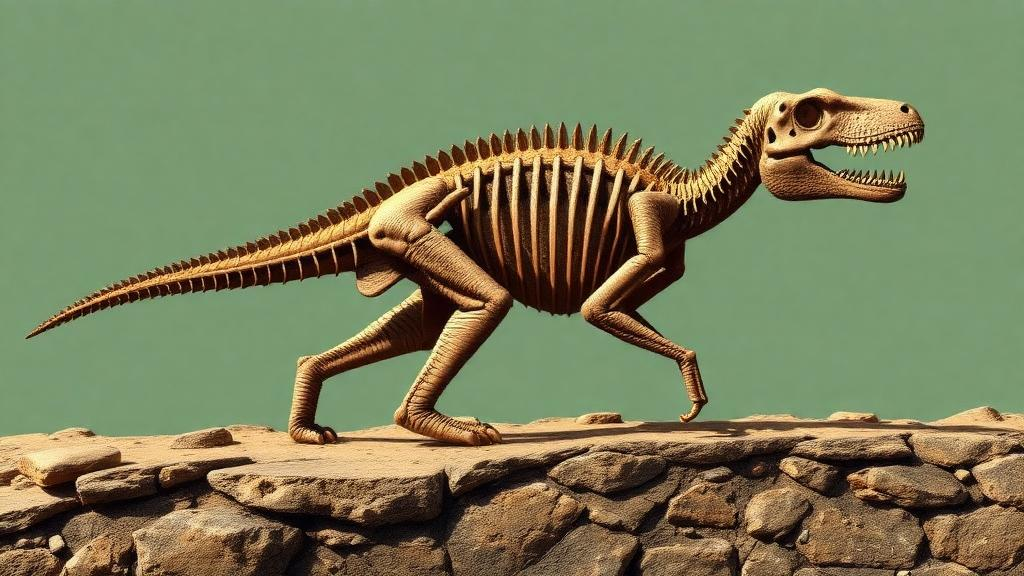
Image Credits: AI Generated
DOI: 10.3897/fr.27.143987
Keywords: Fossil Record, palaeontology, tetrapods, fish-to-tetrapod transition, temnospondyls, Museum für Naturkunde, Romer's Gap, Devonian, Carboniferous, Triassic, skull biomechanics, open access
Cite Scienmag News
Gavin Prescott. (October 19, 2026). Twenty-Five Years of Fossil Record: A Quarter Century of Palaeontological Publishing and the Story of How Vertebrates Walked Onto Land. Scienmag. https://scienmag.com/twenty-five-years-of-fossil-record-a-quarter-century-of-palaeontological-publishing-and-the-story-of-how-vertebrates-walked-onto-land/
Gavin Prescott. "Twenty-Five Years of Fossil Record: A Quarter Century of Palaeontological Publishing and the Story of How Vertebrates Walked Onto Land." Scienmag, 19 October 2026, https://scienmag.com/twenty-five-years-of-fossil-record-a-quarter-century-of-palaeontological-publishing-and-the-story-of-how-vertebrates-walked-onto-land/. Accessed 19 October 2026.
Gavin Prescott. "Twenty-Five Years of Fossil Record: A Quarter Century of Palaeontological Publishing and the Story of How Vertebrates Walked Onto Land." Scienmag. October 19, 2026. https://scienmag.com/twenty-five-years-of-fossil-record-a-quarter-century-of-palaeontological-publishing-and-the-story-of-how-vertebrates-walked-onto-land/


