


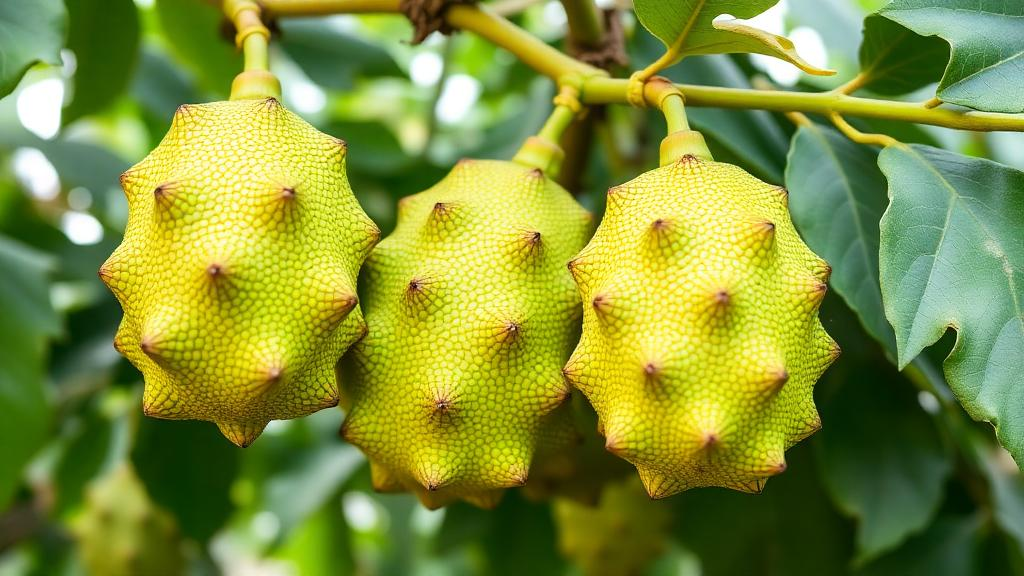
Jackfruit, the largest tree-borne fruit on Earth, is quietly emerging as one of the most climate-resilient crops of the tropics. A new open-access study published in BMC Plant Biology by researchers at the University of Horticultural Sciences in Karnataka, India, has now mapped the hidden diversity within this giant fruit with unprecedented statistical rigor, evaluating thirty jackfruit genotypes across twenty-four morphological and biochemical traits. The results identify genetically promising candidates — including Nagachandra, Palur-1 and Pechiparai — that could anchor future breeding programs aimed at high-yielding, nutritionally superior cultivars.
The research team, led by Meghana Kanihalli Gurumurthy and corresponding author Sreekanth Halli Subrayagowda from the Department of Fruit Science, College of Horticulture, Bengaluru, set out to address a long-standing gap. Although Artocarpus heterophyllus Lam. possesses extensive genetic variability, systematic evaluation of its morpho-biochemical traits using multivariate analysis has remained limited, particularly for identifying genotypes that carry the greatest promise for future breeding. The thirty genotypes were assessed for variability, trait correlations and genetic divergence, providing a quantitative foundation for selection that the fruit has largely lacked.
The scale of variation the team documented is striking. Fruit weight ranged from 1.28 kilograms to 18.08 kilograms — a more than fourteen-fold difference between the lightest and heaviest genotypes. Yield per tree spanned from 37.12 kilograms to an extraordinary 1459.35 kilograms, meaning the most productive genotype in the trial out-yielded the least productive by nearly forty times. For a tree crop, such phenotypic spread represents raw material that breeders can exploit: the wider the range, the greater the opportunity to select for extreme, superior performance.
Technically, the strength of selection potential is captured by coefficients of variation, which measure how much a trait varies relative to its mean. The highest values were recorded for fruit core weight at 27.22, bulb thickness at 25.94, seed weight at 20.09, yield at 19.44, fruit rind weight at 18.55 and fruit weight at 18.42. High coefficients of variation in these traits indicate strong selection potential — breeders can expect meaningful gains from selection because the population contains genotypes that differ substantially from the average. Most traits also showed positive skewness and leptokurtic distributions, a statistical signature indicating that a few superior genotypes sit in the upper tail of the distribution, while a handful of traits displayed near-normal distribution.
Pearson correlation analysis revealed the architecture of trait relationships across the collection. The team identified 66 significant positive correlations and only 6 negative ones, with particularly strong associations among fruit size and yield traits. Fruit weight correlated strongly with rind weight, fruit length and fruit diameter, with correlation coefficients of at least 0.75 at a significance level of p ≤ 0.001. In practical breeding terms, this coherence is valuable: it suggests that selecting for larger fruit dimensions will tend to pull yield-related traits along with it, allowing breeders to improve multiple characteristics simultaneously through corresponding traits useful for selection.
Principal component analysis then compressed the twenty-four traits into a smaller number of independent axes of variation. The first two components together explained 46.90 percent of the total variation. PC1, accounting for 31.20 percent, was dominated by fruit size and yield parameters, while PC2, explaining 15.70 percent, was dominated by biochemical attributes such as the fruit’s nutritional and chemical composition. This separation is informative: it shows that size-and-yield performance and biochemical quality vary along partly independent axes, meaning a genotype can excel in one dimension without necessarily excelling in the other — and that breeders must track both when selecting parents.
Heatmap-based hierarchical clustering added a third layer of analysis, grouping the thirty genotypes into two major clusters and clearly separating highly divergent genotypes such as BSK, BSC-1 and BSC-2. Divergence matters because crossing genetically distant parents tends to produce progeny with greater variability and heterosis, the phenomenon in which offspring outperform both parents. The identification of these outlier genotypes gives breeders a ready-made shortlist of divergent parents for planned crosses, rather than relying on chance pairings.
The study’s headline candidates are the genotypes associated with superior fruit size and yield: Nagachandra, Palur-1 and Pechiparai. These genotypes combine the heavy fruit weights and high per-tree yields documented in the trial, positioning them as elite material for developing high-yielding cultivars. In a complementary niche, Thailand Pink and Vietnam Early were linked to enhanced biochemical traits, suggesting they carry superior nutritional or chemical composition. The contrast between the two groups reinforces the PCA finding that yield and biochemical quality occupy partly independent axes of variation — and that combining them will require deliberate crossing of genotypes from both categories.
Why does this matter beyond the breeding plot? Jackfruit is a climate-resilient tropical fruit tree with extensive nutritional and economic value. As rising temperatures and erratic rainfall stress conventional fruit crops across South and Southeast Asia, jackfruit’s tolerance and productivity make it an increasingly strategic crop for food security. Systematic identification of superior genotypes — and of the divergent genotypes needed to create new genetic combinations — directly supports the development of cultivars that are both high-yielding and nutritionally superior, the study’s authors conclude.
The team notes that the integration of morpho-biochemical characterization with multivariate analyses revealed significant diversity among the thirty genotypes and identified genetically promising candidates for future breeding and multi-location evaluation. Strong positive correlations among key traits and the presence of highly divergent genotypes together highlight the potential for developing improved jackfruit cultivars. The next step, the researchers indicate, is multi-location evaluation — testing the elite candidates across diverse sites to confirm that their superior performance holds beyond a single environment, the final gate before promising genotypes become the jackfruit cultivars of tomorrow.
Subject of Research: Morpho-biochemical diversity and multivariate analysis identify promising jackfruit genotypes
Article Title: Detection of promising jackfruit genotypes through morpho-biochemical diversity and multivariate analysis
Article References: Gurumurthy, M. K., Subrayagowda, S. H., K., S. G. S., Gouda, S. J., Siddeshi, A. D., & Sha, A. (2026). Detection of promising jackfruit genotypes through morpho-biochemical diversity and multivariate analysis. BMC Plant Biology. https://doi.org/10.1186/s12870-026-09957-x
Image Credits: AI Generated
DOI: 10.1186/s12870-026-09957-x
Keywords: jackfruit, Artocarpus heterophyllus, plant breeding, genetic diversity, multivariate analysis, PCA, BMC Plant Biology, Detection, promising, genotypes, morpho-biochemical, diversity
Cite Scienmag News
Alan Morgan. (October 19, 2026). Multivariate analysis uncovers promising jackfruit genotypes for future breeding. Scienmag. https://scienmag.com/multivariate-analysis-uncovers-promising-jackfruit-genotypes-for-future-breeding/
Alan Morgan. "Multivariate analysis uncovers promising jackfruit genotypes for future breeding." Scienmag, 19 October 2026, https://scienmag.com/multivariate-analysis-uncovers-promising-jackfruit-genotypes-for-future-breeding/. Accessed 19 October 2026.
Alan Morgan. "Multivariate analysis uncovers promising jackfruit genotypes for future breeding." Scienmag. October 19, 2026. https://scienmag.com/multivariate-analysis-uncovers-promising-jackfruit-genotypes-for-future-breeding/


