


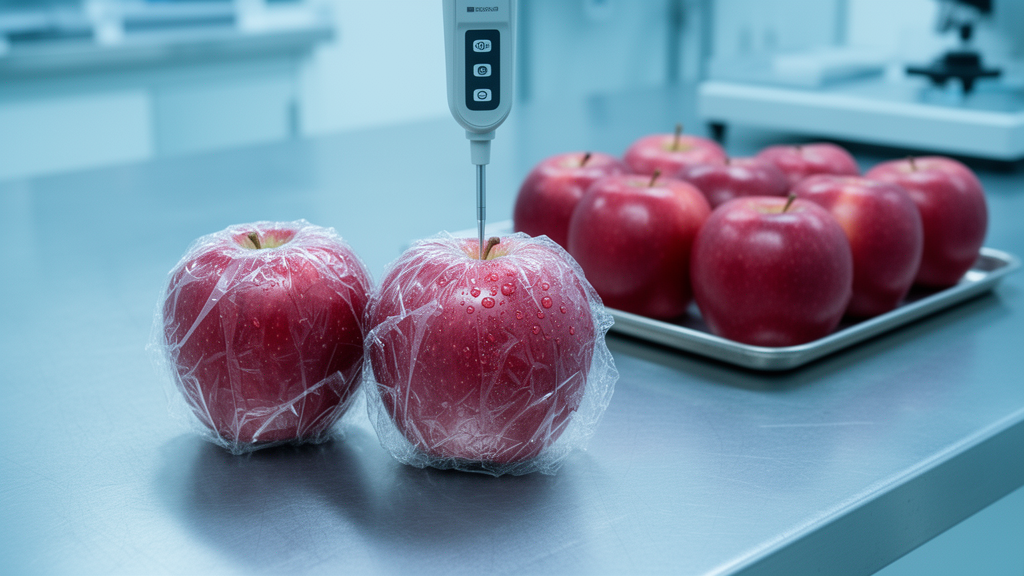
Apples that have spent months in cold storage face a critical vulnerability when they enter the commercial distribution chain. Although modern logistics systems strive for consistency, temperature fluctuations during loading, transportation, and retail remain difficult to eliminate. These dynamic thermal stresses accelerate fruit senescence, browning, and texture degradation, significantly reducing the commercial value of the produce. Recent research published in Food Chemistry: X investigates how these fluctuations impact the quality of Venus Golden apples and whether advanced nano-packaging technologies can mitigate the damage. The study reveals that while nano-packaging offers substantial benefits under stable conditions, its protective efficacy is significantly compromised when exposed to repeated temperature changes.
The research team, led by Xiaodong Zheng and colleagues, focused on Venus Golden apples due to their high commercial value and susceptibility to quality deterioration. The apples were harvested at commercial maturity and subjected to three months of cold storage at 0 degrees Celsius to simulate the pre-distribution phase. Following this storage period, the fruits were packaged in various materials, including a nano-packaging film (NPF) and a nano-coating fluid (NCF), before undergoing a 35-day simulated distribution cycle. This cycle included periods of constant low temperature, constant ambient temperature, and fluctuating temperatures between 10 and 20 degrees Celsius, mimicking the unpredictable conditions of real-world logistics.
Under constant temperature conditions, the nano-packaging film demonstrated superior preservation capabilities compared to conventional polyethylene packaging and unpackaged controls. The NPF-treated apples maintained higher levels of hardness, crispness, and color lightness throughout the distribution period. Specifically, on day 35, the hardness of NPF-packaged apples decreased by only 12.7 percent, whereas the unpackaged controls experienced a decline of 25.3 percent. This protective effect was attributed to the film’s ability to regulate the internal gas composition and reduce water loss, thereby delaying chlorophyll degradation and cell wall breakdown. The nano-coating fluid also showed positive effects, particularly in maintaining total soluble solids, suggesting that both nano-based technologies can effectively extend shelf life when environmental conditions are stable.
However, the introduction of dynamic temperature fluctuations altered the metabolic landscape of the apples significantly. When the NPF-packaged apples were exposed to a 24-hour cycle oscillating between 10 and 20 degrees Celsius, the rate of quality deterioration accelerated markedly. The fluctuations caused a more rapid decrease in fruit lightness and a pronounced increase in yellowing compared to apples stored at a constant 20 degrees Celsius. Texture parameters, particularly hardness, were highly sensitive to these changes, with significant declines observed as early as day 14. Although the nano-packaging initially delayed texture deterioration compared to unpackaged fruit under the same fluctuating conditions, the protective effect weakened over time. By day 28, the texture parameters of the nano-packaged and unpackaged apples became similar, indicating that the packaging could no longer fully counteract the stress-induced softening.
Metabolomic analysis provided deeper insights into the physiological mechanisms driving this deterioration. Untargeted metabolomics identified 159 metabolites, with 35 key differential metabolites linked to carbon and nitrogen metabolism, osmotic regulation, and stress responses. Under constant low temperatures, the NPF treatment helped maintain the relative abundance of stress-responsive metabolites such as myo-inositol, gamma-aminobutyric acid (GABA), and arginine. These compounds play crucial roles in cellular homeostasis, membrane stability, and antioxidant defense. The preservation of these metabolites suggests that nano-packaging enhances fruit tolerance to distribution-related stress by strengthening osmoregulation and reducing oxidative damage. This metabolic stability is closely associated with the maintained quality attributes observed in the physical tests.
In contrast, dynamic temperature fluctuations disrupted this metabolic balance. The study found that fluctuating temperatures accelerated the consumption of primary metabolites, including sugars and organic acids, which serve as essential carbon sources for postharvest respiration. Fructose and glucose levels dropped significantly under fluctuating conditions, while malic acid, the predominant organic acid in apples, showed a pronounced decline. This rapid depletion of respiratory substrates is closely linked to tissue senescence and cellular energy imbalance. Furthermore, the fluctuations induced a rise and fall pattern in sugar alcohols such as dulcitol and lactitol, indicating a shift in osmoregulatory mechanisms and cell wall polysaccharide degradation. These metabolic changes reflect a reprogramming of the fruit’s internal environment in response to the periodic thermal stress.
The antioxidant enzyme system was also significantly perturbed by temperature fluctuations. Polyphenol oxidase (PPO) and peroxidase (POD) activities increased sharply under fluctuating conditions, reaching levels significantly higher than those observed at constant low temperatures. Elevated PPO and POD activities are indicative of intensified phenolic oxidation and oxidative damage, which contribute to browning and tissue degradation. Conversely, catalase (CAT) activity, a key enzyme responsible for scavenging reactive oxygen species, showed a continuous decline. This imbalance between pro-oxidant and anti-oxidant enzymes exacerbated oxidative stress within the fruit, further accelerating quality deterioration. The nano-packaging, while effective under stable conditions, was unable to fully suppress this enzymatic imbalance when subjected to repeated temperature shifts.
Pathway enrichment analysis revealed that temperature fluctuations affected multiple core metabolic pathways, including alanine, aspartate, and glutamate metabolism, as well as arginine biosynthesis. These pathways are highly sensitive to environmental stress and are critical for maintaining cellular function and stress signaling. The disruption of these networks suggests that dynamic temperature fluctuations do not merely cause cumulative heat damage but actively interfere with the fruit’s ability to maintain metabolic homeostasis. The study identified nine candidate metabolic biomarkers, including L-glutamic acid, GABA, and D-sorbitol, that showed significant correlations with quality attributes such as hardness and color. These biomarkers may serve as potential indicators for monitoring quality deterioration in apples under cold-chain fluctuations, providing a molecular basis for assessing the efficacy of preservation technologies.
The findings highlight the limitations of current nano-packaging solutions in the face of real-world logistical challenges. While nano-packaging is a promising technology for extending shelf life, its performance is highly dependent on the stability of the surrounding environment. The study suggests that minimizing temperature fluctuations and maintaining a stable low temperature close to 10 degrees Celsius during commercial distribution is essential for preserving fruit quality. The periodic environmental stress induced by repeated shifts between low and high temperatures exceeds the capacity of nano-packaging to regulate the internal microenvironment, leading to a breakdown in metabolic homeostasis. This insight is crucial for the development of more robust packaging systems and improved cold-chain management strategies.
Future research should focus on validating the identified metabolic biomarkers through targeted quantification and independent sample sets. Additionally, comparative studies involving different nano-packaging systems are needed to assess the general applicability of these findings across various apple cultivars and commercial conditions. The current study used a standardized 24-hour fluctuation cycle, which may not fully replicate the complex and irregular temperature variations encountered in actual logistics. Nevertheless, the results provide valuable guidance for the commercial distribution of long-term cold-stored apples, emphasizing the need for integrated approaches that combine advanced packaging with precise temperature control to mitigate the risks of quality deterioration.
Subject of Research: Metabolic and quality responses of nano-packaged apples to temperature fluctuations
Article Title: Quality deterioration characteristics and metabolomic analysis of nano-packaged Venus Golden apples under dynamic temperature fluctuations
Article References: Zheng, X., Pan, S., Wang, Z., Guo, Q., Du, W., Fan, Y., Liu, X., Yan, X., Qin, L., & Song, Y. (2026). Quality deterioration characteristics and metabolomic analysis of nano-packaged Venus Golden apples under dynamic temperature fluctuations. Food Chemistry: X, 40, Article 104642. https://doi.org/10.1016/j.fochx.2026.104642
Image Credits: AI Generated
DOI: 10.1016/j.fochx.2026.104642
Keywords: nano-packaging, apple quality, metabolomics, cold chain, temperature fluctuation, postharvest physiology, food preservation, oxidative stress, Venus Golden apple, shelf life, Quality, deterioration
Cite Scienmag News
Bethany Barker. (October 18, 2026). Nano-Packaging Fails to Protect Apples from Temperature Swings. Scienmag. https://scienmag.com/nano-packaging-fails-to-protect-apples-from-temperature-swings/
Bethany Barker. "Nano-Packaging Fails to Protect Apples from Temperature Swings." Scienmag, 18 October 2026, https://scienmag.com/nano-packaging-fails-to-protect-apples-from-temperature-swings/. Accessed 18 October 2026.
Bethany Barker. "Nano-Packaging Fails to Protect Apples from Temperature Swings." Scienmag. October 18, 2026. https://scienmag.com/nano-packaging-fails-to-protect-apples-from-temperature-swings/


