


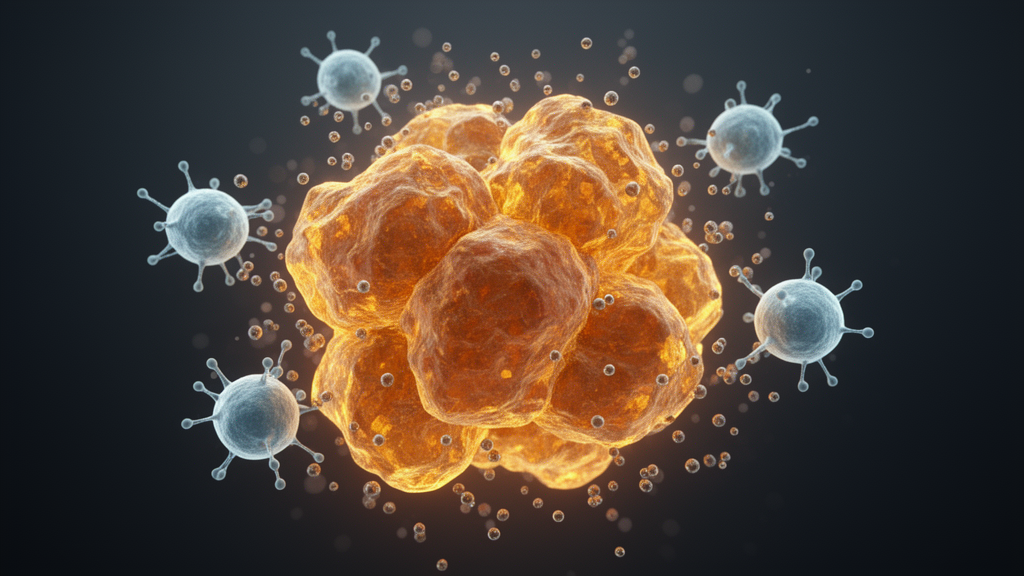
Scientists at The Wistar Institute have uncovered a surprising ally that one of the deadliest forms of prostate cancer recruits long before the tumor itself takes shape: the nervous system. In a study published in the journal Oncogene, researchers identified a neurotransmitter called neuromedin U, or NMU, as a pivotal molecular link between nerve signaling and the emergence of neuroendocrine prostate cancer, an aggressive disease subtype that has so far resisted nearly every therapeutic approach, including modern immunotherapy. The findings suggest that intercepting this nerve-derived signal could strip the cancer of its defenses and reopen the door to treatments that currently fail.
Prostate cancer, in its most common forms, is among the most survivable malignancies. The American Cancer Society reports a five-year survival rate of roughly 98 percent, a figure that reflects decades of progress in screening, surgery, radiation, and hormonal therapy. Yet neuroendocrine prostate cancer, often abbreviated NEPC, stands apart from that encouraging picture. It is a rare but lethal variant that tends to arise when conventional adenocarcinoma evolves under the pressure of long-term androgen deprivation therapy, transforming into a lineage that no longer depends on androgen signaling and no longer responds to the drugs built around that vulnerability.
What makes NEPC especially frustrating for oncologists is its immunological character. Researchers describe it as a cold tumor, a term that refers to cancers lacking the infiltrating T cells that immunotherapies rely upon. Checkpoint inhibitors and other immune-based treatments work by unleashing T cells already present within the tumor microenvironment, training them to recognize and destroy malignant cells. Without those cells, the drugs have nothing to activate. As Michela Perego, research assistant professor in the Altieri lab at The Wistar Institute and first author of the new study, explained, immunotherapy only works if immune cells are inside the tumor, and with NEPC there are no T cells to target. Understanding why those cells are absent became the central question driving the investigation.
To answer it, the team turned to a murine model and examined tissue at a remarkably early stage, before cancer had even developed. What they found was an excessive accumulation of neuromedin U in prostate cells at the very onset of NEPC formation. NMU is not an obscure molecule in human physiology. It is a neuropeptide that normally performs essential functions, helping to regulate blood pressure, modulate the stress response, and maintain hormonal balance. In healthy tissue it plays no pathological role. But in the emerging NEPC microenvironment, its overabundance takes on a destructive second job: it blocks the migration of T cells toward the prostate, effectively clearing the battlefield before the tumor ever arrives.
The mechanism the researchers traced is a study in biological subterfuge. NMU activates neutrophils, the abundant white blood cells best known as rapid first responders against infection. In this context, however, the activated neutrophils become agents of immunosuppression rather than defense. They suppress the T cells that would otherwise mount an immune response against emerging malignant cells. In effect, the tumor co-opts a component of the nervous system to recruit its own security detail, and it does so before the cancer has formally formed. Perego and colleagues describe these NMU-activated neutrophils as working for the cancer in its earliest phase, dismantling the immune surveillance that would normally eliminate abnormal cells.
The most consequential result of the study came when the researchers intervened in that communication line. In a simulated tumor microenvironment, they targeted NMU for destruction, blocking the signal between the neurotransmitter and the neutrophils it recruits. The effect was dramatic. With the NMU signal silenced, the immunosuppressive shield collapsed, T cells returned to the tumor site, anti-tumor immune activity was reinforced, and the cancer regained sensitivity to immunotherapy. In the language of modern oncology, the intervention converted a cold tumor into a hot one, the transformation that immunotherapists strive to achieve in cancers that have been impervious to checkpoint blockade.
Senior author Dario C. Altieri, president and chief executive officer of The Wistar Institute, director of the Ellen and Ronald Caplan Cancer Center, and Robert and Penny Fox Distinguished Professor, framed the discovery within a broader shift in cancer biology. Scientists have long known that tumors communicate with the immune system, a dialogue that has produced transformative therapies for malignancies once considered untreatable. The new study reveals that cancer also communicates with the nervous system, a dimension of tumor biology that Altieri suggests could open the door to new therapies for cancers that currently lack effective options. He described neuromedin U as a lynchpin, noting that the tumor uses it to build a shield of protective immune cells around itself, and that when the signal is removed, the shield comes down.
The therapeutic implications are significant precisely because the need is so acute. Neuroendocrine prostate cancer is considered virtually untreatable with current regimens, and patients who progress to this stage face a prognosis that has changed little despite advances elsewhere in oncology. If disrupting NMU signaling can restore immune infiltration in patients as it did in the experimental models, the approach could be combined with existing immunotherapies to create a treatment strategy for a disease that has proven nearly impossible to stop or slow down. Perego emphasized that blocking the overproduction of NMU could turn cold tumors hot and, when used together with immunotherapy, make these tumors new targets for treatment.
The research also adds to a rapidly growing body of evidence that the nervous system is not a passive bystander in cancer. Across tumor types, nerves have been shown to innervate the tumor microenvironment, releasing neurotransmitters and neuropeptides that influence cancer cell growth, metastasis, and immune evasion. The Wistar study is notable for tracing that influence to the earliest moments of tumor formation rather than to an established malignancy, and for identifying a specific, druggable signaling molecule as the conduit. That specificity matters, because NMU and its receptors are well-characterized targets in pharmacology, raising the possibility that existing or adapted compounds could be repurposed to interrupt the pathway in patients.
The study, published as Neuromedin U Innervation Reprograms Myeloid Immunosuppression in Neuroendocrine Prostate Cancer in Oncogene, was a collaborative effort involving investigators from The Wistar Institute, the Istituto Romagnolo per lo Studio dei Tumori Dino Amadori, AUSL Romagna, Drexel University College of Medicine, Christiana Care Health, Roswell Park Comprehensive Cancer Center, and Thomas Jefferson University. The work was supported by the National Institutes of Health and the Prostate Cancer Foundation. For a cancer with limited options, as Altieri noted, identifying a target that reopens the door to immunotherapy is a discovery the field will now work to understand more deeply, and one that may ultimately determine whether the most aggressive form of prostate cancer can finally be met with an effective response.
Subject of Research: The role of the neurotransmitter neuromedin U in neuroendocrine prostate cancer immune evasion
Article Title: Wistar scientists identify connection between nervous system and aggressive prostate cancer
Article References: Wistar scientists identify connection between nervous system and aggressive prostate cancer. (n.d.). Original publication
Image Credits: AI Generated
DOI: Not provided
Keywords: neuroendocrine prostate cancer, neuromedin U, immunotherapy, tumor microenvironment, neutrophils, T cells, The Wistar Institute, Oncogene, cancer neuroscience, cold tumors, neurotransmitters, myeloid suppression
Cite Scienmag News
Nathaniel Bowman. (October 18, 2026). Nerve Signal Neuromedin U Shields Aggressive Prostate Cancer From Immune Attack. Scienmag. https://scienmag.com/nerve-signal-neuromedin-u-shields-aggressive-prostate-cancer-from-immune-attack/
Nathaniel Bowman. "Nerve Signal Neuromedin U Shields Aggressive Prostate Cancer From Immune Attack." Scienmag, 18 October 2026, https://scienmag.com/nerve-signal-neuromedin-u-shields-aggressive-prostate-cancer-from-immune-attack/. Accessed 18 October 2026.
Nathaniel Bowman. "Nerve Signal Neuromedin U Shields Aggressive Prostate Cancer From Immune Attack." Scienmag. October 18, 2026. https://scienmag.com/nerve-signal-neuromedin-u-shields-aggressive-prostate-cancer-from-immune-attack/


