


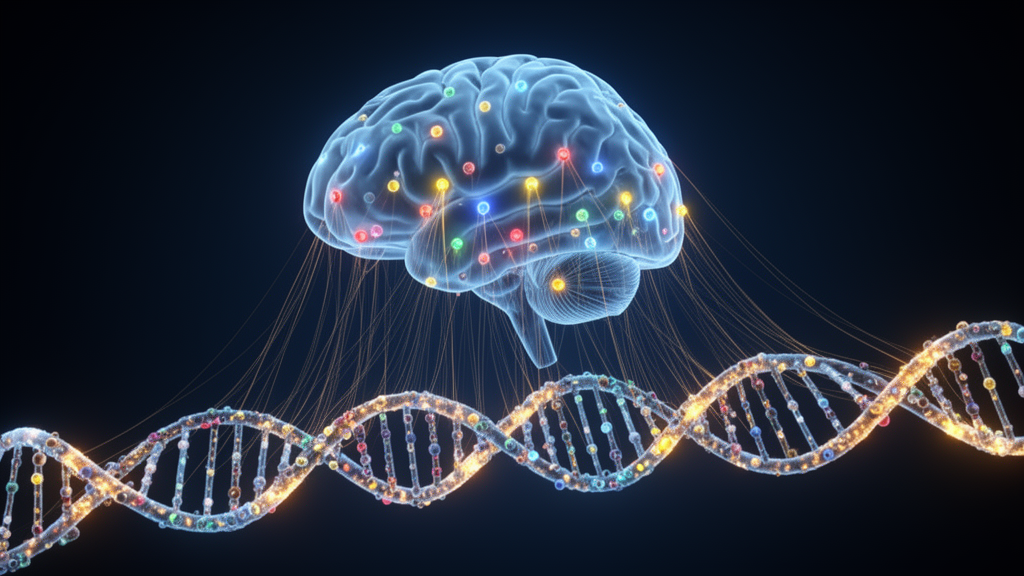
Neuropsychiatric disorders, spanning conditions from schizophrenia and major depressive disorder to Parkinson’s disease, Alzheimer’s disease, amyotrophic lateral sclerosis and multiple sclerosis, impose an enormous burden on global health, yet the specific genes and proteins that drive susceptibility have remained frustratingly elusive. A new study published in BMC Psychiatry has taken a substantial step toward closing that gap by integrating large-scale genome-wide association study (GWAS) summary statistics for eleven common neuropsychiatric disorders with tissue- and cell type-specific multi-omics data from blood and brain. Using a Bayesian-based multi-omics Mendelian randomisation framework, the research team identified 26 significant gene-protein associations in blood and 60 in brain across nine of the disorders, offering one of the most detailed maps to date of how genetic risk is translated into molecular dysfunction in these conditions.
The central challenge the researchers set out to address is a familiar one in human genetics. GWAS have catalogued hundreds of genetic loci associated with neuropsychiatric disorders, but these signals typically point to broad genomic regions rather than to specific causal genes, and they say little about which tissues or cell types mediate the association. The specific genes and proteins underlying susceptibility, and their tissue- and cell type-specific manifestations, remain poorly understood, which has hindered the development of targeted therapies. Mendelian randomisation offers a way around this impasse by exploiting naturally occurring genetic variation as a form of randomised trial: if genetic variants that influence protein levels also influence disease risk, that pattern supports a causal role for the corresponding protein rather than a mere correlation.
Technically, the approach works by combining three layers of summary statistics. First, GWAS data identify genetic variants associated with each disorder. Second, quantitative trait locus (QTL) studies, which map genetic variants that influence gene expression or protein abundance, provide the intermediate molecular phenotypes. The team drew on both blood and brain QTL resources, recognising that neuropsychiatric disorders involve biology in both compartments. Third, a Bayesian colocalisation and prioritisation framework evaluates whether the same causal variant drives both the molecular phenotype and the disease, assigning each gene-protein association a posterior probability. Only associations with a posterior probability of at least 0.7 were considered significant, a threshold designed to filter out signals that could be explained by linkage disequilibrium, the tendency of nearby variants to be inherited together.
What distinguishes this study from earlier efforts is its resolution down to individual brain cell types. By incorporating single-cell expression data, the researchers were able to resolve eleven of their significant brain associations to specific cell populations. This matters because the brain is extraordinarily heterogeneous: a signal that appears in bulk tissue may actually originate from a small population of cells, and knowing which cells carry the molecular signature can transform how a target is interpreted and pursued therapeutically. Among the newly resolved signals were TRAF3, associated with Alzheimer’s disease and multiple sclerosis in excitatory neurons, and SCFD1, associated with amyotrophic lateral sclerosis in both excitatory and inhibitory neurons, extending earlier findings for established disorder-related genes by pinpointing where in the brain they act.
The most striking results were three previously unreported brain-specific gene-protein signatures. The first, TRMT61B, was associated with both major depressive disorder and Parkinson’s disease in bulk brain tissue. TRMT61B encodes a methyltransferase component of the mitoribosome, the ribosome responsible for synthesising proteins inside mitochondria, the energy-producing organelles of the cell. Its association implicates mitoribosome remodelling and mitochondrial translation in susceptibility to both disorders, a finding that resonates with long-standing but poorly understood links between mitochondrial dysfunction and conditions affecting mood and movement.
The second novel signature, EEFSEC, was associated with schizophrenia in bulk brain and specifically in excitatory neurons. EEFSEC is a specialised translation elongation factor required for the incorporation of selenocysteine, a rare amino acid, into selenoproteins, several of which are critical for antioxidant defence and redox balance in the brain. The authors interpret this association as pointing toward serotonergic signalling dysregulation in the pathophysiology of schizophrenia, adding a molecular dimension to hypotheses about neurotransmitter system disruption in the disorder. The third signature, SLC25A24, was associated with schizophrenia in bulk brain and, at single-cell resolution, across astrocytes, excitatory neurons, oligodendrocytes and oligodendrocyte progenitor cells. SLC25A24 is a mitochondrial solute carrier involved in calcium-sensitive signalling, and its association suggests a role for disrupted mitochondrial homeostasis in schizophrenia that cuts across multiple cell types rather than being confined to neurons alone.
Beyond identifying causal genes, the researchers pursued the translational implications of their findings through two complementary analyses. Pathway enrichment analyses were used to delineate the functional pathways underlying the candidate gene-protein signatures, grouping the implicated genes into biological processes that may be amenable to pharmacological modulation. Separately, the team queried the Connectivity Map, a widely used database that links gene expression signatures to small-molecule compounds, to prioritise therapeutic compounds that map to NPD-specific gene-protein signatures. They also used ExPheWAS, an approach that systematically screens genetic associations against a broad spectrum of phenotypes, to flag potential off-target side effects before any candidate advances toward the clinic.
One result stands out from this drug-repurposing arm of the study: bortezomib, a proteasome inhibitor already approved for the treatment of multiple myeloma, emerged as a potential candidate for repurposing in schizophrenia. The logic of the approach is that if the gene-expression signature produced by a compound counteracts the disease-associated signature identified through the genetic analysis, the compound may have therapeutic value even if it was developed for an entirely different indication. Repurposing approved drugs has the practical advantage that safety profiles are already established, potentially shortening the path to clinical evaluation. The ExPheWAS screening for off-target effects is a deliberate safeguard in this process, designed to anticipate unwanted phenotypic consequences of modulating the identified targets.
The study’s scope deserves emphasis. By analysing eleven common neuropsychiatric disorders within a single unified framework, the authors could compare molecular mechanisms across diagnostic boundaries, identifying both shared and disorder-specific signatures. This cross-disorder perspective is increasingly recognised as essential in neuropsychiatry, where genetic risk variants often show pleiotropic effects, influencing more than one condition. The finding that TRMT61B is associated with both major depressive disorder and Parkinson’s disease is a case in point, suggesting that mitochondrial translation may represent a convergent biological pathway relevant to disorders that are usually treated as distinct clinical entities.
The work, led by researchers at the Mater Research Institute at The University of Queensland, the Menzies Institute for Medical Research at the University of Tasmania, and West China Hospital of Sichuan University, was supported by the Mater Foundation, the Australian National Health and Medical Research Council, Multiple Sclerosis Australia, and internal funds from West China Hospital. The authors acknowledge that their findings, like all Mendelian randomisation results, generate hypotheses that will require experimental validation in cellular and animal models before therapeutic implications can be realised. Nevertheless, by resolving gene-protein associations at tissue and cell-type resolution, the study provides a framework for advancing mechanistic understanding of neuropsychiatric risk and, crucially, for identifying druggable targets and repurposing opportunities that could accelerate the development of desperately needed treatments for disorders that have proven stubbornly resistant to conventional drug discovery efforts.
Subject of Research: Identification of causal genes and therapeutic targets for neuropsychiatric disorders using joint analysis of GWAS and blood and brain QTL summary statistics
Article Title: Joint analysis of GWAS and blood and brain QTL summary statistics reveals potential therapeutic targets for neuropsychiatric disorders
Article References: Yang, Y., Zhou, Y., Lin, X., Wu, Y., & Gratten, J. (2026). Joint analysis of GWAS and blood and brain QTL summary statistics reveals potential therapeutic targets for neuropsychiatric disorders. BMC Psychiatry. https://doi.org/10.1186/s12888-026-08603-y
Image Credits: AI Generated
DOI: 10.1186/s12888-026-08603-y
Keywords: neuropsychiatric disorders, Mendelian randomisation, GWAS, QTL, multi-omics, schizophrenia, major depressive disorder, Parkinson's disease, drug repurposing, bortezomib, mitochondrial translation, single-cell genomics
Cite Scienmag News
Juliet Wilcox. (October 18, 2026). Genetic Map of Brain and Blood Points to New Drug Targets for Neuropsychiatric Disorders. Scienmag. https://scienmag.com/genetic-map-of-brain-and-blood-points-to-new-drug-targets-for-neuropsychiatric-disorders/
Juliet Wilcox. "Genetic Map of Brain and Blood Points to New Drug Targets for Neuropsychiatric Disorders." Scienmag, 18 October 2026, https://scienmag.com/genetic-map-of-brain-and-blood-points-to-new-drug-targets-for-neuropsychiatric-disorders/. Accessed 18 October 2026.
Juliet Wilcox. "Genetic Map of Brain and Blood Points to New Drug Targets for Neuropsychiatric Disorders." Scienmag. October 18, 2026. https://scienmag.com/genetic-map-of-brain-and-blood-points-to-new-drug-targets-for-neuropsychiatric-disorders/


