


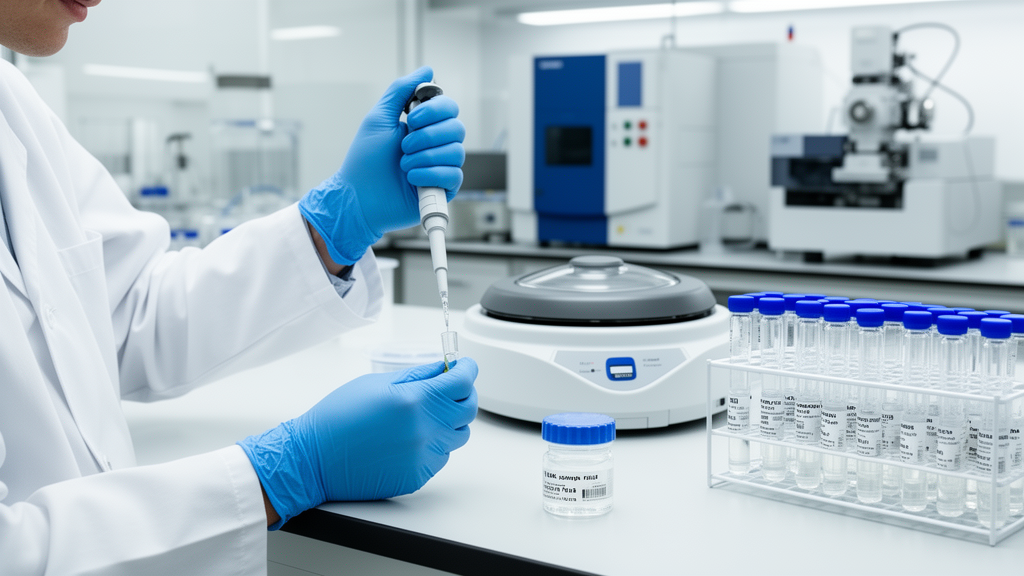
Researchers have developed a robust and cost-effective sample preparation workflow designed to enhance proteomic profiling of plasma and cerebrospinal fluid, two critical biological fluids in the study of neurodegenerative diseases. The method, detailed in a study published in Clinical Proteomics, addresses significant analytical challenges associated with the wide dynamic range of protein abundances in these samples. By integrating the depletion of high-abundance proteins with optimized enzymatic digestion, the workflow aims to improve the detection of low-abundance biomarkers that are often obscured by dominant blood proteins. This advancement is particularly relevant for large-scale clinical studies where reproducibility, throughput, and cost-efficiency are paramount for identifying reliable disease markers.
The core of the new methodology involves the use of a multi-affinity resin containing immobilized antibodies that target fourteen specific high-abundance plasma proteins. These proteins collectively constitute approximately 95% of the total protein content in plasma, creating a significant barrier to detecting lower-abundance molecules. The study, led by John Rönnholm and colleagues, systematically evaluated the conditions required for efficient depletion, including resin-to-plasma ratios and mixing speeds. The researchers found that a resin-to-plasma ratio of at least 75:1, combined with a mixing speed of 900 rpm on a plate shaker, ensured complete and reproducible depletion. This specific combination was critical for achieving consistent results in a 96-well plate format, which is essential for high-throughput laboratory workflows.
The impact of this depletion strategy on proteome coverage was substantial. In plasma samples, the number of identified protein groups increased by approximately 80%, rising from 707 to 1,269. Similarly, in cerebrospinal fluid, the number of identified proteins increased by about 65%. Beyond simply increasing the total count, the workflow significantly improved the detection of brain-enriched proteins in plasma. The number of such proteins tripled following depletion, providing a clearer window into central nervous system pathology through blood samples. This capability is crucial for developing blood-based biomarkers that can reflect brain health without the need for invasive lumbar punctures.
Optimizing the enzymatic digestion process was another key component of the study. The researchers compared different digestion protocols to determine the most effective approach for both plasma and CSF. For plasma, a two-step digestion strategy using a mixture of Lys-C and trypsin, followed by a second incubation with trypsin alone, yielded the highest reproducibility and detectability. The authors suggest that plasma’s higher protein concentration and endogenous protease inhibitors may explain why the second digestion step was beneficial. In contrast, CSF samples required only a single digestion step with the Lys-C/trypsin mixture, as the lower protein concentration and fewer inhibitors allowed for efficient proteolysis without additional treatment.
The study also investigated the role of the detergent sodium deoxycholate in the digestion process. While deoxycholate is commonly used to enhance enzymatic digestion by disrupting protein interactions, its inclusion in the workflow had mixed results. In CSF, the detergent had little effect on protein identification. In plasma, it only marginally improved proteome coverage while decreasing quantification precision and reducing throughput. The researchers concluded that the minor gains in coverage were outweighed by the loss of reproducibility and the added complexity of detergent removal, which is impractical for large-scale, label-free studies. Consequently, the final optimized workflow excludes the use of deoxycholate to maintain high analytical precision.
To validate the technical robustness of the workflow, the team applied it to a clinical cohort of 528 samples from patients with amyotrophic lateral sclerosis and healthy controls. The samples were analyzed using tandem mass tag-based quantification, a method that allows for the simultaneous comparison of multiple samples. Principal component analysis of the data showed that technical replicates from the same sample clustered tightly together, indicating that the variation introduced by the sample preparation and mass spectrometry analysis was substantially lower than the biological variation between individuals. This high level of technical reproducibility is essential for detecting subtle protein changes associated with disease progression in longitudinal studies.
The cost-effectiveness of the new workflow is a significant advantage over alternative methods. While commercial enrichment kits and nanoparticle-based approaches can achieve high proteome coverage, they often rely on proprietary reagents and specialized automation, with costs ranging from 80 to 90 USD per sample. In contrast, the authors report an immunodepletion cost of 3 to 4 USD per sample in their laboratory. This figure concerns that preparation step, not an all-inclusive diagnostic test or the cost of mass-spectrometry analysis. This drastic reduction in cost makes the workflow accessible to a wider range of laboratories and facilitates the analysis of large clinical cohorts that would otherwise be prohibitively expensive. The simplicity of the method, which relies on standard laboratory equipment such as plate shakers and centrifuges, further enhances its scalability and reproducibility.
The findings of this study have important implications for the field of clinical proteomics and the development of biomarkers for neurodegenerative diseases. By enabling deep and reproducible proteome profiling of both plasma and CSF, the workflow supports discovery of candidate biomarkers that would require separate clinical validation before use in diagnosis or monitoring. The ability to detect brain-enriched proteins in plasma supports research into less invasive, blood-based markers of central nervous system disease. As the demand for blood-based biomarkers grows, particularly for conditions like Alzheimer’s disease and ALS, scalable and cost-effective methods like this one will be crucial for translating proteomic discoveries into clinical practice.
The study establishes technical performance for a sample-preparation method, rather than validating a new diagnostic test. Its ALS cohort was used to assess reproducibility and scalability, not to establish disease-specific biomarker accuracy. The findings support further biomarker-discovery studies, while clinical sensitivity, specificity and utility remain separate questions. Laboratories adopting the workflow would also need to verify performance with their own samples, instruments and analytical procedures.
Subject of Research: Optimization of proteomic sample preparation for plasma and cerebrospinal fluid
Article Title: Shake and bake: a robust and cost-effective proteomic sample preparation workflow for plasma and cerebrospinal fluid
Article References: Rönnholm, J., Weiner, S., Fuchs, J., Thorsell, A., Sihlbom, C., Dugom, L., Easton, A., Zetterberg, H., & Gobom, J. (2026). Shake and bake: a robust and cost-effective proteomic sample preparation workflow for plasma and cerebrospinal fluid. Clinical Proteomics, 23(1), Article 12. https://doi.org/10.1186/s12014-026-09589-1
Image Credits: AI Generated
DOI: 10.1186/s12014-026-09589-1
Keywords: proteomics, plasma, cerebrospinal fluid, biomarkers, neurodegenerative diseases, sample preparation, mass spectrometry, clinical proteomics, protein depletion, amyotrophic lateral sclerosis
The cited source study is licensed under CC BY 4.0. This article is an edited news summary; the original authors and DOI are credited above.
Cite Scienmag News
Kenneth Gardner. (October 18, 2026). Sample-Preparation Workflow Improves Plasma and CSF Proteomics. Scienmag. https://scienmag.com/sample-preparation-workflow-improves-plasma-and-csf-proteomics/
Kenneth Gardner. "Sample-Preparation Workflow Improves Plasma and CSF Proteomics." Scienmag, 18 October 2026, https://scienmag.com/sample-preparation-workflow-improves-plasma-and-csf-proteomics/. Accessed 18 October 2026.
Kenneth Gardner. "Sample-Preparation Workflow Improves Plasma and CSF Proteomics." Scienmag. October 18, 2026. https://scienmag.com/sample-preparation-workflow-improves-plasma-and-csf-proteomics/


