


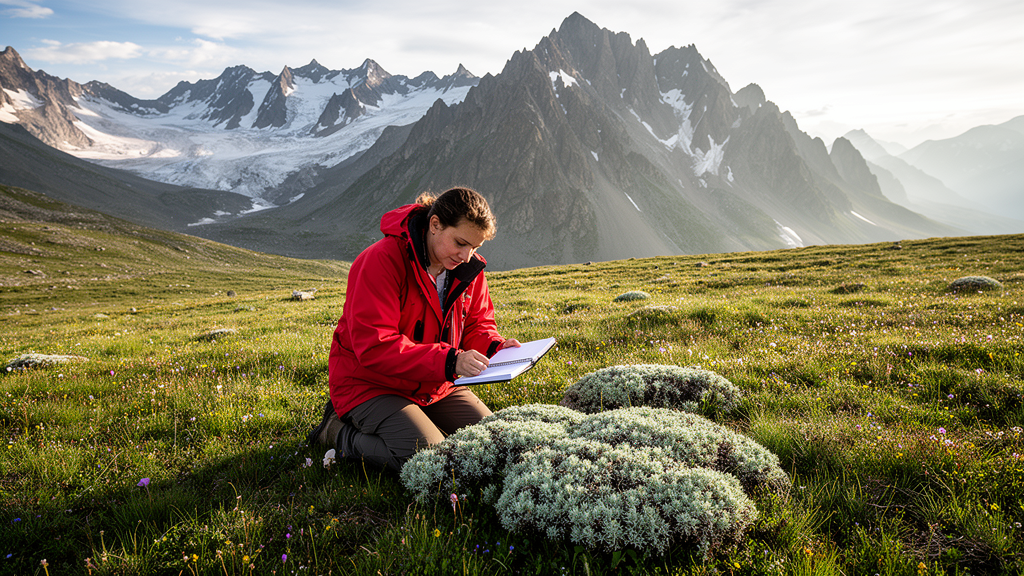
Researchers have significantly advanced the understanding of high-altitude ecosystems in the Pamir-Alai Mountains by identifying new vegetation types in the subalpine and alpine belts of Tajikistan. This study, published in the journal Vegetation Classification and Survey, provides a detailed syntaxonomic classification of forb steppes and related grassland communities. The work fills a critical gap in the hierarchical classification of vegetation in the eastern Irano-Turanian region, offering a more precise framework for ecologists and conservationists studying these remote and harsh environments. By integrating field data from two distinct years, the team has created a robust model that accounts for temporal variability in plant composition, ensuring that the identified vegetation units are representative of the long-term ecological dynamics of the area.
The research team, led by Sebastian Świerszcz and including Marcin Nobis, Grzegorz Swacha, Sylwia Nowak, and Arkadiusz Nowak, focused on completing the syntaxonomic scheme for subalpine forb steppes in this specific mountain range. The Pamir-Alai Mountains represent a unique ecological zone where the Irano-Turanian flora interacts with high-altitude stressors, resulting in distinct plant communities that have not been fully described in previous literature. The primary aim of the study was not only to classify these communities but also to examine the environmental predictors that drive their distribution. By linking specific plant assemblages to climatic variables, the researchers provided insights into how temperature and precipitation patterns shape the structure of alpine and subalpine grasslands in Middle Asia.
To achieve these objectives, the scientists sampled a total of 149 relevés, or vegetation plots, during field campaigns conducted in 2014 and 2021. These plots were selected to cover a range of altitudes and microclimates within the subalpine and alpine belts of Tajikistan. The data collection followed the Braun-Blanquet method, utilizing a seven-degree cover-abundance scale to record the presence and abundance of vascular plants and bryophytes. This standardized approach allows for consistent comparison across different sites and time periods, which is essential for detecting subtle shifts in vegetation composition. The inclusion of data from two separate years helps to distinguish between temporary fluctuations and stable ecological patterns, thereby strengthening the reliability of the resulting classification.
The analysis of the collected data employed a modified TWINSPAN algorithm, a widely used technique in vegetation science for classifying plant communities based on their species composition. The researchers used pseudospecies cut-off levels of 0%, 2%, 5%, and 25% to transform the cover-abundance data into a format suitable for numerical classification. Total inertia was used as a measure of cluster heterogeneity, allowing the team to determine the optimal number of distinct vegetation units. This methodological choice ensures that the resulting clusters are internally coherent and externally distinct, providing a clear separation between different ecological types. The use of a modified algorithm reflects the need to adapt standard tools to the specific characteristics of high-altitude forb steppes, which often exhibit complex species interactions and low species richness.
One of the key findings of the study is the identification of twelve distinct clusters of alpine and subalpine grassland vegetation in Middle Asia. Among these, the researchers distinguished nine new associations and three communities, representing significant additions to the syntaxonomic hierarchy of the region. These new units include forb steppes characterized by the presence of Eremogone griffithii and Nepeta podostachys in both subalpine and alpine belts. Additionally, the study identified alpine grasslands dominated by Festuca alaica and Festuca kryloviana in mesic habitats within the alpine belt. These new vegetation types have been proposed at the potential class rank for Irano-Turanian subalpine and alpine grasslands, highlighting their importance in the broader regional classification. The discovery of these specific assemblages underscores the biodiversity hidden within the open habitats of the Pamir-Alai Mountains.
Diagnostic species were determined using the phi coefficient as a measure of fidelity, which quantifies the association between a species and a particular vegetation unit. This statistical approach helps to identify plants that are characteristic of specific communities, thereby aiding in the field identification and future monitoring of these vegetation types. The researchers also employed Detrended Correspondence Analysis (DCA) to visualize the compositional differences between the distinguished alpine and subalpine grassland units. DCA is particularly useful for revealing gradients in species composition along environmental axes, providing a clear picture of how vegetation changes with altitude and other ecological factors. The results of the DCA confirmed the distinctiveness of the identified clusters and supported the proposed syntaxonomic arrangement.
The study also examined the environmental predictors that differentiate the species composition of the various vegetation units. The main factors identified were the mean diurnal temperature range, the sum of annual precipitation, precipitation seasonality, and the minimum temperature of the coldest month. These climatic variables play a crucial role in shaping the distribution of plant species in high-altitude environments, where temperature extremes and water availability are primary limiting factors. The mean diurnal temperature range, for instance, can influence plant physiology and phenology, affecting which species are able to thrive in a given location. Similarly, the pattern of precipitation, including its seasonality, determines the timing and duration of growing seasons, which is critical for the survival of forb steppes. By linking these environmental variables to specific vegetation types, the researchers provided a predictive framework that can be used to model vegetation distribution under changing climatic conditions.
The nomenclature of the vascular plants in the study follows the Plants of the World Online (POWO 2023) database, with problematic taxonomic issues resolved according to The World Flora Online (WFO 2023). For specific genera, such as Stipa and Geranium, the researchers followed the nomenclature established by Nobis et al. (2020, 2022) and Cherepanov (1995), respectively. The nomenclature of bryophytes follows Ignatov et al. (2006). This careful attention to taxonomic accuracy ensures that the results of the study are consistent with current scientific standards and can be easily integrated into broader regional and global vegetation databases. The use of standardized nomenclature is essential for facilitating communication among researchers and for ensuring that the identified vegetation types can be recognized and studied by others in the future.
While the study provides a significant contribution to the syntaxonomic classification of the Pamir-Alai Mountains, the authors note that the syntaxonomic position of some of the distinguished communities remains unclear. This indicates that further research is needed to fully understand the relationships between these vegetation types and their counterparts in other parts of Middle Asia. The subalpine and alpine forb steppes are described as a very interesting and distinct grassland type in the region, warranting continued attention from the scientific community. The findings of this study not only enhance our knowledge of the local flora but also contribute to the broader understanding of high-altitude ecosystems in Central Asia. As climate change continues to affect mountain environments, the detailed classification provided by this research will be invaluable for monitoring changes in vegetation composition and for developing effective conservation strategies.
In conclusion, this study sheds light on the open habitat vegetation in the Pamir-Alai Mountains and has contributed to the consistent hierarchical classification of the vegetation of the eastern Irano-Turanian region. By identifying new vegetation types and linking them to specific environmental predictors, the researchers have provided a robust framework for future ecological studies in the area. The integration of field data from multiple years and the use of advanced numerical classification techniques have ensured that the results are both detailed and reliable. This work serves as a foundation for further investigations into the ecology and conservation of high-altitude grasslands in Middle Asia, highlighting the importance of rigorous syntaxonomic approaches in understanding complex ecosystems.
Subject of Research: Syntaxonomic classification of forb steppes and alpine vegetation in the Pamir-Alai Mountains
Article Title: Syntaxonomic classification of forb steppes and related vegetation of subalpine and alpine belts in the Pamir-Alai Mountains (Tajikistan, Middle Asia)
Article References: Świerszcz, S., Nobis, M., Swacha, G., Nowak, S., & Nowak, A. (2023). Syntaxonomic classification of forb steppes and related vegetation of subalpine and alpine belts in the Pamir-Alai Mountains (Tajikistan, Middle Asia). Vegetation Classification and Survey, 4, 291-317. https://doi.org/10.3897/vcs.102634
Image Credits: AI Generated
DOI: 10.3897/vcs.102634
Keywords: vegetation classification, Pamir-Alai Mountains, Tajikistan, alpine grasslands, forb steppes, syntaxonomy, TWINSPAN, environmental predictors, Irano-Turanian flora, high-altitude ecosystems, Syntaxonomic, classification
Cite Scienmag News
Margaret Porter. (October 18, 2026). New Vegetation Types Identified in Central Asian Alpine Zones. Scienmag. https://scienmag.com/new-vegetation-types-identified-in-central-asian-alpine-zones/
Margaret Porter. "New Vegetation Types Identified in Central Asian Alpine Zones." Scienmag, 18 October 2026, https://scienmag.com/new-vegetation-types-identified-in-central-asian-alpine-zones/. Accessed 18 October 2026.
Margaret Porter. "New Vegetation Types Identified in Central Asian Alpine Zones." Scienmag. October 18, 2026. https://scienmag.com/new-vegetation-types-identified-in-central-asian-alpine-zones/


