


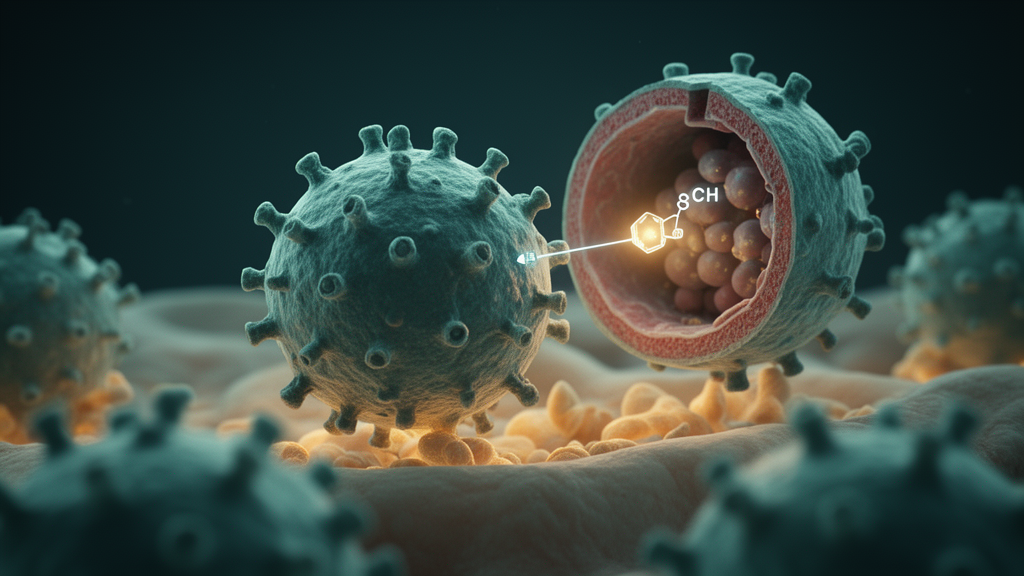
Zika virus, the mosquito-borne pathogen that swept across the Americas in 2015 and 2016, continues to reveal unexpected weaknesses in its molecular machinery. In a study published in npj Viruses, researchers at Radboud University Medical Center in the Netherlands report that a subtle chemical modification called prolyl hydroxylation is essential for the proper maturation and secretion of one of the virus’s most important proteins. The finding adds a previously underappreciated layer of control to the life cycle of orthoflaviviruses, the group of viruses that also includes dengue, West Nile, and yellow fever viruses, and it points to a family of host enzymes that could, in principle, be targeted for antiviral intervention.
The protein at the center of the study is non-structural protein 1, universally abbreviated NS1. In mosquito-borne orthoflaviviruses, NS1 is something of a molecular multitasker. Inside infected cells, it functions as a dimer and participates in viral RNA replication, associating with the replication complexes that assemble on intracellular membranes. At the same time, a fraction of NS1 travels through the host secretory pathway and is released from the cell, either as a soluble hexameric lipoparticle or tethered to the outer leaflet of the plasma membrane. Secreted NS1 is a major player in disease: it helps the virus evade immune responses, modulates complement activation, and has been implicated in the vascular leakage and endothelial dysfunction associated with severe dengue and with the neurological complications of Zika infection.
Given this central role, the team led by Bodine Bezemer, Pascal Miesen, and Ronald van Rij set out to map the interaction partners of Zika virus NS1 in infected cells. Rather than studying the protein in isolation, they engineered a recombinant Zika virus in which NS1 carries a small molecular handle, a FLAG tag, that allows the protein and everything bound to it to be pulled out of infected cell lysates and identified. They infected two biologically distinct cell types with this tagged virus: Huh7 cells, a well-established liver-derived line commonly used for flavivirus work, and human neural progenitor cells, which are directly relevant to the neurodevelopmental defects seen in congenital Zika syndrome.
Quantitative mass spectrometry of the pulled-down material revealed a strikingly consistent picture across both cell types. Among the NS1 interactors were multiple prolyl hydroxylase enzymes, along with enzymes involved in glycosylation, components of the endoplasmic reticulum-associated degradation pathway, and proteins with roles in antiviral immunity. The presence of prolyl hydroxylases was particularly intriguing. These enzymes, best known for adding hydroxyl groups to proline residues in collagen and for their role in cellular oxygen sensing through modification of hypoxia-inducible factors, catalyze a post-translational modification that had not previously been appreciated as important for flavivirus NS1.
The mass spectrometry data went further than merely hinting at an interaction. The analyses detected hydroxyproline residues on NS1 itself, providing direct evidence that the viral protein is actually modified by these enzymes rather than simply passing near them. This observation reframed the interaction as a bona fide enzymatic substrate relationship and raised an immediate functional question: what happens to NS1, and to the virus, if prolyl hydroxylation is blocked?
To answer that question, the researchers turned to chemical inhibitors of prolyl hydroxylases. When cells infected with Zika virus were treated with these compounds, the consequences for NS1 were visible and specific. The protein’s intracellular trafficking was impaired, and its localization to the plasma membrane, a critical step on the route to secretion, was reduced. Consistent with a defect in the virus’s ability to produce and release functional NS1, treatment also lowered intracellular Zika virus RNA levels and reduced infectious virus titers. Together, the interaction data and the inhibitor experiments established prolyl hydroxylation as a modification that the virus depends on for the normal handling of NS1 within the secretory pathway.
To pin the effect down to individual amino acids, the team used site-directed mutagenesis to alter specific proline residues within the NS1 sequence and then rescued mutant viruses. Substituting the proline at position 281 produced a clean and interpretable phenotype: secretion of NS1 from infected cells was impaired, yet viral replication itself, measured by RNA levels and infectious output, was unaffected. This dissociation is mechanistically informative. It indicates that the hydroxylation at this position is not required for the intracellular replication functions of NS1 but is specifically needed for the protein to mature and exit the cell, most likely by stabilizing a conformation or trafficking state that the secretory machinery recognizes.
The second mutant told a different story. Replacing the proline at position 267 strongly dysregulated NS1 expression, and, notably, the mutation reverted to the wild-type sequence after only a single passage in culture. Such rapid reversion is a classic signature of a mutation that imposes a severe fitness cost on the virus. The interpretation offered by the authors is that proline 267 is so central to NS1’s structure or function that any virus carrying the substitution replicates poorly enough to be rapidly outcompeted by revertants in the population. While the precise biochemical role of this residue remains to be defined, its evolutionary inflexibility underscores how tightly constrained the NS1 sequence is around its modification sites.
Taken together, the study identifies prolyl hydroxylation as an essential post-translational modification of Zika virus NS1 and embeds it in a broader network of host factors that the virus co-opts during infection. The co-occurrence of prolyl hydroxylases, glycosylation enzymes, and ER-associated degradation proteins among the NS1 interactors suggests that NS1’s journey through the endoplasmic reticulum and Golgi apparatus is choreographed by a series of host-driven chemical edits, of which hydroxylation is now one of the best supported. Because secreted NS1 contributes substantially to the immune evasion and pathogenic features of orthoflavivirus infections, any process required for its secretion is, by extension, a potential point of therapeutic leverage.
The work also raises questions that extend beyond Zika virus. NS1 is highly conserved among mosquito-borne orthoflaviviruses, and the proline residues examined in this study are positioned within regions of the protein that are shared across dengue, West Nile, and yellow fever viruses. Whether prolyl hydroxylation similarly governs the maturation and secretion of NS1 in these related pathogens is an obvious next step, and one with practical implications: if a single host enzymatic activity supports the secretion of NS1 from multiple medically important viruses, inhibitors of that activity could offer a strategy with breadth across the orthoflavivirus family. For now, the study provides a concrete molecular foothold, showing that a small chemical decoration on a single proline residue can determine whether a viral protein reaches the cell surface, and demonstrating once again that the fine details of virus-host biochemistry often hide the most consequential vulnerabilities.
Subject of Research: Prolyl hydroxylation of Zika virus non-structural protein 1 and its role in viral maturation and secretion
Article Title: Prolyl hydroxylation is required for maturation and secretion of Zika virus non-structural protein 1
Article References: Bezemer, B., Overheul, G. J., Stevens, M., Spruijt, C. G., Vermeulen, M., Miesen, P., & van Rij, R. P. (2026). Prolyl hydroxylation is required for maturation and secretion of Zika virus non-structural protein 1. npj Viruses. https://doi.org/10.1038/s44298-026-00248-8
Image Credits: AI Generated
DOI: 10.1038/s44298-026-00248-8
Keywords: Zika virus, NS1 protein, prolyl hydroxylation, orthoflavivirus, post-translational modification, mass spectrometry, viral secretion, prolyl hydroxylases, mutagenesis, viral replication, immune evasion, npj Viruses
Cite Scienmag News
Kristina Jarvis. (October 18, 2026). Hidden Chemical Tag on Zika Protein Revealed as Key to Viral Secretion. Scienmag. https://scienmag.com/hidden-chemical-tag-on-zika-protein-revealed-as-key-to-viral-secretion/
Kristina Jarvis. "Hidden Chemical Tag on Zika Protein Revealed as Key to Viral Secretion." Scienmag, 18 October 2026, https://scienmag.com/hidden-chemical-tag-on-zika-protein-revealed-as-key-to-viral-secretion/. Accessed 18 October 2026.
Kristina Jarvis. "Hidden Chemical Tag on Zika Protein Revealed as Key to Viral Secretion." Scienmag. October 18, 2026. https://scienmag.com/hidden-chemical-tag-on-zika-protein-revealed-as-key-to-viral-secretion/


