


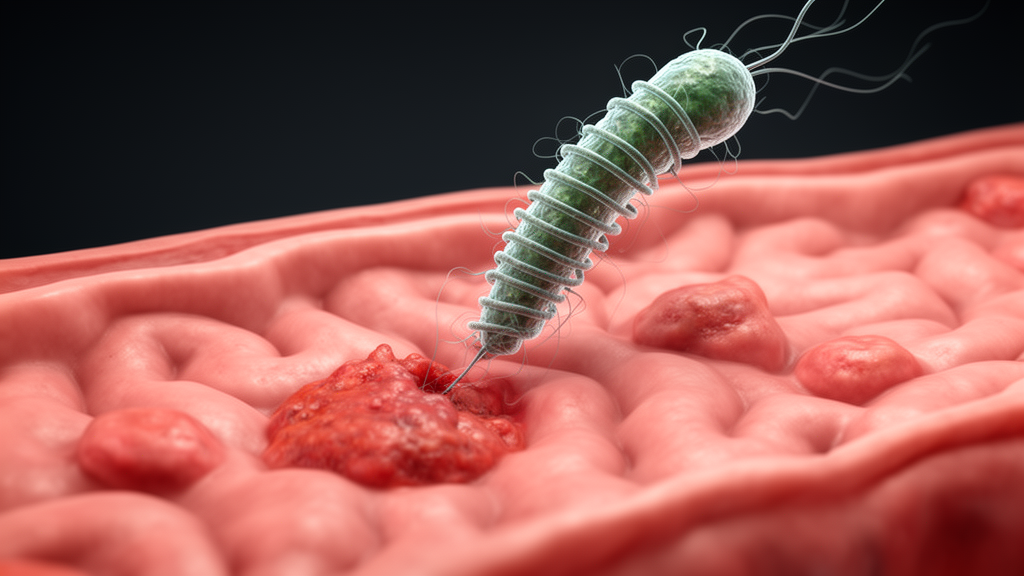
One of the world’s most common bacterial infections, long notorious for causing stomach ulcers and gastric cancer, may also be quietly contributing to one of its deadliest malignancies of the large intestine. An international collaborative study led by investigators from the LKS Faculty of Medicine of the University of Hong Kong (HKUMed) and the University of California San Diego has found that exposure to Helicobacter pylori, a spiral-shaped bacterium that colonises the gastric lining of roughly half the global population, may be associated with approximately 22 percent of colorectal cancer cases worldwide. The findings, published in the peer-reviewed journal eGastroenterology, suggest that a pathogen already targeted by large-scale eradication programmes for stomach disease could represent one of the most significant modifiable risk factors in bowel cancer, a disease that claimed an estimated 900,000 lives in 2022 alone.
The scale of the colorectal cancer problem gives the result immediate public health weight. Colorectal cancer is the second leading cause of cancer-related death worldwide, and in 2022 nearly two million new cases were diagnosed globally. Because screening, diet and lifestyle interventions only partially explain or prevent this burden, researchers have long searched for additional modifiable risk factors. H. pylori has been an established gastric carcinogen for decades, but its potential role in colorectal cancer has remained one of the more controversial questions in gastroenterology, with individual studies producing conflicting results. The new analysis was designed to settle the question at a scale no single cohort could achieve.
To do so, the research team assembled a remarkably large evidence base: 43 international studies encompassing approximately 48.7 million individuals. Rather than relying on any single dataset, the investigators combined global and regional estimates of H. pylori prevalence with colorectal cancer incidence data drawn from the Global Cancer Observatory (GLOBOCAN) 2022, the authoritative international cancer statistics platform maintained by the World Health Organization’s cancer agency. This risk attribution modelling approach allowed the team to examine how the association varied by diagnostic method used to detect the bacterium, by sex, and across World Health Organization regions, providing a layered picture of where and among whom the infection’s contribution to bowel cancer might be greatest.
The headline result was striking. H. pylori exposure was associated with a 1.59-fold increased risk of colorectal cancer compared with individuals without exposure to the bacterium. From this elevated risk and the widespread prevalence of the infection, the researchers estimated that H. pylori exposure could potentially account for approximately 22 percent of colorectal cancer cases globally. Crucially, the team stress-tested the finding by restricting the analysis to the 14 most methodologically robust studies, those that were population-based or cohort designs, which are less vulnerable to the biases that can distort case-control comparisons. Even in this conservative subset, approximately 12 percent of colorectal cancer cases remained potentially linked to H. pylori exposure, indicating that the association is not an artefact of weaker study designs.
Professor Leung Wai-keung, Li Shu Fan Medical Foundation Professor in Gastroenterology and Chair Professor of Gastrointestinal Medicine in HKUMed’s Department of Medicine, emphasised the practical implications of the discovery. Unlike many inherited cancer risks, he noted, H. pylori infection is both detectable and treatable. He said the study suggests the bacterium may contribute substantially to the global burden of colorectal cancer, and that understanding this relationship could help inform future prevention strategies and identify new opportunities to reduce risk worldwide. In other words, a simple course of antibiotics and a breath or stool test, tools already deployed against gastric cancer, could theoretically shave a meaningful fraction off bowel cancer incidence as well.
The study also looked at what happens when the bacterium is eliminated. Although the evidence remains limited, existing observational studies indicate that people who received eradication treatment experienced a lower risk of colorectal cancer after more than 10 years of follow-up. That delayed protective effect fits with the known biology of colorectal cancer, which typically develops over many years through the accumulation of genetic and epigenetic changes in the cells lining the colon and rectum. Removing a contributing carcinogen would not be expected to reverse existing lesions overnight, but it could slow or prevent the sequence of events that ultimately produces tumours. The authors caution, however, that further prospective and interventional studies are required before eradication can be formally recommended as a bowel cancer prevention measure.
Geography emerged as a major theme in the analysis. The researchers observed that countries with higher H. pylori prevalence tended to carry a greater estimated colorectal cancer burden attributable to the infection. The Western Pacific region, which includes China, Mongolia and Vietnam, recorded the highest estimated proportion of colorectal cancer cases linked to H. pylori exposure, at approximately 25 percent. China alone had the largest absolute number of colorectal cancer cases potentially associated with the bacterium, a consequence of both its substantial infection prevalence and its enormous population. This regional pattern suggests that eradication programmes could deliver their greatest cancer-prevention dividends precisely in areas where healthcare resources are often most stretched.
One of the more counterintuitive findings concerns generational change. The researchers found that later birth cohorts appeared to carry a proportionally higher H. pylori-related colorectal cancer burden, even though the prevalence of the infection has been declining over time. The estimated proportion of colorectal cancer linked to the bacterium rose from 9.5 percent among people born before 1947 to 15 percent among those born between 1963 and 1977. The reasons for this shift are not yet clear, and the team highlights the need for further research into how infection, lifestyle and environmental factors may interact to influence cancer risk across generations. Possibilities include changing dietary patterns, altered gut microbiomes, and differences in age at exposure, all of which could modulate how a chronic gastric infection influences distant intestinal tissue.
The prospect of a dual benefit is what elevates the study from an academic curiosity to a potential turning point in cancer prevention policy. Many countries and regions have already introduced population-based H. pylori screening and eradication programmes with the explicit goal of reducing gastric cancer risk. Professor Leung said the findings suggest these programmes could potentially generate a dual cancer-prevention benefit by reducing the risks of both gastric cancer and colorectal cancer, particularly in areas where H. pylori infection remains highly prevalent and healthcare resources are limited. Because the same screening infrastructure, diagnostic tests and treatment regimens would serve both goals, the marginal cost of extending protection to the bowel could be comparatively low.
Professor Leung added that the team’s goal is to provide evidence that informs public health and research priorities and to guide infection-targeted prevention strategies at both global and regional levels, complementing and extending beyond H. pylori eradication efforts to reduce the risk of multiple cancers. The study was supervised by Professor Leung and Professor Shailja Shah of the University of California San Diego as joint senior authors, with PhD student Yunhao Li of HKUMed’s Department of Medicine as first author. The international collaboration also included Erasmus MC in the Netherlands and Brown University in the United States. If future interventional trials confirm what this modelling study suggests, the humble stomach bacterium that medicine has spent decades fighting could become an even more valuable target, offering a rare opportunity to strike two major cancers with a single, inexpensive intervention.
Subject of Research: Association between Helicobacter pylori exposure and global colorectal cancer risk
Article Title: HKUMed-led international study finds Helicobacter pylori exposure may be associated with more than one in five colorectal cancer cases worldwide
Article References: HKUMed-led international study finds Helicobacter pylori exposure may be associated with more than one in five colorectal cancer cases worldwide. (n.d.). Original publication
Image Credits: AI Generated
DOI: Not provided
Keywords: Helicobacter pylori, colorectal cancer, cancer prevention, epidemiology, GLOBOCAN, gastric cancer, risk attribution modelling, HKUMed, Western Pacific region, eradication programmes, public health, observational study
Cite Scienmag News
Nathaniel Bowman. (October 18, 2026). Stomach bacterium H. pylori may drive one in five colorectal cancer cases worldwide. Scienmag. https://scienmag.com/stomach-bacterium-h-pylori-may-drive-one-in-five-colorectal-cancer-cases-worldwide/
Nathaniel Bowman. "Stomach bacterium H. pylori may drive one in five colorectal cancer cases worldwide." Scienmag, 18 October 2026, https://scienmag.com/stomach-bacterium-h-pylori-may-drive-one-in-five-colorectal-cancer-cases-worldwide/. Accessed 18 October 2026.
Nathaniel Bowman. "Stomach bacterium H. pylori may drive one in five colorectal cancer cases worldwide." Scienmag. October 18, 2026. https://scienmag.com/stomach-bacterium-h-pylori-may-drive-one-in-five-colorectal-cancer-cases-worldwide/


