


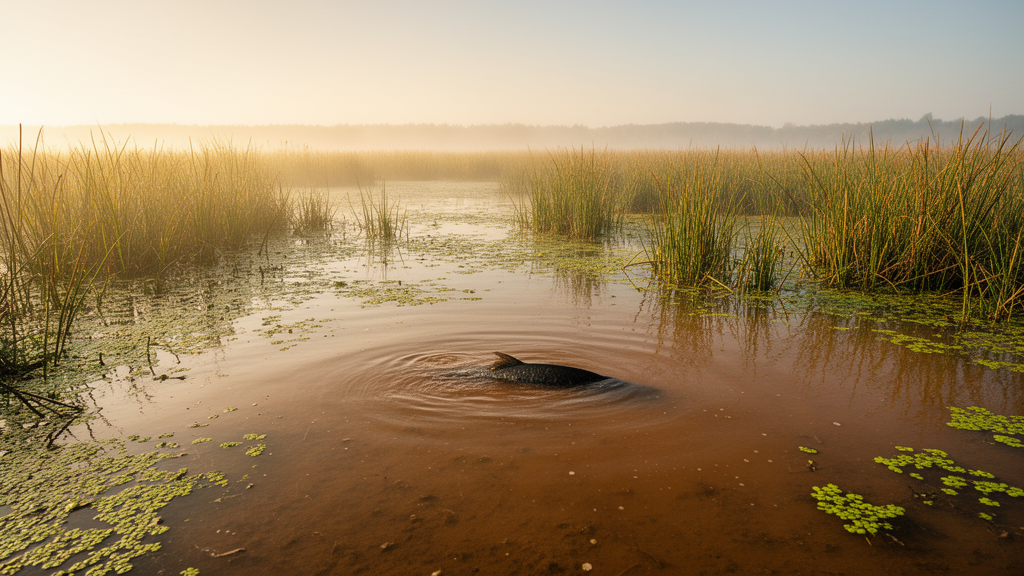
At first glance, the small, muddy, oxygen-poor waters scattered across Europe’s wetlands hardly look like treasure. They are turbid, often ephemeral, and seemingly inhospitable, which is precisely why they have long been overlooked in conservation planning. Yet for a handful of highly specialised fish species, these unglamorous habitats are nothing less than vital refuges. A newly published special issue in the journal Nature Conservation, edited by an expert group led by Josef Wanzenböck, now places these unique fish and their imperilled homes at the centre of the wetland conservation debate, arguing that the fate of some of Europe’s least charismatic species is inseparable from the health of some of its most valuable ecosystems.
The special issue brings together selected papers from the international conference “The Fish of Muddy Waters,” which took place in Vienna, Austria, in October 2025. The event gathered researchers and conservation practitioners around a shared theme: fish species adapted to the specific and often extreme conditions of wetlands and their surrounding areas. By compiling the conference’s findings in a peer-reviewed format, the editors aim to make results that might otherwise remain scattered across national reports and conference presentations accessible to an international audience of experts, and to consolidate a body of knowledge that has long been fragmented.
Among the species at the heart of the issue are the European mud minnow (Umbra krameri), the weatherfish (Misgurnus fossilis), and the crucian carp (Carassius carassius). Each of these fish represents a distinct evolutionary answer to the same fundamental problem: how to survive in water that other fish cannot tolerate. The weatherfish, for example, is famous among ichthyologists for its ability to supplement its oxygen uptake by swallowing air at the surface, an adaptation that allows it to persist in stagnant, silt-laden ponds where oxygen levels can collapse. The mud minnow similarly tolerates low-oxygen environments, while the crucian carp is renowned for its extreme physiological tolerance of anoxic conditions, particularly in small water bodies that freeze over in winter.
These adaptations are more than biological curiosities. Because the fish that inhabit small, muddy wetlands live at the very edge of what is physiologically possible, they are acutely sensitive to changes in their environment. Alterations to hydrology, pollution, the loss of temporary floodplain pools, or the arrival of new competitors can push populations past critical thresholds. This sensitivity gives these species a second, less obvious role: they can serve as indicators of the ecological health of their habitats. If specialised wetland fish are struggling, the signal often points to broader changes or a deterioration in the entire ecosystem, long before the damage becomes visible in more conspicuous elements of the landscape.
This indicator function was a central theme of the Vienna conference. Organisers deliberately sought to strengthen the link between research and conservation practice, and to draw public attention to fish species that typically receive far less attention than larger, more commercially valuable, or more photogenic aquatic animals. Salmon, trout, and sturgeon dominate the public imagination and much of the conservation funding landscape, while the mud-dwelling specialists of floodplain pools and marsh ditches remain largely invisible. The conference and the resulting special issue argue that this imbalance leaves a critical gap in Europe’s biodiversity strategy, because the species most tightly bound to wetland habitats are also among the first to disappear when those habitats degrade.
The issue also confronts a growing pressure on these systems: non-native fish species that have become established in the peripheral areas of floodplains and other wetland habitats. Contributions examine which introduced species have gained a foothold in these environments and discuss their impact on native ecosystems. Invasive fish can alter wetland communities through predation, competition for food and spawning sites, and the modification of habitat structure, and their tolerance of degraded conditions can allow them to thrive precisely where native specialists are already stressed. Understanding these interactions is essential for conservation managers who must decide where and how to intervene in modified floodplain landscapes.
The broader context for this work is sobering. European wetlands are among the continent’s most heavily altered ecosystems, having been drained for agriculture, cut off from rivers by flood defences, and degraded by eutrophication for well over a century. The dynamic mosaic of temporary pools, side channels, and backwaters that once characterised large floodplains has been dramatically simplified, and with it the habitat template on which muddy-water specialists depend. Species such as the weatherfish and the European mud minnow, which rely on exactly these small, shallow, oxygen-fluctuating waters, have consequently declined across much of their range, making them priorities for national and international conservation lists.
Fish have always held a firm place in European culture and are closely linked to the human use of water bodies, from fisheries to folklore. The little-known inhabitants of wetlands reveal another side of this relationship: they demonstrate just how closely the conservation of individual species is tied to the protection of their habitats. Unlike mobile species that can shift between environments, wetland specialists succeed or fail with the wetlands themselves. Research on these fish therefore does more than fill taxonomic and ecological gaps; it can help raise public awareness of the importance of wetlands as a whole and lay the groundwork for more effective biodiversity conservation, framing habitat protection not as an abstract goal but as the concrete condition for the survival of identifiable, vulnerable species.
The newly published special issue offers a snapshot of current research on these specialised fish species and makes selected results of the Vienna conference available to the wider scientific community. For the editors and contributors, the hope is that the collection will serve as both a scientific resource and a call to action: a demonstration that Europe’s muddy waters, and the remarkable fish that inhabit them, deserve a permanent place on the conservation agenda rather than the margins of attention they have long occupied.
Subject of Research: Biology and conservation of threatened wetland fish species in Europe
Article Title: New special issue highlights threatened fish of European wetlands
Article References: New special issue highlights threatened fish of European wetlands. (n.d.). Original publication
Image Credits: AI Generated
DOI: Not provided
Keywords: wetland fish, Nature Conservation, European mud minnow, weatherfish, crucian carp, floodplains, invasive species, biodiversity, habitat conservation, ecosystem indicators, Vienna conference, Pensoft
Cite Scienmag News
Margaret Porter. (October 17, 2026). Muddy Waters, Hidden Fish: New Special Issue Spotlights Europe’s Threatened Wetland Species. Scienmag. https://scienmag.com/muddy-waters-hidden-fish-new-special-issue-spotlights-europes-threatened-wetland-species/
Margaret Porter. "Muddy Waters, Hidden Fish: New Special Issue Spotlights Europe’s Threatened Wetland Species." Scienmag, 17 October 2026, https://scienmag.com/muddy-waters-hidden-fish-new-special-issue-spotlights-europes-threatened-wetland-species/. Accessed 17 October 2026.
Margaret Porter. "Muddy Waters, Hidden Fish: New Special Issue Spotlights Europe’s Threatened Wetland Species." Scienmag. October 17, 2026. https://scienmag.com/muddy-waters-hidden-fish-new-special-issue-spotlights-europes-threatened-wetland-species/


