


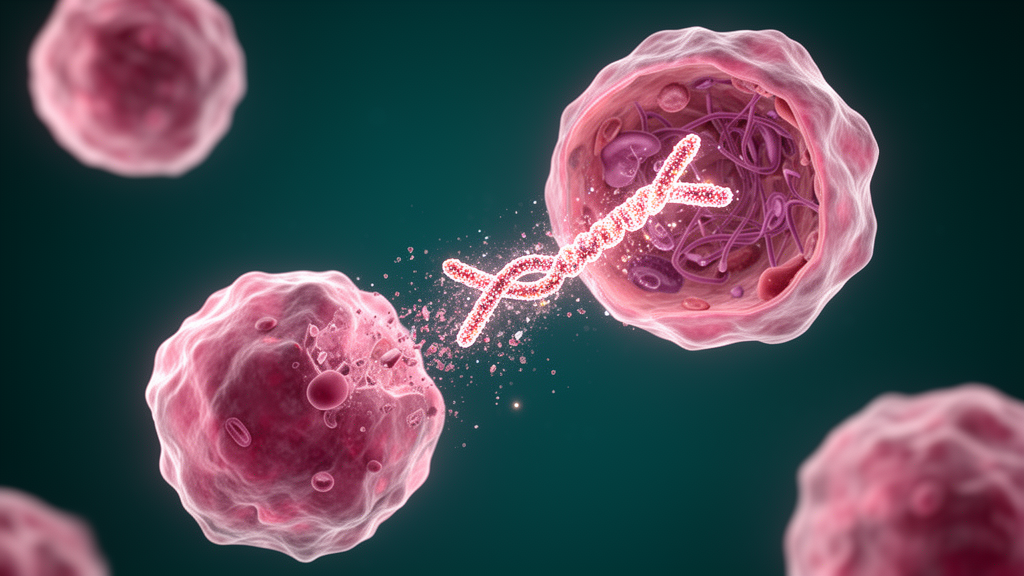
One of the most common genetic changes in aging men has long been treated as a curiosity: the quiet disappearance of the Y chromosome from blood cells, a phenomenon known as loss of Y. A new study led by the University of Arizona Cancer Center suggests that in cancer, this process is anything but random. Instead of losing the entire chromosome in one sweeping event, tumor cells appear to selectively erode specific, gene-rich stretches of the Y chromosome, and those targeted deletions send regulatory shockwaves through the rest of the genome that can promote tumor growth. The findings, published in the journal Communications Biology, offer one of the most detailed maps yet of how Y chromosome loss reshapes cancer biology at the level of individual genes and pathways.
The study, titled “Recurrent deletions and regulatory disruption of the Y chromosome in cancer,” was co-led by Dr. Dan Theodorescu, the Nancy C. and Craig M. Berge endowed chair and Director of the University of Arizona Cancer Center. Theodorescu, who is also a professor at the U of A College of Medicine – Tucson, served as senior author, working alongside co-authors Trini Nguyen, Aditi Kuchi and Nicholas Tatonetti of Cedars-Sinai Medical Center. The research was funded by the National Institutes of Health under grants R35GM131905 and R35CA294022, and the authors reported no competing interests.
Every cell in a man’s body normally carries one X and one Y chromosome. The Y chromosome has historically been defined by its role in determining male sex, but researchers increasingly recognize that its genes perform functional duties in cells throughout the body. Loss of Y is a frequent genetic change in aging men, most often detected in blood cells, and it also occurs within cancer cells themselves. What has remained unclear is precisely which parts of the chromosome are lost in tumors, whether those losses are acquired during cancer evolution or inherited, and what the consequences are for gene regulation and tumor behavior.
To answer those questions, the research team combined expertise in cancer biology and computational genomics and analyzed whole genome sequencing and gene expression data from 160 male cell lines in the Cancer Cell Line Encyclopedia. The choice of cancer cell lines was deliberate. In solid tumor samples, non-cancerous background cells can dilute or obscure the genetic signals coming from the tumor itself, making it difficult to quantify exactly how much of the Y chromosome has been lost. Cell lines, which consist almost entirely of cancer cells, provided a cleaner window into the chromosome’s fate during malignant evolution.
Central to the study was a novel analytical tool the team developed called the Y EroSion Score, or YES. Traditional approaches treated Y chromosome loss as a binary state: the chromosome was either present or completely gone. The YES scoring system reframed the phenomenon as a continuous spectrum of erosion, allowing researchers to measure degrees of partial loss across the chromosome with high-resolution genome sequencing. “Traditionally, researchers looked at losing the Y chromosome in a cancer cell as an all-or-nothing event. It was either there or completely gone,” Theodorescu said. “By zooming in with high-coverage genome sequencing, we discovered that cancer cells are actually wearing down specific, gene-rich regions of the Y chromosome to help tumor growth while keeping other regions intact.”
That selective erosion produced a striking pattern. The team identified 24 protein-coding genes on the Y chromosome that were recurrently lost across the cancer cell lines, a recurrence that implies these deletions confer some advantage to the tumor rather than representing incidental damage. To test whether the pattern held beyond laboratory models, the researchers cross-referenced their findings with two external datasets: single-nucleus sequencing of bladder tumors and a pan-cancer clinical sequencing panel. Fifteen of the 24 recurrently lost genes were independently detected as lost in at least one of those two clinical datasets, strengthening the case that the erosion pattern is a genuine feature of human cancers rather than an artifact of cell line culture.
The most consequential comparison came from healthy genomes. When the team examined whole genome sequencing data from men in the 1000 Genomes Project, a large public reference collection of human genetic variation, they found no evidence of the same Y chromosome deletions. That absence is critical: it indicates that the recurrent losses seen in cancer are acquired over time during tumor evolution rather than inherited traits passed down through families. In other words, cancer cells are actively sculpting the Y chromosome as they divide, chipping away at the same gene-rich regions again and again because doing so appears to help the tumor grow.
The deletions also appear to do more than silence the genes physically removed from the chromosome. “When specific parts of the Y chromosome are lost, the effects reverberate through the entire cell, affecting pathways that determine stress, growth and immune responses,” Theodorescu said. This regulatory disruption means that eroding segments of the Y chromosome can alter the behavior of genes elsewhere in the genome, rippling through networks that govern how cancer cells handle stress, how fast they proliferate, and how visible they are to the immune system. “Understanding which parts are lost gives us a clearer map of how tumors evolve and could eventually lead to targeted therapies for patients,” he added.
The new findings build on Theodorescu’s earlier research into Y chromosome biology in cancer. Previous work from his group showed that loss of the Y chromosome in cancer cells in men as they age can help tumors evade the immune system, a mechanism that helps explain why the loss has been linked to increased mortality from carcinomas and other cancers. His group’s other research suggests that loss of the Y chromosome in normal-appearing tissues may act as an early warning sign, marking a hidden zone of genetic vulnerability where cancer is more likely to develop. Taken together, these studies portray Y chromosome erosion as a progressive process that begins in apparently healthy tissue and deepens as tumors evolve, with each stage carrying clinical meaning.
The study’s method of research was data and statistical analysis, and the subject of research was cells, but the implications extend toward the clinic. Because the Y EroSion Score maps loss as a graded spectrum rather than a simple presence-or-absence call, it could eventually help physicians stratify male patients by the degree and pattern of Y chromosome erosion in their tumors, informing personalized treatment plans that account for the immune and growth pathways those deletions disrupt. As whole genome sequencing becomes more common in cancer care, the ability to read the Y chromosome’s erosion pattern as a dynamic record of tumor evolution may transform a chromosome once dismissed as genetically quiet into a source of actionable insight for men’s cancer treatment.
Subject of Research: Y chromosome erosion and its role in cancer development in men
Article Title: Study shows how missing pieces of Y chromosome drive cancer in men
Article References: Study shows how missing pieces of Y chromosome drive cancer in men. (n.d.). Original publication
Image Credits: AI Generated
DOI: Not provided
Keywords: Y chromosome, cancer, whole genome sequencing, loss of Y, tumor growth, gene regulation, Communications Biology, University of Arizona Cancer Center, bladder cancer, immune evasion, personalized medicine, genomics
Cite Scienmag News
Nathaniel Bowman. (October 17, 2026). Cancer Cells Selectively Strip Gene-Rich Regions of the Y Chromosome to Fuel Tumor Growth. Scienmag. https://scienmag.com/cancer-cells-selectively-strip-gene-rich-regions-of-the-y-chromosome-to-fuel-tumor-growth/
Nathaniel Bowman. "Cancer Cells Selectively Strip Gene-Rich Regions of the Y Chromosome to Fuel Tumor Growth." Scienmag, 17 October 2026, https://scienmag.com/cancer-cells-selectively-strip-gene-rich-regions-of-the-y-chromosome-to-fuel-tumor-growth/. Accessed 17 October 2026.
Nathaniel Bowman. "Cancer Cells Selectively Strip Gene-Rich Regions of the Y Chromosome to Fuel Tumor Growth." Scienmag. October 17, 2026. https://scienmag.com/cancer-cells-selectively-strip-gene-rich-regions-of-the-y-chromosome-to-fuel-tumor-growth/


