


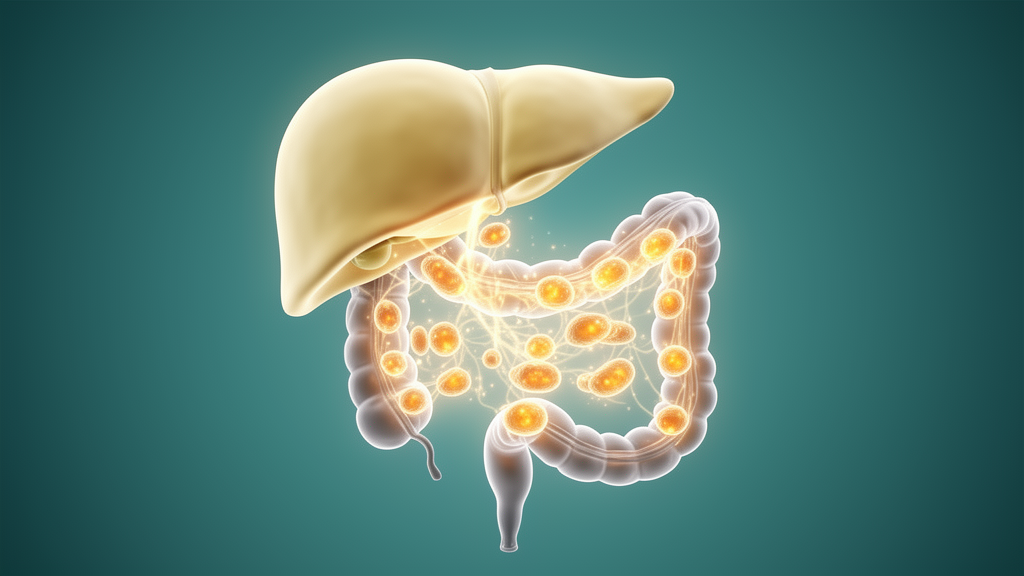
Metabolic dysfunction–associated steatotic liver disease, or MASLD, has quietly become the most common chronic liver disorder on the planet, affecting more than a quarter of adults worldwide. Once dismissed as simple fatty liver, the condition renamed from NAFLD in recent years is now understood as something far more complex: a systemic disease that emerges from a tangled interplay between inherited genetic risk, metabolic overload, immune signaling and the trillions of microbes living in the gut. A comprehensive review published in Frontiers in Gastroenterology by researchers at the University of Balamand synthesizes this evidence and argues that MASLD can only be understood, diagnosed and eventually treated by decoding what the authors call the gut–genetic–metabolic nexus.
The disease spans a dangerous continuum. It begins as simple steatosis, the harmless-sounding accumulation of triglycerides inside hepatocytes, but can progress to metabolic dysfunction–associated steatohepatitis, or MASH, in which inflammation and hepatocyte injury take hold. From there, activated hepatic stellate cells transform into myofibroblasts and deposit extracellular matrix, driving fibrosis, then cirrhosis, and ultimately hepatocellular carcinoma. The old two-hit hypothesis, which imagined a single secondary trigger converting fat-laden livers into inflamed ones, has given way to a model of continuous, bidirectional interactions among genetics, diet, insulin resistance, environmental exposures and even oral health. Notably, MASLD is increasingly diagnosed at younger ages and is linked to elevated cancer risk.
Central to this new understanding is the gut–liver axis, the anatomical and functional connection between the intestine and the liver via the portal vein and biliary tract. In MASLD, microbial dysbiosis, increased intestinal permeability and altered metabolite production disrupt this axis. High-fat, high-sugar diets and a loss of short-chain fatty acid–producing commensals such as Faecalibacterium compromise tight junctions, producing a leaky gut. Microbial products then translocate into portal blood: lipopolysaccharide activates Toll-like receptor 4 on Kupffer cells, triggering NF-κB signaling and a flood of tumor necrosis factor-alpha and interleukin-1beta, while flagellin and peptidoglycans stimulate innate immune pathways. Small-intestinal bacterial overgrowth further amplifies this endotoxin flux, positioning barrier failure as the first hit that ignites hepatic immune activation.
The microbial contribution extends well beyond barrier failure into a pharmacology of its own. Dysbiosis reshapes bile acid pools, impairing signaling through the farnesoid X receptor and TGR5 and favoring toxic, poorly water-soluble secondary bile acids that injure hepatocytes. Depleted butyrate production weakens the colonic barrier and worsens insulin resistance, while bacterial conversion of choline to trimethylamine, and then to trimethylamine N-oxide by the host, reduces hepatic phosphatidylcholine needed to export very low-density lipoproteins, trapping fat in the liver. Microbial ethanol and phenylacetic acid drive oxidative stress and lipogenesis, whereas protective indole derivatives such as indole-3-propionic acid activate the aryl hydrocarbon and pregnane X receptors to detoxify harmful metabolites. Supplementation with these indoles has been shown to improve hepatic steatosis in patients.
Genetics sets the stage on which this microbial drama unfolds. Genome-wide association studies have identified susceptibility loci including PNPLA3, TM6SF2, MBOAT7, HSD17B13 and GCKR, which alter hepatic lipid handling and inflammatory signaling. Strikingly, the relationship is bidirectional: individuals carrying PNPLA3 risk alleles exhibit dysbiotic gut communities enriched in pathobionts and depleted of short-chain fatty acid producers, while microbiota-derived metabolites feed back to reshape hepatic gene expression through epigenetic mechanisms such as DNA methylation and histone modification. Butyrate itself acts as a histone deacetylase inhibitor, promoting anti-inflammatory transcription, and twin studies confirm that microbial ecology is partly heritable, tying host genotype to the composition of the gut ecosystem.
Hormones add yet another layer. Hypothyroidism, both overt and subclinical, is consistently associated with MASLD through thyroid-stimulating hormone–mediated insulin resistance, lipid dysregulation and reduced fatty acid oxidation, and Mendelian randomization studies reveal a dose-dependent relationship between elevated TSH and advanced fibrosis. Thyroid hormones also alter gut microbial composition, giving hypothyroidism a dual effect on disease. The clinical payoff is already visible: the thyroid hormone receptor-beta agonist resmetirom recently became the first FDA-approved therapy for adults with non-cirrhotic MASH and moderate-to-advanced fibrosis, and experimental work with the agonist HSK31679 showed that its efficacy depends on Bacteroides thetaiotaomicron and microbial sphingolipid production, a pharmacomicrobiomic paradigm suggesting that drugs may need microbiome co-optimization to work at all.
Microbial signatures also track with disease severity in ways that could transform diagnosis. Duodenal mucosal microbiota, anatomically close to the liver, correlate with liver fat content and stiffness on MRI and can identify advanced disease with roughly 81 percent accuracy. Low-biomass tissue studies have detected distinct bacterial DNA in liver and adipose tissue across MASLD stages, with Enterococcus, Granulicatella and Morganellaceae associated with MASH and Brevibacterium with fibrosis, though such findings demand strict contamination controls. On the dietary side, a higher Dietary Index of Gut Microbiota, a score reflecting intake of foods that promote microbial diversity and short-chain fatty acid production, is associated with roughly a 10 percent reduction in MASLD odds, an effect mediated largely through body mass index and systemic inflammation.
These mechanistic insights are fueling a wave of microbiome-directed therapeutics. Probiotics, typically Lactobacillus and Bifidobacterium strains, strengthen tight junctions and reduce endotoxemia, and meta-analyses show improvements in liver enzymes and metabolic parameters, though effects on steatosis and fibrosis remain inconsistent. Prebiotic fibers boost butyrate and propionate production and improve insulin sensitivity, while synbiotics, which combine the two, currently carry the strongest clinical evidence, with meta-analyses showing reduced hepatic steatosis, lower TNF-alpha and improved lipid profiles. Postbiotics, such as pasteurized Akkermansia muciniphila, deliver microbial metabolites without live organisms and have improved insulin sensitivity in early human studies, though no MASLD-specific trials exist yet.
More ambitious approaches are following. Fecal microbiota transplantation has shown proof of concept in animal models, where transferring gut flora can transmit or protect from steatosis, and in small human pilot trials it improved gut permeability and, in one controlled study combined with lifestyle intervention, significantly reduced liver steatosis measured by FibroScan. An ongoing placebo-controlled trial is testing continuous fecal microbiota capsules over 24 weeks alongside next-generation probiotics. Further out, engineered bacteria programmed to secrete interleukin-22 or GLP-1 have attenuated liver injury and improved metabolic outcomes in animal models, and bacteriophage therapy has selectively eliminated alcohol-producing Klebsiella pneumoniae in mice, preventing steatohepatitis without disturbing commensal communities. None of these advanced platforms has yet completed large clinical trials in MASLD.
The review’s authors emphasize that the microbiome functions primarily as a disease modifier rather than the principal initiating factor, with obesity, insulin resistance and inherited variants remaining the dominant determinants of susceptibility, but its modifiability makes it the most tractable therapeutic target. Analysis of 317 registered interventional trials shows a field shifting rapidly toward pharmacological agents targeting metabolic pathways, inflammation and fibrosis, dominated by North American and European sites, while patient studies reveal that self-management capacity, influenced by education, smoking and social support, strongly predicts readmission. The path forward, the authors argue, lies in precision hepatology: longitudinal, multi-center studies integrating genomics, metabolomics and microbiome profiling with standardized clinical phenotyping, so that microbiome-aware, biomarker-guided and genetically stratified therapies can halt or even reverse a disease that begins in the gut and ends, too often, in the liver.
Subject of Research: Gut–liver axis mechanisms and microbiome-targeted therapies in metabolic dysfunction–associated steatotic liver disease
Article Title: MASLD beyond the liver: decoding the gut–genetic–metabolic nexus
Article References: Attieh, P., Nassif, M., Maghzal, M., Bedran, A., Kassas, J., Othman, M., Sahyoun, F., Harb, F., Azar, S., & Ghadieh, H. E. (2026). MASLD beyond the liver: decoding the gut–genetic–metabolic nexus. Frontiers in Gastroenterology, 5, Article 1824548. https://doi.org/10.3389/fgstr.2026.1824548
Image Credits: AI Generated
DOI: 10.3389/fgstr.2026.1824548
Keywords: MASLD, NAFLD, MASH, gut-liver axis, gut microbiome, dysbiosis, PNPLA3, bile acids, resmetirom, fecal microbiota transplantation, hepatocellular carcinoma, precision medicine
Cite Scienmag News
Juliet Wilcox. (October 17, 2026). Fatty liver disease is not just a liver problem: how gut microbes, genes and metabolism collide. Scienmag. https://scienmag.com/fatty-liver-disease-is-not-just-a-liver-problem-how-gut-microbes-genes-and-metabolism-collide/
Juliet Wilcox. "Fatty liver disease is not just a liver problem: how gut microbes, genes and metabolism collide." Scienmag, 17 October 2026, https://scienmag.com/fatty-liver-disease-is-not-just-a-liver-problem-how-gut-microbes-genes-and-metabolism-collide/. Accessed 17 October 2026.
Juliet Wilcox. "Fatty liver disease is not just a liver problem: how gut microbes, genes and metabolism collide." Scienmag. October 17, 2026. https://scienmag.com/fatty-liver-disease-is-not-just-a-liver-problem-how-gut-microbes-genes-and-metabolism-collide/


