


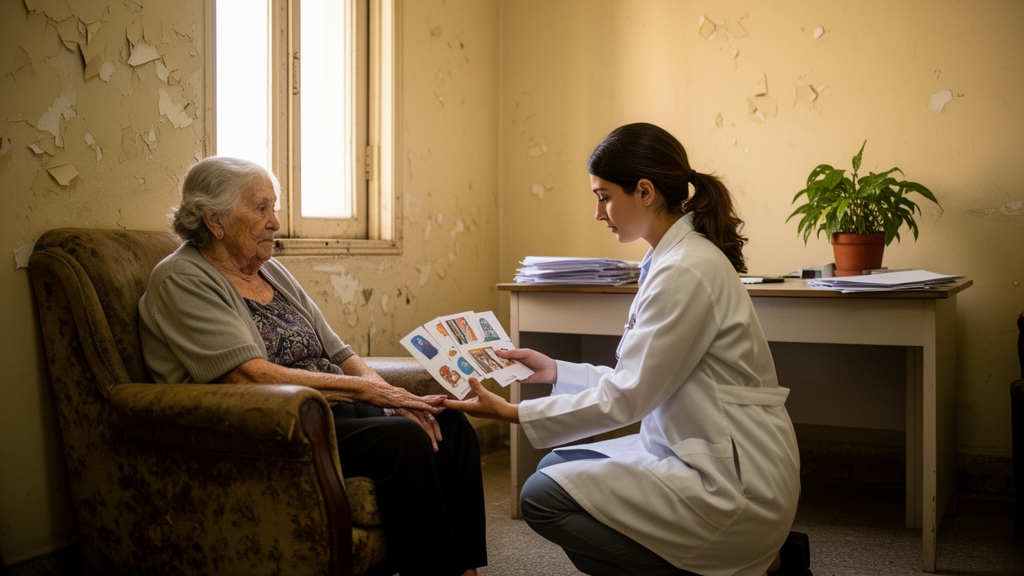
In a district of Greater Buenos Aires where more than 60 percent of residents lack essential services, a public memory clinic has spent ten years quietly rewriting the rules of dementia care. A new study published in Frontiers in Dementia documents the trajectory of the Memory Clinic at Hospital El Cruce in Florencio Varela, Argentina, from its founding in 2016 to its current role as the region’s only public center for specialized cognitive assessment. The report, based on 1,204 patients evaluated over a decade, shows how a standardized, culturally adapted diagnostic protocol can deliver high-quality dementia care in one of the most socioeconomically vulnerable corners of Latin America.
The clinic serves older adults covered by PAMI, Argentina’s largest state-run health program for seniors and people with disabilities, broadly comparable to Medicare in the United States. Florencio Varela presents a stark picture of structural poverty: 16.2 percent of its population lives in poverty as measured by Unsatisfied Basic Needs, and a government report found that 20 percent of residents live in census areas ranking lowest on the Multiple Deprivation Index. Before the clinic opened, beneficiaries faced significant barriers to neuropsychological evaluation, and primary care physicians lacked specialist support for accurate diagnosis. An earlier study by the same team revealed the consequences: 25 percent of people without dementia were being medicated with drugs typically reserved for the disease, while more than half of those living with dementia went untreated.
Between January 2016 and January 2026, the clinic evaluated 1,204 individuals, 852 women and 353 men, with a mean age of 72.1 years and an average of just six years of education. Notably, 11.8 percent were immigrants, most from neighboring countries, with Paraguayans forming the largest subgroup. Most patients arrived through self-motivation, driven by memory complaints rather than formal clinical referral, even though all met the PAMI requirement of a primary care referral. Women made up 70.7 percent of the sample and presented at a significantly younger mean age than men, 71.7 versus 73.1 years, a pattern the authors attribute to greater health-seeking behavior among women rather than a lesser cognitive burden.
The educational profile of the population posed a central technical challenge for diagnosis. Standard cognitive tests are highly sensitive to years of schooling, and applying them uncritically risks both overdiagnosis and underdiagnosis. The clinic therefore adopted education-adjusted cut-off scores for the Mini-Mental State Examination, using the Río de la Plata version, and for the Spanish version of the Addenbrooke’s Cognitive Examination-Revised. Twenty-two percent of patients had three or fewer years of formal schooling, and only 3.3 percent had reached university level. Using these adjusted thresholds, 36.3 percent of patients met criteria for cognitive impairment on the MMSE and 40.9 percent on the ACE-R, with age and low education both significantly increasing the odds of impairment in logistic regression models.
The assessment battery itself evolved through iterative refinement. Executive function was initially screened with the INECO Frontal Screening, but in 2019 the team switched to the Frontal Assessment Battery, whose simpler tasks and worldwide validation better suited the cohort. The shift was revealing: 86.6 percent of those evaluated with the IFS scored below threshold, whereas the FAB detected executive dysfunction in 49.2 percent, suggesting the earlier instrument had overestimated impairment in this low-education context. Functional assessment was likewise expanded, adding the Functional Activities Questionnaire in 2021 to complement the Clinical Dementia Rating, the Spanish Neuropsychiatric Inventory Questionnaire in 2023 to capture behavioral changes, the Zarit Burden Interview in 2021 to measure caregiver strain, and the 15-item Geriatric Depression Scale in 2022.
One of the study’s most striking findings is the dissociation between cognition and function. Although roughly 40 percent of patients showed measurable cognitive deficits, only 19 percent met criteria for dementia, defined as cognitive impairment accompanied by functional dependency on the Clinical Dementia Rating. Many patients with very low cognitive scores retained a degree of autonomy, performed daily activities, and remained engaged in community life. The authors link this resilience to cognitive reserve, the brain’s capacity to adapt and optimize functioning despite aging or pathology, which is shaped by lifetime experiences such as education, occupation, and social engagement. To measure it, the team culturally adapted the Cognitive Reserve Questionnaire into a local version, the CRQ-BA, and tested it in 315 patients between 2019 and 2023. Diagnosis explained 5.7 percent of the variability in reserve scores, with significantly lower reserve in patients with dementia compared with both cognitively normal individuals and those with mild cognitive impairment.
Neuroimaging added another layer of diagnostic precision. Over 90 percent of cognitively impaired patients showed abnormal magnetic resonance findings, with mixed degenerative and vascular pathology the most common pattern, likely reflecting the cumulative burden of vascular risk factors tied to socioeconomic disadvantage. Importantly, a notable proportion of cognitively normal patients also exhibited structural brain changes, underscoring the value of imaging even without symptoms. Patients were encouraged to scan at Hospital El Cruce’s 3 Tesla Philips Achieva scanner, where the clinic team has direct access to results and standardized protocols including high-resolution T1-weighted structural imaging, diffusion-weighted imaging, resting-state functional MRI, and T2 and FLAIR sequences.
Diagnoses are not made by a single clinician. Instead, they are established by consensus in weekly interdisciplinary meetings that integrate clinical, cognitive, functional, laboratory, and neuroimaging findings according to the criteria proposed by McKhann and colleagues in 2011. Every patient receives evidence-based lifestyle counseling for dementia prevention, and when clinically indicated, pharmacological treatment or referral to culturally adapted cognitive stimulation therapy. That therapy, originally developed in the United Kingdom, was translated into Spanish and adapted through structured interviews with health professionals, twelve family caregivers, ten patients with Alzheimer-type dementia, and the clinic’s neurology and neuropsychology team. It has now run four times in groups of about ten people with mild cognitive impairment or mild dementia, with encouraging cognitive improvements in most participants and positive results on global cognitive functions in an efficacy trial.
The clinic’s research arm has become inseparable from its clinical mission. Over the past three years it helped launch GeNED.ar, a national cohort study on genetics and neuroimaging in aging and dementia in Argentina, aimed at characterizing a population critically underrepresented in large-scale dementia research. The collaboration is explicitly bidirectional: a recent GeNED.ar analysis of plasma phosphorylated tau at position 217, a promising Alzheimer’s blood biomarker, in 134 participants produced two diagnostic models whose results converged with the clinic’s own clinical diagnoses. This alignment between biomarker research and bedside judgment exemplifies how practice-based research can feed back into care, supporting staff training and alignment with international standards.
Longitudinal data, though limited to the 20 percent of patients who returned for at least one follow-up visit, carry a warning: a quarter of those initially classified as cognitively normal showed decline by their next visit, reinforcing the need for structured monitoring in a population at high social and vascular risk. The authors acknowledge persistent barriers, including transportation difficulties, extreme weather, limited internet access, and low digital literacy, which constrain both attendance and the feasibility of remote care. Their future plans include pilot-testing virtual cognitive stimulation therapy for patients with connectivity and devices, and adapting caregiver interventions such as the START program for family carers. As dementia prevalence rises disproportionately in low- and middle-income countries, the Florencio Varela experience offers what the authors describe as a successful and replicable model for similar socioeconomic contexts across Latin America, demonstrating that research-integrated, equitable dementia care is feasible even where resources are scarce.
Subject of Research: Dementia diagnosis and treatment in a public memory clinic serving a low-income population in Argentina
Article Title: Diagnostic and treatment strategies in a memory clinic for older adults in a region with a predominantly low-income population
Article References: Solis, P., Mintz, I., Medel, N., Sevillano, Z., Lisso, J., Irureta, N., Zalazar-Jaime, M. F., Giagante, B., Dalmasso, M. C., & Kochen, S. (2026). Diagnostic and treatment strategies in a memory clinic for older adults in a region with a predominantly low-income population. Frontiers in Dementia, 5, Article 1881788. https://doi.org/10.3389/frdem.2026.1881788
Image Credits: AI Generated
DOI: 10.3389/frdem.2026.1881788
Keywords: dementia, memory clinic, cognitive reserve, Alzheimer's disease, Argentina, public health, cognitive stimulation therapy, neuroimaging, health equity, older adults, GeNED.ar, low-income populations
Cite Scienmag News
Cassandra Pierce. (October 17, 2026). Inside Argentina’s Public Memory Clinic: A Decade of Dementia Care for the Poor. Scienmag. https://scienmag.com/inside-argentinas-public-memory-clinic-a-decade-of-dementia-care-for-the-poor/
Cassandra Pierce. "Inside Argentina’s Public Memory Clinic: A Decade of Dementia Care for the Poor." Scienmag, 17 October 2026, https://scienmag.com/inside-argentinas-public-memory-clinic-a-decade-of-dementia-care-for-the-poor/. Accessed 17 October 2026.
Cassandra Pierce. "Inside Argentina’s Public Memory Clinic: A Decade of Dementia Care for the Poor." Scienmag. October 17, 2026. https://scienmag.com/inside-argentinas-public-memory-clinic-a-decade-of-dementia-care-for-the-poor/


