


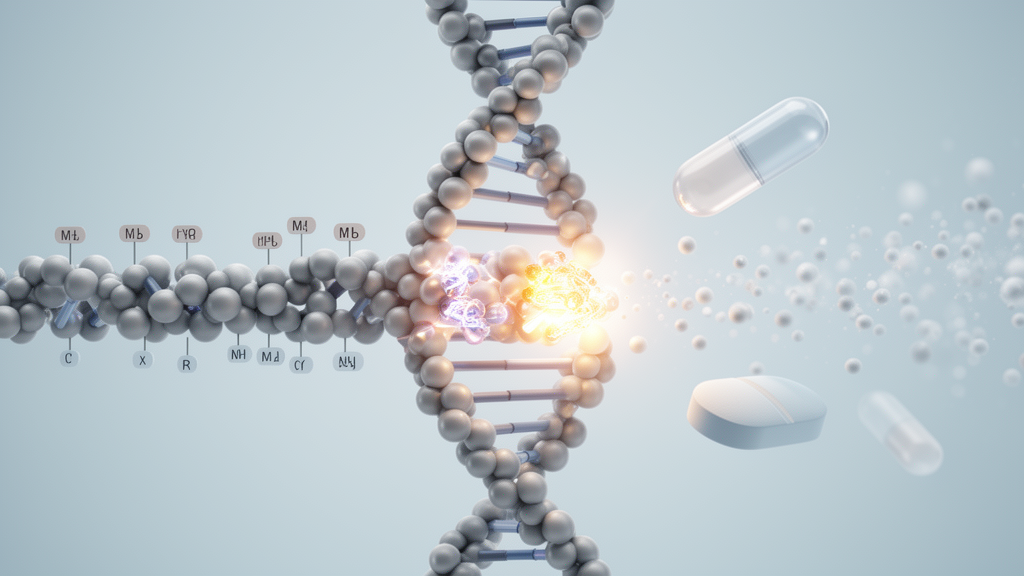
Every cell in the human body carries the same DNA sequence, yet a neuron and a liver cell behave nothing alike. The difference lies in the epigenome, a dynamic layer of chemical marks that switches genes on and off without ever altering the underlying code. A new review published in Frontiers in Pharmacology by Ashley M. Nguyen and Tamer E. Fandy of Texas Tech University’s Paul L. Foster School of Medicine argues that this layer is now central to understanding why patients respond so differently to the same drug. The emerging discipline of pharmacoepigenetics examines how epigenetic variability modifies pharmacokinetics, pharmacodynamics, efficacy, toxicity, and resistance, and it is rapidly becoming a cornerstone of precision medicine.
Unlike pharmacogenomics, which traces drug response to fixed genetic variation, epigenetic regulation is reversible and responsive to the world around it. DNA methylation, histone modifications, chromatin remodeling, and non-coding RNA regulation can all be influenced by age, lifestyle, environmental exposures, inflammation, diet, smoking, and even the microbiome. This plasticity has direct pharmacological consequences. Epigenetic control of genes governing drug absorption, distribution, metabolism, and excretion, including cytochrome P450 enzymes and membrane transporters, can alter drug exposure, while epigenetic regulation of drug targets and disease pathways can change pharmacodynamic sensitivity. Patients with similar genotypes may therefore still differ in treatment response, and an individual’s response may shift over time as the epigenome itself changes.
Epigenetic drugs exploit this regulatory layer directly. In oncology, a central strategy is reactivation of tumor suppressor genes that are often silenced during tumor development and progression. Epigenetic reactivation of these silenced genes can induce apoptosis or differentiation of tumor cells and increase sensitivity to chemotherapy, offering a potentially more personalized and precise approach to cancer treatment. The review catalogs the current FDA-approved arsenal, including DNA methyltransferase inhibitors, histone deacetylase inhibitors, EZH2 inhibitors, mutant IDH inhibitors, and menin inhibitors, alongside emerging therapies such as BET inhibitors, LSD1 inhibitors, precision epigenetic editing, and combination strategies.
DNA methyltransferase inhibitors illustrate the mechanistic sophistication of this class. DNA methylation involves transfer of a methyl group to the C5 position of cytosine to form 5-methylcytosine, a mark that recruits transcriptional repressors and limits transcription-factor access to DNA. The nucleoside analogs azacitidine and decitabine are incorporated into DNA, where they act as suicide substrates that covalently trap DNMT enzymes, leading to DNMT depletion and passive DNA hypomethylation during replication. At pharmacologically relevant lower exposures these agents favor epigenetic reprogramming, while at higher doses DNA damage and cytotoxicity become increasingly prominent. Azacitidine is approved for acute myeloid leukemia, myelodysplastic syndromes, and juvenile myelomonocytic leukemia, and decitabine was first approved in 2006 for myelodysplastic syndromes. The oral combination Inqovi pairs decitabine with cedazuridine, a cytidine deaminase inhibitor that boosts decitabine’s oral bioavailability, and is now approved for myelodysplastic syndromes and, with venetoclax, for selected patients with newly diagnosed AML.
Histone deacetylase inhibitors take a different route into the chromatin. HDACs remove acetyl groups from lysine residues on histone and non-histone proteins, and deacetylation of histones H2A, H2B, H3, and H4 generally favors chromatin compaction and transcriptional repression. Blocking this process increases acetylation at promoters of apoptosis- and cell-cycle-related genes, contributing to cell-cycle arrest, differentiation, and apoptosis in tumor cells. Vorinostat, a pan-HDAC inhibitor approved in 2006 for cutaneous T-cell lymphoma, binds the catalytic site of HDAC enzymes and modulates acetylation of proteins involved in proliferation, protein stability, motility, apoptosis, and angiogenesis. Belinostat, another pan-HDAC inhibitor, is approved for relapsed or refractory peripheral T-cell lymphoma, while romidepsin preferentially inhibits class I HDACs, particularly HDAC1, HDAC2, and HDAC3, after intracellular reduction of its disulfide bond. Notably, the field is no longer confined to cancer: givinostat, an HDAC inhibitor, was approved by the FDA in 2024 for Duchenne muscular dystrophy in patients six years of age and older.
Perhaps the most striking successes come from drugs that target epigenetic enzymes only when they are mutated. Isocitrate dehydrogenase 1 and 2 normally convert isocitrate to α-ketoglutarate, a cofactor that dioxygenases such as TET2 depend on to actively demethylate DNA. IDH mutations deplete α-ketoglutarate and accumulate the oncometabolite 2-hydroxyglutarate, crippling TET2 activity and producing aberrant DNA hypermethylation that represses genes vital to cellular differentiation. Ivosidenib and olutasidenib inhibit mutant IDH1, enasidenib inhibits mutant IDH2, and vorasidenib, a brain-penetrant dual IDH1/IDH2 inhibitor approved in 2024, targets Grade 2 astrocytoma or oligodendroglioma harboring susceptible IDH mutations. By reducing 2-hydroxyglutarate production, these agents restore normal differentiation, and their approvals exemplify a biomarker-defined paradigm in which tumor genotype directly guides drug selection.
Menin inhibitors extend this molecularly defined approach. Menin is a nuclear scaffold protein that, in KMT2A-rearranged leukemia, binds wild-type or chimeric KMT2A-containing complexes and supports aberrant HOXA/MEIS transcription, impaired hematopoietic differentiation, and leukemic transformation. Revumenib, an oral menin inhibitor, disrupts the menin-KMT2A interface and is FDA-approved for relapsed or refractory acute leukemia with KMT2A translocation and for relapsed or refractory AML with a susceptible NPM1 mutation. In NPM1-mutant leukemia, revumenib does not bind mutant NPM1 directly; rather, these leukemias remain dependent on menin-KMT2A activity to maintain HOXA9 and MEIS1 expression, and disruption of this complex promotes differentiation. The pathway has also seen a sobering setback: tazemetostat, an orally active SAM-competitive EZH2 inhibitor once approved for epithelioid sarcoma and selected follicular lymphoma, was voluntarily withdrawn from the United States market in 2026 after an increased rate of secondary hematologic malignancies was identified, leaving no EZH2 inhibitor with an active FDA approval even as next-generation EZH2-selective and dual EZH1/2 inhibitors such as valemetostat remain under clinical investigation.
Emerging therapies are pushing the field toward greater precision. BET proteins, including BRD2, BRD3, BRD4, and BRDT, are epigenetic reader proteins that bind acetylated histone tails to regulate transcription and the cell cycle, and they are overexpressed in multiple tumor types where they drive proto-oncogene activation. The investigational pan-BET inhibitor pelabresib demonstrated improved clinical responses with a manageable safety profile when combined with the JAK inhibitor ruxolitinib in the Phase III MANIFEST-2 trial for myelofibrosis. LSD1, a flavin adenine dinucleotide-dependent demethylase that removes mono- and dimethyl groups from H3K4 and H3K9, is overexpressed in multiple cancers and associated with adverse prognosis; the selective irreversible inhibitor iadademstat covalently modifies LSD1’s FAD cofactor and is being evaluated in combination with azacitidine and venetoclax in AML. Most ambitious of all is precision epigenetic editing, which uses nuclease-deactivated Cas proteins to recruit chromatin-modifying effectors to defined loci without creating double-strand breaks. The investigational epigenetic silencer CRMA-1001, now in Phase 1/2 testing for chronic hepatitis B, uses a non-cleaving programmable DNA-targeting system delivered by lipid nanoparticles to direct durable DNA methylation to transcriptionally active episomal and integrated HBV DNA, repressing viral transcription without cutting or changing the HBV DNA sequence.
Combination strategies are evolving in parallel, and the mechanistic logic is compelling. DNMT inhibitors can derepress endogenous retroviral elements, generate double-stranded RNA, activate type I and III interferon signaling, and increase MHC class I and cancer-testis antigen expression, providing a rationale for pairing epigenetic modifiers with immune checkpoint inhibitors. Another clinically established paradigm couples DNA hypomethylating agents with the BCL-2 inhibitor venetoclax in older or medically unfit patients with AML, joining epigenetic reprogramming with apoptotic priming. Yet the review is candid about the limits: rational combinations require mechanistic justification, biomarker-guided patient selection, and careful optimization of sequence and dose rather than empiric addition of multiple agents, since increased toxicity and inconsistent efficacy remain important limitations.
Formidable challenges still stand between pharmacoepigenetics and routine clinical implementation. Broad HDAC and DNMT inhibition can alter large portions of the epigenome rather than a single disease-driving locus, dose-limiting toxicity can restrict treatment intensity, and the absence of validated predictive biomarkers for many epigenetic drugs leaves treatment largely empiric. Solid tumors add barriers of low proliferation rates that blunt S-phase-dependent nucleoside DNMT inhibitors, stromal barriers to drug distribution, and clonal heterogeneity that offers multiple escape routes. Resistance is drug-specific: loss of DCK for decitabine or UCK2 for azacitidine can blunt hypomethylating agents, IDH-inhibitor resistance can emerge through secondary target-site mutations or isoform switching, and chromatin-directed therapies can be bypassed through compensatory recruitment of alternative complexes. Even so, the trajectory is clear. Tissue profiling, single-cell epigenomics, and circulating tumor DNA methylation assays are improving feasibility, and continued integration of genomic and epigenomic profiling into therapeutic decision-making may ultimately enable more individualized and durable treatment strategies, extending pharmacoepigenetics from oncology into kidney disease, neurodegenerative disorders, and beyond.
Subject of Research: Pharmacoepigenetics and epigenetic regulation of drug response in personalized medicine
Article Title: Pharmacoepigenetics: from epigenetic regulation to personalized therapeutics
Article References: Nguyen, A. M., & Fandy, T. E. (2026). Pharmacoepigenetics: from epigenetic regulation to personalized therapeutics. Frontiers in Pharmacology, 17, Article 1965981. https://doi.org/10.3389/fphar.2026.1965981
Image Credits: AI Generated
DOI: 10.3389/fphar.2026.1965981
Keywords: pharmacoepigenetics, epigenetics, DNA methylation, histone deacetylase inhibitors, DNMT inhibitors, EZH2 inhibitors, mutant IDH inhibitors, menin inhibitors, BET inhibitors, LSD1 inhibitors, epigenetic editing, precision medicine
Cite Scienmag News
Juliet Wilcox. (October 16, 2026). Pharmacoepigenetics: How Epigenetic Regulation Is Driving Personalized Therapeutics. Scienmag. https://scienmag.com/pharmacoepigenetics-how-epigenetic-regulation-is-driving-personalized-therapeutics/
Juliet Wilcox. "Pharmacoepigenetics: How Epigenetic Regulation Is Driving Personalized Therapeutics." Scienmag, 16 October 2026, https://scienmag.com/pharmacoepigenetics-how-epigenetic-regulation-is-driving-personalized-therapeutics/. Accessed 16 October 2026.
Juliet Wilcox. "Pharmacoepigenetics: How Epigenetic Regulation Is Driving Personalized Therapeutics." Scienmag. October 16, 2026. https://scienmag.com/pharmacoepigenetics-how-epigenetic-regulation-is-driving-personalized-therapeutics/


