


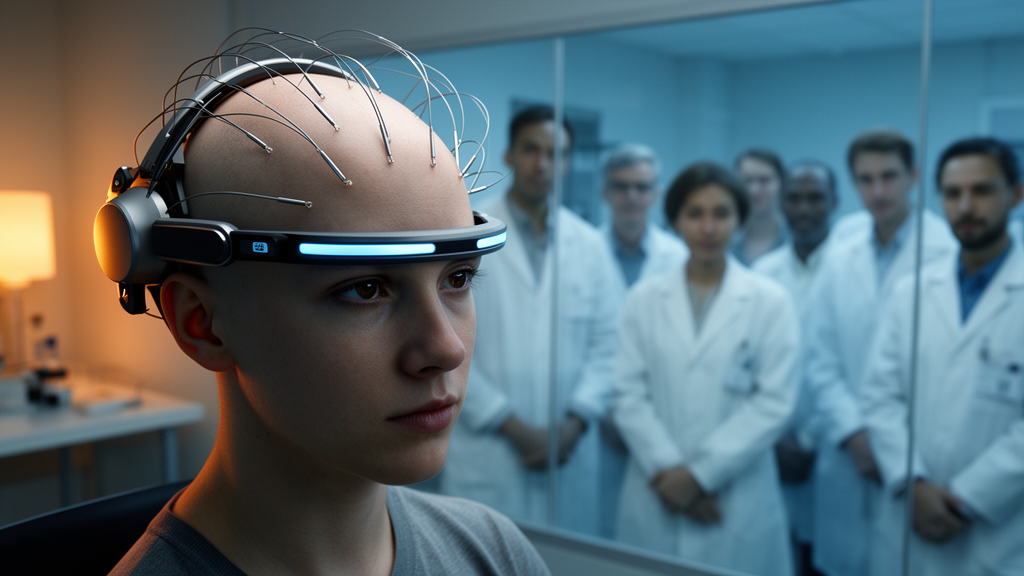
When a patient undergoes an electroencephalogram, a brain MRI scan, or a course of transcranial magnetic stimulation, a chain of professionals stands behind the procedure: someone places the electrodes or operates the machine, and someone else reads the data and makes the diagnosis. A new systematic survey spanning 26 countries on five continents reveals that while this division of labor is remarkably consistent for established technologies such as EEG and MRI, it becomes strikingly opaque for newer brain stimulation methods like transcranial magnetic stimulation and focused ultrasound, where national guidelines are often simply missing.
The survey’s methodology deserves attention because mapping professional roles across borders is not straightforward. The researchers combined three complementary approaches: systematic searches of the scientific literature, direct examination of national health organizations’ websites, and direct correspondence with local health authorities. This triangulation matters because formal regulations, professional society guidelines, and actual bedside practice can diverge considerably. A country may have no written rule about who may operate a TMS device, yet in practice only physicians perform the procedure; conversely, a regulation may exist on paper but be poorly enforced. By contacting authorities directly, the authors could capture practices that would otherwise remain invisible to a purely bibliographic search, though the approach also means that the completeness of the picture depends on how responsive each national body was to inquiry.
The consistency found for EEG and MRI is not accidental. Both technologies share a structural feature that makes role division comparatively easy: the recording or acquisition phase is separable in time from the interpretation phase. An EEG technologist can attach electrodes, calibrate amplifiers, and record a tracing that is stored for later review, and an MRI radiographer can position the patient, select sequences, and archive the images without making any diagnostic judgment. The interpretation, in turn, requires medical training because it carries diagnostic and therapeutic consequences. This temporal and cognitive separation maps naturally onto a technician-physician division, and international bodies such as the International Federation of Clinical Neurophysiology and the American College of Radiology have codified it in their recommendations. The survey’s finding that this pattern holds across most of the 26 countries suggests that these recommendations have been widely absorbed into national practice, even where formal national protocols are absent.
The clinical stakes of this division are considerable. In EEG, the distinction between a technically adequate recording and an interpretable one depends on details such as electrode impedance, artifact recognition, and activation procedures, which is why trained technologists matter. But the reading itself, particularly the identification of interictal epileptiform discharges or the recognition of non-convulsive status epilepticus, demands subspecialty expertise, and misreading can lead to either missed seizures or inappropriate treatment with antiseizure medications. Similarly, in MRI, the technologist’s role in sequence selection and image quality directly determines whether the radiologist can detect subtle pathology such as early demyelinating lesions or small ischemic foci. The survey’s confirmation that neurologists and radiologists respectively hold interpretive authority for EEG and MRI therefore reflects a division of labor that has direct consequences for diagnostic accuracy.
Transcranial Doppler stands out in the survey because it resists this clean separation. Unlike EEG and MRI, TCD is an interactive, real-time examination: the operator must find acoustic windows through the temporal bone or other thin regions of the skull, adjust insonation angles, and track vessels dynamically, and the diagnostic conclusion often emerges during the examination itself rather than afterward. The result is heavily operator-dependent, which is why professional guidelines such as those from the American Institute of Ultrasound in Medicine permit performance by either trained sonographers or physicians, but the survey found that in most countries physicians both perform and interpret the study. This is particularly evident in applications such as detecting vasospasm after subarachnoid hemorrhage, where serial bedside examinations track changing flow velocities and findings must be acted upon immediately, or in sickle cell disease, where elevated flow velocities in the middle cerebral artery guide transfusion decisions that prevent stroke in children. In these settings, the delay inherent in a two-stage perform-then-interpret workflow could be clinically harmful, which plausibly explains why the physician-performed model dominates.
The situation for transcranial magnetic stimulation is more layered because the technology serves two distinct purposes. Single-pulse TMS, used diagnostically to elicit motor evoked potentials and assess corticospinal tract integrity and cortical excitability, is a neurophysiological test in the tradition of EEG, and the survey found that it is either performed by physicians directly or performed by technicians under physician presence, with interpretation reserved for physicians. Repetitive TMS, by contrast, is a therapeutic intervention whose effects depend on stimulation frequency: frequencies below one hertz tend to reduce cortical excitability, while frequencies above five hertz tend to increase it. The therapeutic applications span treatment-resistant major depressive disorder, post-stroke motor rehabilitation, neuropathic pain, and obsessive-compulsive disorder. The survey found that where information was available, therapeutic rTMS is delivered by physicians, typically neurologists or psychiatrists, which aligns with the fact that the prescribing decision, the selection of stimulation parameters, and the monitoring of psychiatric or neurological response all require medical judgment.
The IFCN framework for TMS roles is worth unpacking because it represents the most developed international attempt to structure this workforce. Under these guidelines, technicians conduct sessions, monitor patient safety and comfort, and administer standardized assessments such as depression rating scales; physicians determine appropriateness, prescribe protocols, and supervise; and scientists, usually principal investigators, design studies and oversee implementation in research contexts. This three-tier model resembles the division of labor in other procedural fields, such as anesthesia or interventional cardiology, where delegated performance under medical supervision is standard. Yet the survey’s central finding is that this framework, despite existing in international recommendations, has not been translated into national guidelines in most of the countries examined. The gap between international recommendation and national regulation means that in many jurisdictions the question of who may legally perform or interpret TMS is governed by general medical device or professional practice rules rather than by modality-specific standards.
Focused ultrasound presents an even starker regulatory vacuum, compounded by the fact that the term covers interventions of very different risk profiles. High-intensity focused ultrasound, above roughly 200 watts per square centimeter, produces permanent thermal lesions and is functionally a surgical technique; it has received regulatory approval for thalamotomy in essential tremor and tremor-dominant Parkinson’s disease, and for treatments outside the brain such as uterine fibroids and bone metastases. Medium-intensity applications can transiently open the blood-brain barrier to enable drug delivery, an approach being explored in neurodegenerative diseases. Low-intensity focused ultrasound, below 100 watts per square centimeter, modulates neural activity through mechanical effects on cell membranes and ion channels without destroying tissue, and early-phase pilot trials have explored its neuromodulatory potential in drug-resistant epilepsy. The survey found that where therapeutic use is established, it is performed by physicians, including surgeons for the ablative applications, but the absence of local guidelines for the newer, non-ablative applications means that practice is likely to be improvised as the technology spreads.
The economic dimension of these role assignments should not be overlooked. The authors note that the costs of these technologies are determined not only by equipment and infrastructure but also by the specialized staff required to operate and interpret them. When a modality requires a physician for every session, as TCD largely does, the cost per procedure and the scalability of the service are constrained by physician availability. When delegation to technicians is permitted, as in EEG and MRI, services can be scaled more economically. This has direct implications for accessibility: rTMS, which requires 20 to 30 daily sessions per treatment course and trained personnel, remains of limited availability in many countries precisely because the staffing model is expensive. How countries resolve the question of who may perform stimulation procedures will therefore shape not only patient safety but also whether these therapies reach the patients who could benefit from them.
The survey’s call for standardized national protocols rests on a straightforward premise: that patient safety and diagnostic accuracy should not depend on geography. For EEG and MRI, the international convergence on a technician-performs, physician-interprets model suggests that standardization is achievable when the technology’s demands are well understood and professional consensus has had decades to mature. For TMS and FUS, technologies whose clinical roles are still expanding and whose risk profiles range from non-invasive neuromodulation to permanent ablation, the absence of national guidance leaves both practitioners and patients in an uncertain position. The survey provides the baseline map against which future regulatory developments in these countries can be measured.
Subject of Research: International survey of professional roles in performing and interpreting EEG, MRI, TCD, TMS and focused ultrasound procedures
Article Title: Roles in brain stimulation, recording and interpreting neuroimaging data: a systematic survey of 26 countries on current practices in EEG, MRI, TCD, TMS and FUS
Article References: Valizada, V., Sesseljuson, L. D., Nardone, R., Thomschewski, A., Trinka, E., & Höller, Y. (2026). Roles in brain stimulation, recording and interpreting neuroimaging data: a systematic survey of 26 countries on current practices in EEG, MRI, TCD, TMS and FUS. Frontiers in Medical Technology, 8, Article 1917621. https://doi.org/10.3389/fmedt.2026.1917621
Image Credits: AI Generated
DOI: 10.3389/fmedt.2026.1917621
Keywords: EEG, MRI, transcranial magnetic stimulation, focused ultrasound, transcranial Doppler, neurotechnology, clinical guidelines, health professionals, brain stimulation, neuroimaging, patient safety, health policy
Cite Scienmag News
Cassandra Pierce. (October 16, 2026). Who Can Touch Your Brain? 26-Country Survey Exposes Gaps in Neurotechnology Rules. Scienmag. https://scienmag.com/who-can-touch-your-brain-26-country-survey-exposes-gaps-in-neurotechnology-rules/
Cassandra Pierce. "Who Can Touch Your Brain? 26-Country Survey Exposes Gaps in Neurotechnology Rules." Scienmag, 16 October 2026, https://scienmag.com/who-can-touch-your-brain-26-country-survey-exposes-gaps-in-neurotechnology-rules/. Accessed 16 October 2026.
Cassandra Pierce. "Who Can Touch Your Brain? 26-Country Survey Exposes Gaps in Neurotechnology Rules." Scienmag. October 16, 2026. https://scienmag.com/who-can-touch-your-brain-26-country-survey-exposes-gaps-in-neurotechnology-rules/


