

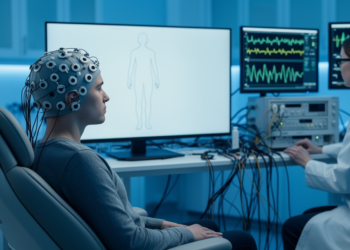
Mild brain stimulation temporarily reverses objectification bias in visual perception
A University of Exeter lab study of 76 students found that ten minutes of transcranial direct current stimulation temporarily improved ...
A University of Exeter lab study of 76 students found that ten minutes of transcranial direct current stimulation temporarily improved ...

A randomized clinical trial found that adults with major depression could complete six weeks of home-based brain stimulation and video-game ...
A randomized, sham-controlled crossover pilot found that one 10-minute focused-ultrasound session modestly reduced delusions for up to seven days in ...
A comprehensive scoping review finds that the optimal angle for TMS coils follows individual cortical geometry rather than a universal ...
A randomized sham-controlled trial found that embodiment-based psychotherapy, with or without concurrent tDCS, greatly improved interoceptive awareness and depressive symptoms ...
A pilot study found that pairing cognitive training with active right-prefrontal tDCS selectively improved non-verbal reasoning and associative fluency in ...
A systematic survey of 26 countries finds consistent professional roles for EEG and MRI but a striking absence of national ...
Recordings from living human cortical tissue reveal that high-frequency electrical stimulation selectively activates fast-spiking interneurons while suppressing other cell types, ...
A new rat study shows that rTMS for depression recruits different behavioral, hormonal, and molecular adaptations depending on whether the ...
A new resting-state fMRI study finds that stronger functional connectivity between the cerebellar posterior vermis and widespread cortical regions is ...

Embark on a thrilling journey of discovery with Scienmag.com—your ultimate source for cutting-edge breakthroughs. Immerse yourself in a world where curiosity knows no limits and tomorrow’s possibilities become today’s reality!