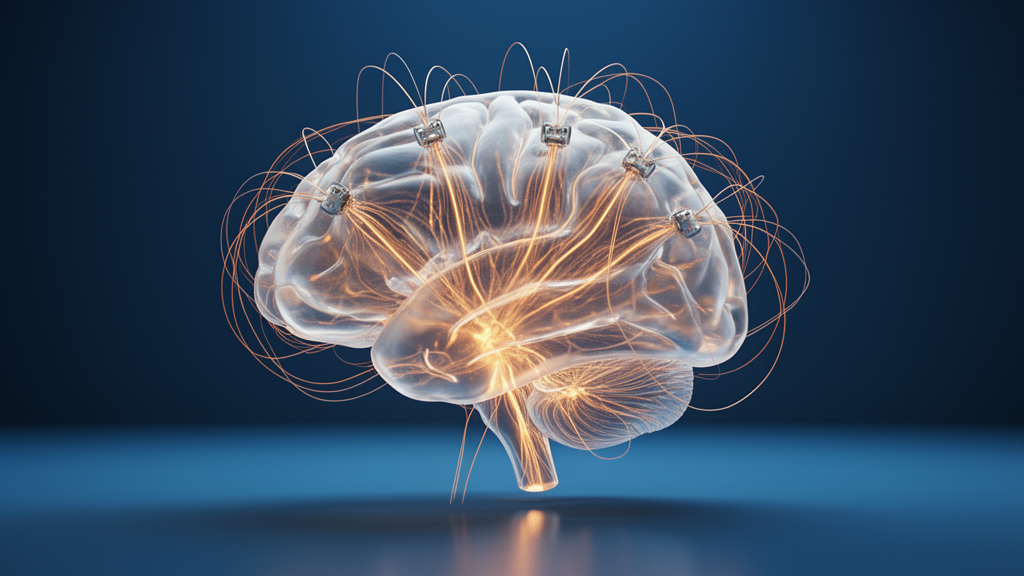
Non-invasive brain stimulation has quietly become one of the most consequential technologies in modern neuroscience. Devices that pass magnetic pulses, weak electrical currents, or even focused beams of sound through the skull can now alter the activity of the living human brain without a single incision. But a new, unusually large analysis of the scientific literature reveals that the four major stimulation technologies are growing along strikingly different trajectories — and that the assumptions researchers often make about how a young scientific field should mature may be wrong.
The study, published in Frontiers in Neuroscience by Guodong Wang and Shuang Wu of Guizhou Medical University, is a comparative bibliometric mapping review of four neuromodulation modalities: transcranial magnetic stimulation (TMS), transcranial direct current stimulation (tDCS), transcranial focused ultrasound and related low-intensity ultrasound stimulation (tFUS/TUS/LIFU), and temporal interference stimulation (TI). Drawing on more than 53,000 records from the Web of Science Core Collection and Scopus published between January 2017 and June 2026, the team applied deduplication, relevance screening, targeted re-auditing, and strict corpus quality control, ultimately retaining 32,017 records. Of these, 20,179 concerned TMS, 10,576 tDCS, 1,100 tFUS/TUS/LIFU, and only 162 TI. After narrowing the ultrasound corpus to a strict neuromodulation core of 843 records — excluding blood–brain barrier opening, drug delivery, ablation, and imaging work — the final comparative dataset contained 31,760 publications.
The growth statistics tell a story of two scientific worlds operating at entirely different scales. TMS, which uses electromagnetic induction to activate cortical neurons and has accumulated decades of clinical evidence including treatment guidelines for depression, grew from 1,547 publications in 2017 to 2,740 in 2025 — an absolute increase of 1,193 papers per year. tDCS, which modulates neuronal resting membrane potentials with weak direct current, added 722 annual publications over the same period. Temporal interference stimulation, by contrast, went from a single paper in 2017 — the year the technique was introduced — to 54 in 2025. That yields a compound annual growth rate of 64.6 percent, the fastest of the four modalities, yet the smallest absolute gain: just 53 additional publications. tFUS/TUS/LIFU occupied an intermediate position, rising from 16 to 176 annual publications with a 35.0 percent growth rate.
This contrast between relative and absolute growth matters because raw percentages can be deceptive when a field starts from a baseline of one paper. The authors explicitly caution that TI’s normalized growth is sensitive to this small-base effect. But the analysis went considerably further than counting papers. Using a size- and year-matched resampling procedure repeated 10,000 times, the researchers sampled 162 records from each comparison modality, matching TI’s year-by-year publication distribution, and then compared six indicators spanning geography, collaboration, and thematic vocabulary.
The most robust finding to emerge from this statistical gauntlet concerned thematic structure. TI showed lower author-keyword Shannon diversity and higher Top-10 keyword concentration than matched samples from TMS, tDCS, and strict-core tFUS/TUS/LIFU, with all six thematic comparisons remaining significant after joint Benjamini–Hochberg false discovery rate correction. In plain terms, TI research revolves around a narrow cluster of technical themes — temporal interference, non-invasive deep brain stimulation, electric fields, computational modeling, and human stimulation — whereas the TMS and tDCS literatures sprawl across depression, stroke, motor cortex, plasticity, and rehabilitation. The ultrasound field showed a mixed profile, blending acoustic engineering foundations with emerging disease-oriented terms such as Alzheimer’s disease, epilepsy, and Parkinson’s disease.
Crucially, this thematic concentration survived every robustness check the authors threw at it. The pattern held when comparator corpora were expanded after record-level adjudication, when inclusion was restricted to title-defined records alone, when the historical title-term procedure was applied to the contemporary datasets, and when the six thematic comparisons were recalculated with two-sided empirical tests. A stratified manual audit of 500 records, independently cross-checked with 96.7 percent agreement and a Cohen’s kappa of 0.902, confirmed that modality-core records constituted the majority of each dataset. TI’s greater focus, in other words, is not an artifact of database quirks or small-sample noise — it is a genuine structural feature of the field.
Yet the deepest insight of the study came from a complementary analysis that inverted the usual logic. Rather than comparing all four modalities over the same calendar window, the researchers aligned each field to its own first nine years: TMS from 1985 to 1993, tDCS from 2000 to 2008, tFUS from 2010 to 2018, and TI from 2017 to 2025. After equalizing corpus sizes through rarefaction to 76 records, the expected pattern — young fields being narrowly focused, mature fields being diverse — did not appear. Instead, early TMS and tDCS were more thematically concentrated than TI, while early tFUS was the least concentrated of all. The relationship between field age and thematic breadth is not monotonic, and this non-monotonic ordering persisted even after the historical tFUS corpus was broadened to include core-adjacent records.
The practical implication is significant: thematic concentration should not be read as a direct proxy for bibliometric maturity, and the historical development of TMS and tDCS cannot be assumed to provide a default roadmap for TI. The TI field, despite its compact size, is already doing things that a naive maturity model would place far in the future. Recent TI research includes direct human deep-target validation — studies stimulating the hippocampus and striatum, some with intracranial or depth-electrode recordings — and investigations in patient populations with Parkinson’s disease and epilepsy, alongside several registered clinical trials in major depressive disorder, bipolar depression, and drug-resistant epilepsy. The authors note these registrations illustrate ongoing translational activity rather than evidence of clinical efficacy.
The co-citation analysis adds another layer to the picture. After canonicalizing cited references to reduce fragmentation from formatting inconsistencies, the four networks displayed distinct intellectual foundations: TI centered on a limited set of biophysical, modeling, dose-optimization, and human-validation papers, with the 2017 Cell paper introducing temporally interfering electric fields standing as its most cited core document at 720 Web of Science citations. TMS’s knowledge base, by contrast, is anchored by evidence-based treatment guidelines with more than 1,700 citations and landmark clinical trials, including the THREE-D and Stanford neuromodulation therapy studies in depression. Geographically, TMS and tDCS involve 112 and 102 contributing countries respectively, compared with 41 for strict-core ultrasound and 29 for TI — yet TI’s multiple-country publication ratio of 25.6 percent actually exceeds those of the larger fields, signaling disproportionate international engagement for so young a literature.
The authors conclude that the four modalities occupy distinct positions on what they call a bibliometric knowledge-structure spectrum, shaped by historical depth, publication volume, technical traditions, and translational pathways rather than by a single developmental axis. For the established fields, the challenge ahead is improving quality and reproducibility within enormous diversified evidence bases. For TI, priorities include multicenter collaboration, standardization of stimulation parameters and electric field modeling, terminology convergence — the field still juggles TI, TIS, tTIS, and other labels — and the shift from proof-of-concept demonstrations toward adequately powered controlled patient cohorts testing dose–response relationships, safety, and clinically meaningful efficacy. Whether temporally interfering electric fields can deliver reliable, selective modulation of deep brain structures remains to be established. But this sweeping map of the literature makes clear that the next chapter of non-invasive deep brain stimulation is already being written faster than almost anyone expected.
Subject of Research: Comparative bibliometric analysis of temporal interference stimulation, TMS, tDCS, and transcranial focused ultrasound for non-invasive brain stimulation
Article Title: Across established non-invasive neuromodulation and emerging deep-targeting strategies: a comparative bibliometric analysis of TI, TMS, tDCS, and tFUS/TUS/LIFU
Article References: Wang, G., & Wu, S. (2026). Across established non-invasive neuromodulation and emerging deep-targeting strategies: a comparative bibliometric analysis of TI, TMS, tDCS, and tFUS/TUS/LIFU. Frontiers in Neuroscience, 20, Article 1922512. https://doi.org/10.3389/fnins.2026.1922512
Image Credits: AI Generated
DOI: 10.3389/fnins.2026.1922512
Keywords: non-invasive brain stimulation, temporal interference stimulation, transcranial magnetic stimulation, transcranial direct current stimulation, transcranial focused ultrasound, bibliometric analysis, deep brain stimulation, neuromodulation, Shannon diversity, temporal interference, co-citation analysis, clinical translation
Cite Scienmag News
Cassandra Pierce. (October 16, 2026). The Hidden Map of Brain Stimulation: New Analysis Reveals How Fast-Growing Deep-Target Techniques Really Compare. Scienmag. https://scienmag.com/the-hidden-map-of-brain-stimulation-new-analysis-reveals-how-fast-growing-deep-target-techniques-really-compare/
Cassandra Pierce. "The Hidden Map of Brain Stimulation: New Analysis Reveals How Fast-Growing Deep-Target Techniques Really Compare." Scienmag, 16 October 2026, https://scienmag.com/the-hidden-map-of-brain-stimulation-new-analysis-reveals-how-fast-growing-deep-target-techniques-really-compare/. Accessed 16 October 2026.
Cassandra Pierce. "The Hidden Map of Brain Stimulation: New Analysis Reveals How Fast-Growing Deep-Target Techniques Really Compare." Scienmag. October 16, 2026. https://scienmag.com/the-hidden-map-of-brain-stimulation-new-analysis-reveals-how-fast-growing-deep-target-techniques-really-compare/