


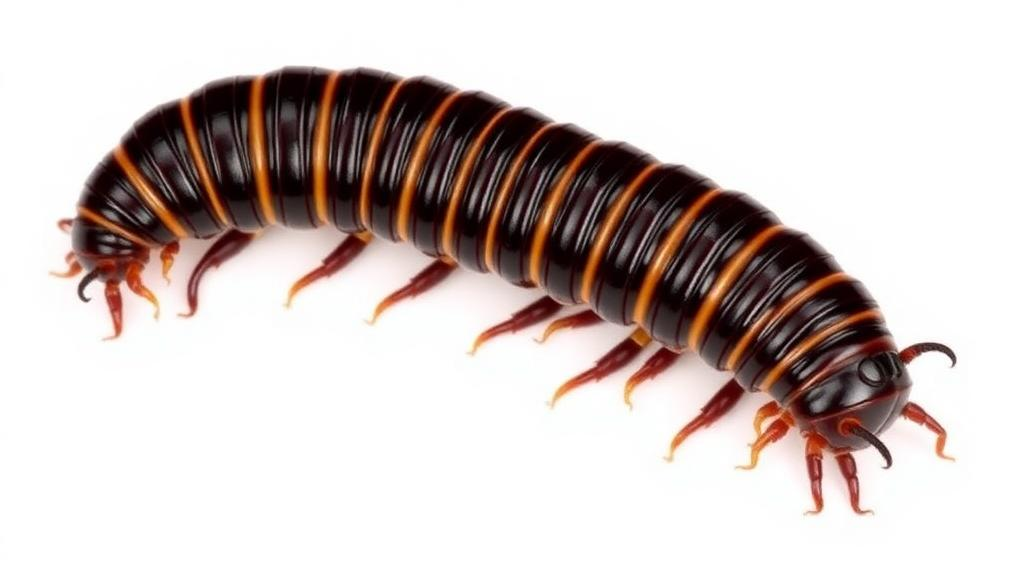
Deep in the forests and agricultural landscapes of Thailand, giant pill-millipedes have been quietly rolling themselves into perfect spheres, evading scientific attention for decades. Now, a team of researchers has revealed that these armored invertebrates are far more diverse than previously recognized. In a new integrative taxonomic study published in ZooKeys, scientists describe two brand-new species of the genus Zephronia and document two species recorded from Thailand for the very first time, bringing the country’s known Zephronia tally to 18 species and underscoring Southeast Asia’s status as one of the planet’s great biodiversity hotspots.
Giant pill-millipedes belong to the order Sphaerotheriida, a group famous for their heavily sclerotised exoskeletons and their remarkable defensive trick: when threatened, they curl into a tight, ball-like shape that protects their soft undersides from predators. The genus Zephronia, first established in 1832, is among the most species-rich groups within this order, with more than 50 described species distributed across Cambodia, China, India, Indonesia, Laos, Malaysia, Myanmar, Nepal, Singapore, Thailand, and Vietnam. Despite this impressive range, the genus remains poorly documented in several biogeographically important areas, particularly mainland Southeast Asia, where dense forests and rugged terrain have long concealed hidden diversity.
Thailand itself sits within the Indo-Burma biodiversity hotspot and harbors approximately 287 recorded millipede species, a number that continues to grow with each new survey. Among Thai giant pill-millipedes, only the family Zephroniidae has been documented, represented by three genera: Sphaerobelum, Prionobelum, and Zephronia. Since 2021, interest in Thai Zephronia has surged, with targeted field surveys uncovering a remarkable array of morphologically distinct populations. The new study, led by researchers affiliated with Khon Kaen University and partner institutions, builds on this momentum by combining classical morphological examination with modern molecular techniques to untangle the region’s pill-millipede diversity.
Between 2022 and 2024, the team conducted extensive fieldwork across the upper central and northeastern regions of Thailand, collecting specimens by hand from agricultural fields, plantation forests, limestone mountains, and forest floors. A total of 290 specimens were examined under stereomicroscopes, with live individuals photographed in situ using high-resolution macro photography before being preserved in 95% ethanol for later analysis. The researchers also employed scanning electron microscopy (SEM) to reveal fine-scale morphological details, from the sensory cones on mouthparts to the crenulated teeth on male telopods, structures that prove critical for distinguishing closely related species.
The molecular component of the study centered on DNA barcoding of the mitochondrial cytochrome c oxidase subunit I (COI) gene. The team extracted genomic DNA from 27 specimens and amplified a 658-base-pair barcoding region using universal primers, then combined these new sequences with 97 publicly available sequences representing all recorded Zephronia species. Phylogenetic trees were reconstructed using both maximum likelihood and Bayesian inference methods, with the GTR+I+G substitution model identified as the best fit for the data. In total, 124 sequences were analyzed, containing 376 polymorphic sites and 316 parsimony-informative sites.
The results were striking. Two new species emerged from the analysis: Zephronia tamarindina sp. nov., named for the tamarind fruit cultivated in Phetchabun Province where it was discovered, and Zephronia triforma sp. nov., whose name reflects the three distinct color morphs it displays. Z. tamarindina is endemic to a single locality in Phetchabun Province, where it was found in dipterocarp forest on limestone terrain, while Z. triforma is known from Nakhon Sawan and Phitsanulok Provinces in the upper central region. Both species exhibit distinctive coloration patterns that set them apart from all known congeners, and SEM imaging revealed unique morphological characters for each taxon.
Perhaps the most visually captivating finding involves Z. triforma, which exhibits remarkable sexual dimorphism within its Phitsanulok population: males display a greyish brown body with dark brown freckles, while females are reddish brown without freckles. A separate population from Nakhon Sawan Province shows a uniform brownish emerald-green coloration. Despite these dramatic differences in appearance, DNA barcoding confirmed that all three morphotypes belong to a single species, with maximum intraspecific genetic distances of only 5.63%, well below the minimum interspecific distance of 8.68% observed in the study. This finding highlights the danger of relying solely on external appearance for species identification in groups with cryptic diversity.
In addition to the two new species, the researchers documented the first records of Zephronia dawydoffi Attems, 1953 and Zephronia laotica Wesener, 2019 from Thailand. Z. dawydoffi, originally described from southern Cambodia, was found in Buri Ram and Khon Kaen Provinces, extending its known range by approximately 300 to 700 kilometers northward. Z. laotica, previously known only from Champasak Province in southern Laos, was recorded from Si Sa Ket Province in northeastern Thailand. Both species inhabit agricultural landscapes, particularly rubber plantations and durian orchards, where they shelter beneath leaf litter and decomposed wood during the daytime.
Phylogenetic analyses placed all four species within the Zephronia sensu stricto clade, characterized by the position of the Tömösváry’s organ outside the antennal groove. However, the broader picture revealed by the COI barcoding tree is more complicated. Zephronia was recovered as non-monophyletic, with certain species such as Z. hui, Z. medogensis, and Z. zhouae nesting within Sphaerobelum rather than clustering with their congeners. The genera Cryxus, Prionobelum, and Sphaerobelum were interspersed among Zephronia lineages with weak nodal support at deeper branches, indicating that traditional morphological diagnostic traits, such as telopod morphology and sensory organ placement, may have evolved independently across different lineages. The researchers emphasize that resolving these relationships will require multi-locus data and more comprehensive taxon sampling across Southeast Asia.
The genetic distances between the newly characterized species and their closest relatives ranged from 8.68% to 22.98%, consistent with the 8–21% interspecific divergence typically observed in giant pill-millipedes. These substantial genetic gaps, combined with clear morphological differences in telopod structure, endotergal characters, and body coloration, provide robust evidence for species delimitation. The study’s findings not only expand the known diversity of Zephronia in Thailand but also highlight the upper central Thai region as a significant center of endemism. With continued field surveys and the application of integrative taxonomic approaches, researchers anticipate that many more pill-millipede species await discovery in the region’s underexplored habitats, reinforcing Southeast Asia’s reputation as a living laboratory of evolutionary diversification.
Subject of Research: Integrative taxonomy of giant pill-millipedes in Thailand
Article Title: Two new species and two new country records of the giant pill-millipede genus Zephronia Gray, 1832 from Thailand, based on integrative taxonomy ( Diplopoda , Sphaerotheriida , Zephroniidae )
Article References: Two new species and two new country records of the giant pill-millipede genus Zephronia Gray, 1832 from Thailand, based on integrative taxonomy ( Diplopoda , Sphaerotheriida , Zephroniidae ). (n.d.). https://doi.org/10.3897/zookeys.1294.205518
Image Credits: AI Generated
DOI: 10.3897/zookeys.1294.205518
Keywords: giant pill-millipedes, Zephronia, Thailand, integrative taxonomy, DNA barcoding, COI gene, new species, biodiversity hotspot, Sphaerotheriida, Zephroniidae, Southeast Asia, morphology
Cite Scienmag News
Margaret Porter. (October 16, 2026). Two New Giant Pill-Millipede Species Discovered in Thailand Through Integrative Taxonomy. Scienmag. https://scienmag.com/two-new-giant-pill-millipede-species-discovered-in-thailand-through-integrative-taxonomy/
Margaret Porter. "Two New Giant Pill-Millipede Species Discovered in Thailand Through Integrative Taxonomy." Scienmag, 16 October 2026, https://scienmag.com/two-new-giant-pill-millipede-species-discovered-in-thailand-through-integrative-taxonomy/. Accessed 16 October 2026.
Margaret Porter. "Two New Giant Pill-Millipede Species Discovered in Thailand Through Integrative Taxonomy." Scienmag. October 16, 2026. https://scienmag.com/two-new-giant-pill-millipede-species-discovered-in-thailand-through-integrative-taxonomy/


