


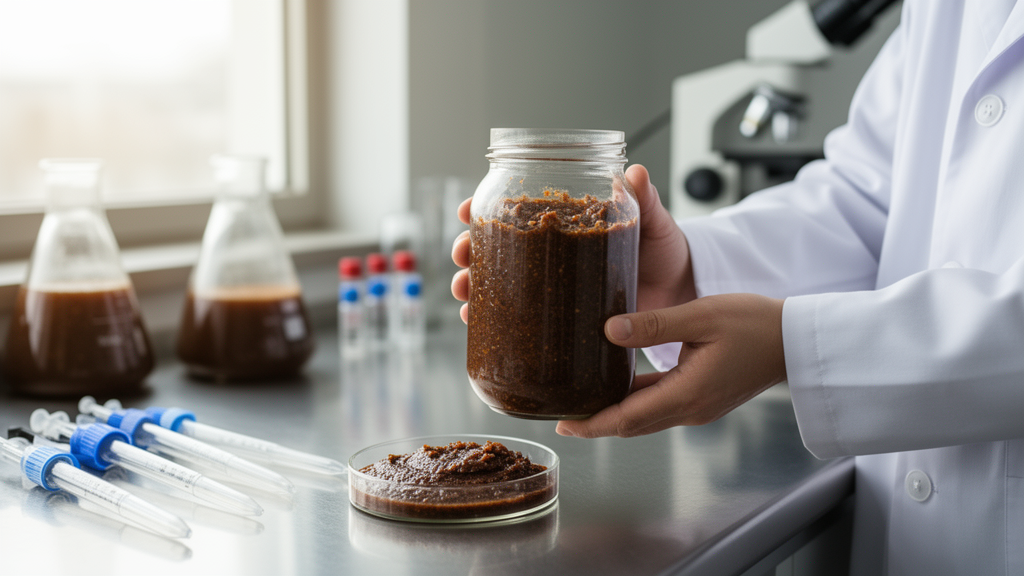
Soybean paste, also known as yellow soybean paste, is one of the representative traditional fermented grain condiments in China. With a history of more than 2000 years of consumption, it holds an important position in Chinese food culture. It shares similar technical origins with other East Asian fermented soybean products such as Japanese miso and Korean doenjang. Soybean paste is mainly made from soybeans, flour, salt and water through koji-making, active fermentation, and ripening stages processes. With the development of the modern food industry, its production has gradually evolved from traditional manual fermentation in workshops toward standardization, low salt content, intelligence and functionalization. It has become a distinctive fermented food in the Asia-Pacific region with regional characteristics, industrial value and great potential for health-oriented development.
The fermentation of soybean paste is essentially a multi-substrate biotransformation process driven by complex microbial communities. Aspergillus oryzae and other aspergilli dominate the koji-making stage and produce proteases, peptidases, amylases, and lipases. These enzymes initiate the degradation of proteins, starches, and lipids in soybeans and wheat. During subsequent high-salt fermentation, salt-tolerant lactic acid bacteria, salt-tolerant yeasts, and Bacillus subtilis contribute to further substrate transformation. Their metabolic activities promote the accumulation of amino acids, low-molecular-weight peptides, reducing sugars, organic acids, fatty acids, alcohols, and esters. Meanwhile, Maillard reaction and oxidation reaction jointly contribute to the formation of its typical sauce aroma, umami taste, sweet flavor and brown colour. Accordingly, soybean paste is more than a simple condiment; it is a natural fermentation system that integrates nutritional remodelling, flavor enrichment and functional factor production.
In this system, soybean proteins are the major precursors of functional peptides, mainly including glycinin (11S) and β-conglycinin (7S), which account for approximately 70% of the total soybean protein. During fermentation, proteases and peptidases secreted in situ by microorganisms continuously hydrolyze these proteins to release peptides with different molecular weights, sequences and physicochemical properties. It is generally acknowledged that most fermentation-derived functional peptides have a molecular weight below 6 kDa, and highly active oligopeptides are mostly less than 1 kDa, typically consisting of 2 to dozens of amino acid residues. Compared with intact soybean proteins, small-molecular-weight peptides exhibit improved aqueous solubility and digestibility. Some di- and tri-peptides can be intactly absorbed via the intestinal PepT1 transporter and exert sequence-dependent bioactivities, which constitute the key material basis for the potential health-promoting effects of soybean paste.
However, crude peptide extracts from fermented soybean paste contain various impurities and peptide fractions that differ in molecular weight and biological activity. This heterogeneity complicates structural characterization and investigation of their mechanisms of action. Accordingly, efficient extraction, graded separation, and high-purity purification procedures are essential to obtain homogeneous soybean paste functional peptides. Systematic characterization should determine the molecular weight distribution, amino acid composition, and three-dimensional conformation of these peptides. Their biological activities should also be experimentally verified. Together, these analyses can clarify structure–activity relationships and the mechanisms underlying flavor modulation and potential physiological effects.
In terms of functional properties, soybean paste functional peptides can be classified into two major categories: flavor peptides and bioactive peptides, and the two categories are not completely independent. Flavor peptides mainly include sour, sweet, bitter, salty, umami and kokumi peptides. They contribute to the formation of umami, mouthfulness and overall flavor harmony of soybean paste, and lay a foundation for the development of low-salt and naturally flavor-enhanced products. Bioactive peptides primarily consist of antioxidant peptides, antihypertensive peptides, anti-inflammatory peptides and hypoglycemic-related peptides. These peptides exert effects by scavenging free radicals, inhibiting angiotensin-converting enzyme, regulating the activities of enzymes involved in glucose and lipid metabolism, or modulating inflammation-related signaling pathways. Some peptide fragments possess both flavor-enhancing and physiological regulatory activities, reflecting the dual value of these peptides in flavor improvement and bioactive benefits.
Accordingly, this review focuses on the peptide system produced via in-situ microbial fermentation of soybean paste over the past decade, following the main thread of proteolysis, peptide formation, and dual functions of flavor and bioactivity. This review summarizes stage-dependent enzyme production and sequential protein hydrolysis involving Aspergillus oryzae, Bacillus subtilis, lactic acid bacteria, yeasts, and other microorganisms during soybean paste fermentation. It then examines how these processes generate low-molecular-weight oligopeptides and functional peptides below 6 kDa. On this basis, it further focuses on the efficient extraction, separation and purification of these peptides, as well as the systematic structural characterization of purified peptide components to support functional verification. Furthermore, it discusses their dual values including the natural flavor-enhancing effect of flavor peptides, as well as the antioxidant, antihypertensive, hypoglycemic and anti-inflammatory activities of health-promoting peptides.
Research regarding the in vivo digestion, intestinal transport, absorption characteristics and overall bioavailability of soybean paste-derived peptides remains limited. After oral administration, these peptides undergo complex structural degradation, secondary enzymatic hydrolysis and molecular rearrangement within the gastrointestinal tract. Only a small proportion of intact or fragmented peptides can penetrate the intestinal barrier, enter the systemic circulation, and exert biological functions. The digestive stability, transmembrane transport mechanism, in vivo tissue distribution, metabolic clearance and bioavailability are critical determinants of the in vivo bioactivities of soybean paste peptides, and serve as essential theoretical foundations for bridging the gap between their in vitro performance and actual in vivo physiological efficacy.
Multi-omics technology has emerged as an advanced and effective tool to overcome the above research bottlenecks and further elucidate the underlying action mechanisms of soybean paste peptides. The integrated application of microbiomics, transcriptomics, proteomics and metabolomics enables accurate analysis of microbial succession patterns, key enzyme gene expression profiles and metabolic regulatory networks during soybean paste fermentation. Furthermore, multi-omics profiling facilitates the identification of core biomarkers responsible for peptide synthesis, flavor formation and bioactivity generation, clarifies the molecular coupling mechanism between flavor and bioactive peptides, and reveals the metabolic and intestinal flora responses to peptide intervention in vivo.
Several questions remain concerning the co-formation of flavor-active and bioactive peptides, potential synergistic interactions within peptide mixtures, and control of peptide profiles. Other challenges include translating in vitro activity into in vivo efficacy and achieving cost-effective enrichment of target peptides. On this basis, this review emphasizes the importance of exploring the gastrointestinal behavior and bioavailability of soybean paste peptides. Combined with multi-omics dissection, the authors propose AI-assisted screening, targeted low-salt fermentation and oriented peptide enrichment to resolve the disconnect between in vitro bioactivity and in vivo efficacy, facilitating the industrial exploitation of dual-functional soybean paste peptides.
Subject of Research: Food Science
Article Title: Soybean paste functional peptides: Fermentation-driven formation, characterization, classification, structure-activity relationships, and multi-omics insights
Article References: Soybean paste functional peptides: Fermentation-driven formation, characterization, classification, structure-activity relationships, and multi-omics insights. (n.d.). https://doi.org/10.1016/j.fochx.2026.104623
Image Credits: AI Generated
DOI: 10.1016/j.fochx.2026.104623
Keywords: soybean paste, functional peptides, fermentation, flavor peptides, bioactive peptides, multi-omics, structure-activity relationships, Food Chemistry: X, Soybean, paste, functional, peptides
Cite Scienmag News
Bethany Barker. (October 16, 2026). Soybean paste functional peptides: Fermentation-driven formation, characterization, classification, structure-activity relationships, and multi-omics insights. Scienmag. https://scienmag.com/soybean-paste-functional-peptides-fermentation-driven-formation-characterization-classification-structure-activity-relationships-and-multi-omics-insights/
Bethany Barker. "Soybean paste functional peptides: Fermentation-driven formation, characterization, classification, structure-activity relationships, and multi-omics insights." Scienmag, 16 October 2026, https://scienmag.com/soybean-paste-functional-peptides-fermentation-driven-formation-characterization-classification-structure-activity-relationships-and-multi-omics-insights/. Accessed 16 October 2026.
Bethany Barker. "Soybean paste functional peptides: Fermentation-driven formation, characterization, classification, structure-activity relationships, and multi-omics insights." Scienmag. October 16, 2026. https://scienmag.com/soybean-paste-functional-peptides-fermentation-driven-formation-characterization-classification-structure-activity-relationships-and-multi-omics-insights/


