


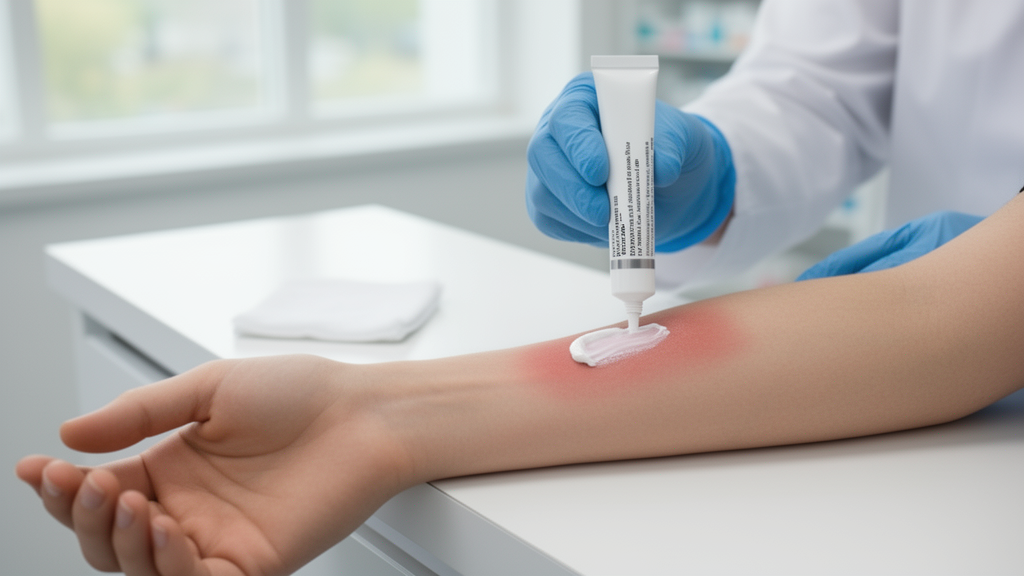
When a drug that patients have swallowed for years suddenly appears on pharmacy shelves as a cream or foam, the safety information that accompanies it can look alarming. That is precisely the situation now unfolding with roflumilast, a potent anti-inflammatory agent whose oral form has treated severe chronic obstructive pulmonary disease in Canada since 2010 and whose topical formulations were recently approved for three common inflammatory skin conditions. A new review published in the Journal of Pharmacy & Pharmaceutical Sciences argues that pharmacists and patients need to read the fine print through a pharmacokinetic lens, because the route of administration changes nearly everything about how the drug behaves in the body.
Roflumilast belongs to a class of drugs called phosphodiesterase-4 inhibitors. By blocking the PDE4 enzyme, which normally degrades cyclic adenosine monophosphate, the drug raises intracellular cAMP levels and thereby suppresses pro-inflammatory mediators and inflammatory cytokines. The oral tablet, dosed at 500 micrograms once daily, was approved by Health Canada in November 2010 for the maintenance treatment of severe COPD. More recently, Health Canada cleared three topical formulations: a 0.3% cream and a 0.3% foam for plaque psoriasis in patients aged 12 and older, a 0.15% cream for mild to moderate atopic dermatitis in patients aged 6 and older, and the 0.3% foam for seborrheic dermatitis in patients aged 9 and older. The approvals rested on the DERMIS-1 and DERMIS-2 phase 3 trials for psoriasis, the INTEGUMENT-1 and INTEGUMENT-2 trials for atopic dermatitis, and a phase 2a trial plus the STRATUM phase 3 trial for seborrheic dermatitis.
The clinical trial data for the topical products are strikingly reassuring. Across the randomized studies, the most common adverse events with the 0.3% cream were diarrhea at 3.1%, headache at 2.4%, insomnia at 1.4%, nausea at 1.2%, upper respiratory and urinary tract infections at 1.0% each, and application site pain at 1.0%. The 0.15% cream produced headache in 2.9% of users, nausea in 1.9%, and diarrhea, vomiting, and application site pain in 1.5% each. The foam’s leading adverse events were nasopharyngitis at 1.5%, nausea at 1.3%, and headache at 1.1%. Treatment discontinuation due to adverse events was rare, affecting only 1.0% of patients on the 0.3% cream, 1.6% on the 0.15% cream, and 0.9% on the foam. Most gastrointestinal symptoms appeared within the first two weeks and resolved without dose adjustment or interruption.
Yet the product monograph for topical roflumilast carries a substantial amount of safety information drawn from the oral formulation, including serious events such as supraventricular arrhythmias, dizziness, tremors, anxiety, and depression that have never been observed in topical trials. The reason is straightforward: the topical products are new, long-term real-world safety data are scarce, and no formal drug-drug interaction studies have been conducted with the creams or foam. Regulators therefore default to the conservative approach of carrying oral safety information forward. For pharmacists, who are often the first professionals patients ask about a medication’s risks, this creates a communication challenge that the review’s authors, a team of Canadian dermatologists and pharmacists, set out to address.
The pharmacokinetic differences between the two routes of administration are dramatic. Oral roflumilast has an absolute bioavailability of approximately 79%, reaching peak plasma concentrations within about an hour of a single 500-microgram dose. It is extensively metabolized in the liver by the cytochrome P450 enzymes CYP3A4 and CYP1A2 into roflumilast N-oxide, an active metabolite that, while roughly threefold less potent than the parent compound, achieves systemic exposure approximately twelvefold greater and accounts for about 90% of the drug’s overall pharmacological effect. In essence, swallowing the pill floods the bloodstream with drug and metabolite alike.
Topical roflumilast cream 0.3%, by contrast, exhibits a bioavailability of just 1.5% and is absorbed slowly, producing steady-state plasma concentrations with low peak-to-trough fluctuation. Pharmacokinetic studies showed that skin concentrations of the drug were 61.8-fold and 126-fold higher than plasma levels following application of 0.5% and 0.15% creams respectively, while concentrations of roflumilast N-oxide in the skin were thirtyfold lower than circulating plasma levels. This indicates minimal systemic exposure and no significant conversion of the parent drug to its active metabolite within the skin; the pharmacological effect appears to come from local PDE4 inhibition by roflumilast itself.
These numbers explain why the safety profiles diverge so sharply. Gastrointestinal events such as abdominal pain and gastritis have been reported only with oral administration, and oral roflumilast is additionally associated with cardiac, neurologic, and psychiatric events absent from the topical trial record. History offers precedent for this pattern. A post-marketing safety study of oral tofacitinib led to boxed warnings for serious infections, malignancies, thrombosis, and major adverse cardiovascular events being applied to all oral JAK inhibitors and even to topical ruxolitinib, yet real-world data showed those events were not reported with topical ruxolitinib use during its first year on the market. Similarly, the black box warning for malignancy on topical tacrolimus, based on oral calcineurin inhibitor data, was removed after two large post-authorization safety studies demonstrated low risk. Topical diclofenac and topical dapsone likewise show markedly lower systemic toxicity than their oral counterparts.
The review also tackles drug interactions and contraindications with practical nuance. Because oral roflumilast is metabolized by CYP3A4 and CYP1A2, co-administration with inhibitors of these enzymes, such as erythromycin, ketoconazole, fluvoxamine, enoxacin, or cimetidine, can raise systemic exposure and adverse event risk. With topical use, systemic concentrations may simply be too low for such interactions to matter, although this has not been formally studied, so the authors advise counselling patients about the theoretical potential for increased adverse events until better data exist. On hepatic impairment, the monograph contraindicates topical roflumilast in moderate-to-severe liver disease (Child-Pugh B or C) based on an oral pharmacokinetic study showing that hepatic insufficiency increased total PDE4 inhibition by roughly 20% in mild and 90% in moderate disease. The authors agree with avoiding the topical product in moderate-to-severe hepatic impairment and recommend caution in mild cases, noting that extensive skin involvement could increase absorption and compound hepatic risk.
Several practical counselling points round out the guidance. Diarrhea with topical roflumilast is infrequent and typically mild, and pooled trial data show it occurs more frequently in patients with larger affected body surface area, rising from 1.1% in patients with less than 5% involvement to 6.7% in those with more than 10%, presumably because more drug is applied over a wider area. Mild weight loss of at least 5% of body weight was reported in 4% of patients on the 0.3% cream but was judged not clinically meaningful, and the authors suggest that unexplained loss of 10% of baseline weight warrants discontinuation and medical assessment. Skin irritation is rare, with roughly 98% of patients showing no signs of irritation in the DERMIS trials, an outcome the authors attribute in part to a vehicle formulated at physiological skin pH 5.5 and free of common irritants such as propylene glycol, ethanol, and fragrances. No skin thinning, photosensitivity, or tachyphylaxis has been reported, and all serious adverse events in the trials were deemed unrelated to treatment.
The review’s limitations are candidly acknowledged: long-term real-world safety data are lacking, no formal interaction studies exist for the topical formulations, and evidence in special populations such as pregnancy, breastfeeding, and broader pediatric groups remains thin. The work was funded by Arcutis Biotherapeutics, the manufacturer of the topical products, though the authors state the company was not involved in data interpretation or the decision to submit. The broader lesson, the authors argue, extends beyond a single drug. Route of administration fundamentally reshapes a molecule’s risk profile, and pharmacovigilance must continue as new formulations reach patients. For now, the message for pharmacists and dermatologists is to contextualize the alarming oral-derived warnings, reassure patients with the topical trial data, and collaborate closely so that safety messaging remains consistent as real-world experience with topical roflumilast accumulates.
Subject of Research: Pharmacokinetic and safety differences between oral and topical roflumilast formulations for inflammatory skin diseases
Article Title: Practical considerations for managing patients being treated with topical roflumilast
Article References: Hanna, S., Chehade, A., Han, C., Poelman, S., Sanghera, R., Whiskin, C., & Sihota, A. (2026). Practical considerations for managing patients being treated with topical roflumilast. Journal of Pharmacy & Pharmaceutical Sciences, 29, Article 16026. https://doi.org/10.3389/jpps.2026.16026
Image Credits: AI Generated
Keywords: roflumilast, PDE4 inhibitor, pharmacokinetics, dermatology, psoriasis, atopic dermatitis, seborrheic dermatitis, drug safety, pharmacists, Practical, considerations, managing
Cite Scienmag News
Ophelia Keating. (October 16, 2026). Topical Roflumilast: Why Route of Administration Rewrites the Safety Story. Scienmag. https://scienmag.com/topical-roflumilast-why-route-of-administration-rewrites-the-safety-story/
Ophelia Keating. "Topical Roflumilast: Why Route of Administration Rewrites the Safety Story." Scienmag, 16 October 2026, https://scienmag.com/topical-roflumilast-why-route-of-administration-rewrites-the-safety-story/. Accessed 16 October 2026.
Ophelia Keating. "Topical Roflumilast: Why Route of Administration Rewrites the Safety Story." Scienmag. October 16, 2026. https://scienmag.com/topical-roflumilast-why-route-of-administration-rewrites-the-safety-story/


