


When an 80-year-old woman arrived at the hospital after collapsing at home, her doctors initially suspected a heart problem. She had a history of heart failure, hypertension, and coronary artery disease, and she described a classic warning sequence before losing consciousness: lightheadedness, tunnel vision, and then a brief blackout with rapid recovery. But her cardiac workup, including a detailed assessment for arrhythmias and structural disease, came back clean. What her physicians found instead was something far more unusual — a rare form of kidney damage triggered by her previously treated lymphoma, quietly flooding her urine with protein and slowly shutting down her kidneys.
The woman, who had been treated years earlier for low-grade B-cell non-Hodgkin lymphoma with a rituximab-based regimen, arrived at the hospital with dangerously low blood pressure — 86/58 — and severe swelling in both legs. Lab tests revealed massive protein leakage into her urine, a condition known as nephrotic-range proteinuria, along with acute kidney injury. Her creatinine, a marker of kidney function, was elevated at 1.8 mg/dL, and her urine protein-to-creatinine ratio exceeded 10 g/g, a level indicating profound kidney damage. She was diagnosed with nephrotic syndrome of uncertain origin and scheduled for a renal biopsy to find the cause.
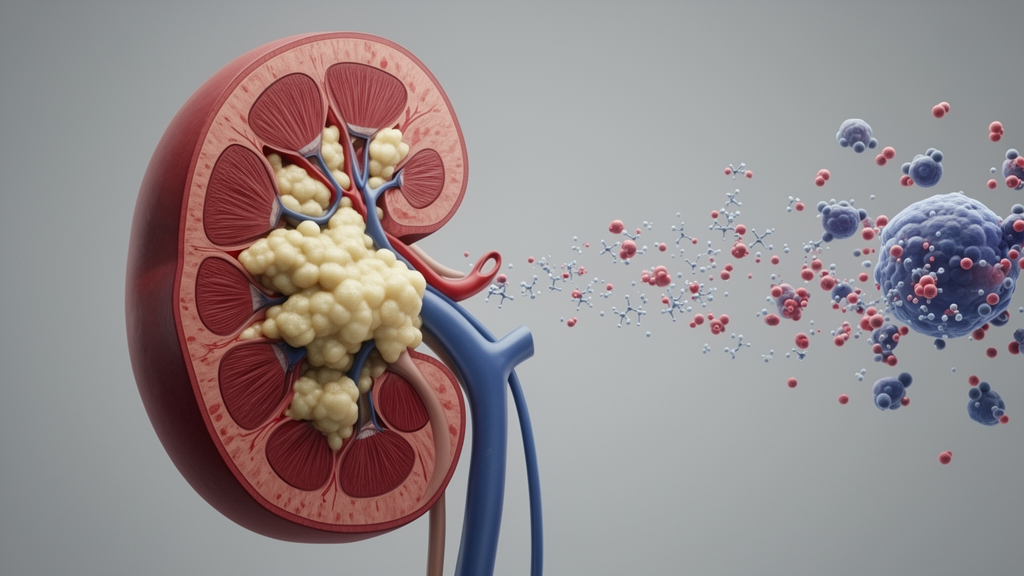
What the biopsy revealed was light chain (AL) amyloidosis — a rare protein misfolding disorder in which abnormal immunoglobulin light chains, produced by a clonal population of plasma cells or B cells, fold incorrectly and aggregate into insoluble fibrils that deposit in organs, disrupting their structure and function. In this patient, the amyloid deposits were composed of lambda light chains and had infiltrated the glomeruli, interstitium, arteries, and arterioles of her kidneys. Light microscopy showed 52% global glomerulosclerosis, moderate interstitial fibrosis, and moderate acute tubular injury — evidence that the deposits had already caused substantial, though not yet irreversible, damage.
AL amyloidosis is uncommon, with an estimated incidence of 9 to 14 cases per million person-years in the United States. It typically arises from plasma cell dyscrasias such as multiple myeloma or monoclonal gammopathy of undetermined significance (MGUS). But in rare instances, it can originate from B-cell lymphomas — a distinctly less prevalent pathogenic subtype that reflects an alternative lymphoid origin of the misfolded light chains. The clinical consequences depend on where the amyloid accumulates: in the heart, it causes restrictive cardiomyopathy; in the kidneys, it produces nephrotic-range proteinuria and progressive renal failure; and systemically, it can cause fatigue, hypotension, and unintentional weight loss.
To identify the source of the amyloid, the team performed a bone marrow biopsy. The results were striking: low-grade B-cell non-Hodgkin lymphoma had infiltrated 85% of the marrow. Immunophenotyping revealed a lambda-restricted clonal B-cell population that was positive for CD20 — a surface marker targeted by rituximab — and negative for CD5, CD10, and CD11c. The immunophenotypic profile raised the possibility of lymphoplasmacytic lymphoma or Waldenström macroglobulinemia, but MYD88 L265P mutation testing was not performed, leaving the precise subtype unresolved. PET imaging confirmed lymphomatous involvement without additional abnormal uptake or lymphadenopathy.
The connection between the two diagnoses was an IgM monoclonal lambda gammopathy detected on serum immunofixation, along with mildly elevated serum lambda free light chains and a decreased kappa-to-lambda ratio of 0.11. These findings indicated that the lymphoma cells were producing the very light chains that were misfolding and depositing as amyloid in her kidneys. The patient was also found to have a positive hepatitis C antibody, though HCV RNA was undetectable and cryoglobulins were absent, making an infectious cause of her kidney disease unlikely.
Treatment was initiated with rituximab and bendamustine, a combination targeting the underlying clonal B-cell disorder driving the amyloid production. The patient tolerated therapy well, and within four weeks her creatinine had improved to 1.15 mg/dL, a sign of recovering kidney function. Her proteinuria also decreased, though it remained elevated at 7.9 g/g. She was simultaneously treated for adrenal insufficiency with hydrocortisone and fludrocortisone, and she reported significant improvement in her peripheral edema.
The case, published in Frontiers in Nephrology, highlights a diagnostic challenge that nephrologists and hematologists rarely encounter. AL amyloidosis is attributed to non-Hodgkin lymphoma in only 1% to 4% of cases, and the overlap in symptoms — fatigue, edema, renal dysfunction — makes it easy to miss. Moreover, nephrotic syndrome in patients with lymphoma has a broad differential diagnosis, including minimal change disease, membranous nephropathy, focal segmental glomerulosclerosis, light-chain deposition disease, cast nephropathy, cryoglobulinemic glomerulonephritis, and immune complex membranoproliferative glomerulonephritis. Distinguishing among these entities requires careful integration of clinical features, serologic testing, complement levels, and definitive renal biopsy findings, because treatment differs significantly depending on the underlying pathology.
Prognosis in AL amyloidosis is primarily determined by the extent of organ involvement and disease stage. Cardiac involvement is the most significant predictor of poor outcomes, with heart failure accounting for approximately 50% of amyloidosis-related deaths. Renal failure and infection each contribute roughly 15% of mortality. In untreated patients, progression to dialysis-dependent renal failure occurs in an estimated 60% to 75% within three years. Earlier studies reported median survival as low as six months, though advances in immunomodulatory therapies and earlier diagnosis have substantially improved outcomes.
The authors acknowledge several limitations, including the absence of definitive amyloid typing by laser microdissection with mass spectrometry and the lack of MYD88 L265P mutation testing, which precluded definitive subclassification of the lymphoma. The relatively short follow-up also limits assessment of long-term remission and renal recovery. Nevertheless, the case adds to a limited body of literature on renal AL amyloidosis associated with low-grade B-cell non-Hodgkin lymphoma and reinforces a critical clinical message: persistent nephrotic-range proteinuria in a patient with B-cell lymphoma — particularly when accompanied by IgM lambda monoclonal gammopathy — should prompt urgent evaluation for amyloidosis with renal biopsy and hematologic assessment, because early clone-directed therapy can alter the trajectory of both diseases.
Subject of Research: Renal light chain amyloidosis secondary to low-grade B-cell non-Hodgkin lymphoma
Article Title: Case Report: Light chain amyloidosis in a patient with low-grade B-cell lymphoma
Article References: Case Report: Light chain amyloidosis in a patient with low-grade B-cell lymphoma. (n.d.). https://doi.org/10.3389/fneph.2026.1959759
Image Credits: AI Generated
DOI: 10.3389/fneph.2026.1959759
Keywords: AL amyloidosis, light chain amyloidosis, non-Hodgkin lymphoma, renal amyloidosis, nephrotic syndrome, IgM monoclonal gammopathy, rituximab, bendamustine, kidney biopsy, B-cell lymphoma, proteinuria, amyloid fibrils
Cite Scienmag News
Nathaniel Bowman. (October 16, 2026). When Lymphoma Masquerades as Kidney Disease: A Rare Case of Light Chain Amyloidosis. Scienmag. https://scienmag.com/when-lymphoma-masquerades-as-kidney-disease-a-rare-case-of-light-chain-amyloidosis/
Nathaniel Bowman. "When Lymphoma Masquerades as Kidney Disease: A Rare Case of Light Chain Amyloidosis." Scienmag, 16 October 2026, https://scienmag.com/when-lymphoma-masquerades-as-kidney-disease-a-rare-case-of-light-chain-amyloidosis/. Accessed 16 October 2026.
Nathaniel Bowman. "When Lymphoma Masquerades as Kidney Disease: A Rare Case of Light Chain Amyloidosis." Scienmag. October 16, 2026. https://scienmag.com/when-lymphoma-masquerades-as-kidney-disease-a-rare-case-of-light-chain-amyloidosis/


