


Alzheimer’s disease has long been framed as a problem of plaques and tangles, a single pathological pathway to be blocked with a single drug. A new Perspective published in Frontiers in Molecular Medicine argues that this framing has outlived its usefulness, and that the field’s next great leap will come not from one more molecule but from an architectural change in how research and care are organized. The authors, James Arthur Rice, Jean-Marie C. Bouteiller, and Ara S. Khachaturian, contend that curing the disease and caring for people who live with it are not rival priorities but linked outputs of the same continuously learning research and care ecosystem.
The scientific case for this shift rests on how much the understanding of Alzheimer’s biology has broadened. Amyloid-beta and tau remain central to the field, but current evidence also implicates neuroinflammation, immune dysregulation, vascular dysfunction, metabolic changes, aging biology, and host-microbe interactions in disease pathogenesis. The disease is increasingly recognized as a complex biological syndrome rather than a disorder driven by one pathway. That means the challenge is no longer simply to assemble more data, but to represent how these interacting systems behave across scales and over time, producing heterogeneous patterns of vulnerability, compensation, and clinical expression in different people.
Neuroinflammation illustrates the point. Activated microglia and astrocytes, along with inflammatory cytokines, influence both neuronal injury and repair depending on timing, intensity, and context. In the short term, immune activation may help clear debris and maintain tissue homeostasis; over time, chronic or dysregulated inflammation can contribute to synaptic dysfunction, neuronal stress, and cell loss. This immune-centered view also helps explain why patients present and progress so differently: genetic variation in immune-related pathways may shape resilience, vulnerability, and treatment response. Immune regulation, the authors argue, should therefore be studied not only as a biomarker of disease but as a possible therapeutic target in its own right.
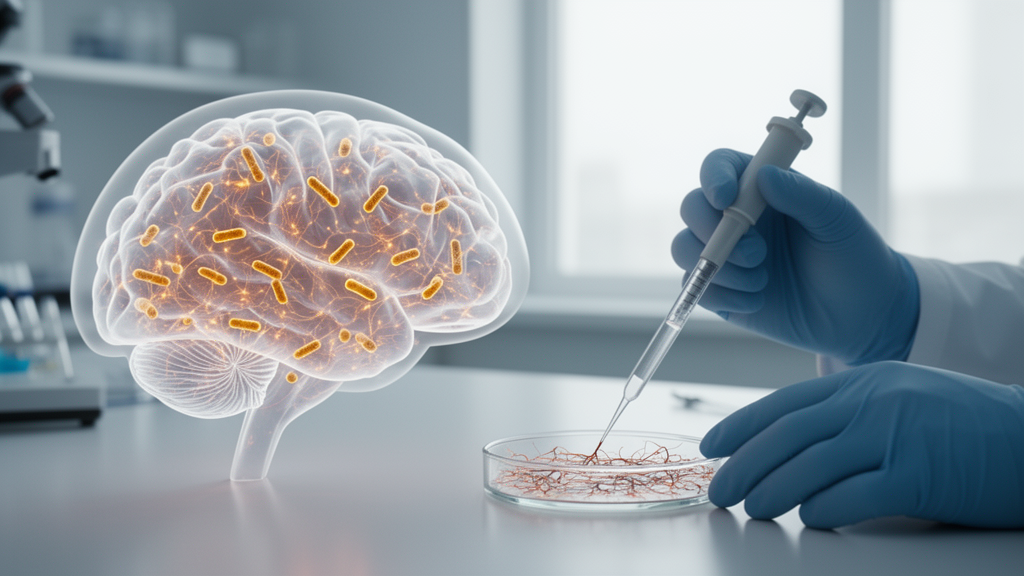
Microbiology extends the framework further. Interest in the gut-brain-microbiome axis has grown because microbial communities may influence brain health through immune signaling, metabolite production, barrier integrity, and inflammatory regulation. But the authors are careful about causality. Because it remains unproven, microbiome signals should be treated as candidate components of a systems model, with explicit attention to temporality, confounding, and external validation. The same discipline applies across the board: a systems perspective is more than a longer list of candidate mechanisms, and complexity must not become an excuse for conceptual vagueness.
Into this complexity the authors introduce artificial intelligence, multi-omics, and digital biomarkers, but with a sharp caveat. The central question is not whether AI can combine more variables, but whether its representations remain faithful to biological and clinical patterns. AI can detect nonlinear relationships across genomics, transcriptomics, proteomics, metabolomics, neuroimaging, electronic health records, and digital biomarkers, yet those relationships remain hypotheses until they are biologically interpreted and externally validated. Data must preserve relevant structure across time, scale, context, and uncertainty before models can identify clinically meaningful patterns rather than artifacts of fragmented, incomplete, or incompatible datasets.
That requirement turns data sharing into scientific infrastructure. The FAIR principles, which call for data that are findable, accessible, interoperable, and reusable, provide the foundation, but the authors stress that FAIR data are not automatically meaningful data. Provenance, semantic alignment, temporal context, and fitness for a defined use determine whether shared data can support valid inference. The Alzheimer’s Disease Neuroimaging Initiative is cited as proof of concept, having advanced biomarker validation, disease staging, and reproducibility across the field. Future ecosystems, the authors propose, should extend that model by aligning microbiome profiles, digital biomarkers, patient- and caregiver-reported outcomes, and environmental exposures around longitudinal person-level patterns rather than merely adding new modalities.
Privacy and governance loom over any such international effort. Federated learning offers one promising pathway, enabling model training across institutions without moving patient-level data out of local repositories, which supports privacy-preserving collaboration and reduces barriers created by differing legal and regulatory frameworks. Yet federation preserves data locality without harmonizing meaning, correcting bias, or establishing validity. The authors also insist on context-appropriate explainability: if AI systems are to influence diagnosis, prognosis, or care planning, clinicians must understand the rationale, uncertainty, and limits of model predictions for the specific decision and user. In a disease where decisions have profound consequences for patients and families, they write, explainability is not optional.
The most provocative move in the paper is its treatment of care. A persistent limitation of Alzheimer’s research has been the uneven integration of disease-focused discovery with the translation, dissemination, implementation, and scaling of evidence-based care and caregiving. Molecular investigations have concentrated on mechanisms, biomarkers, and therapeutic targets, while care has often been viewed as the responsibility of clinical practice and health systems. As precision medicine advances, the authors argue, this separation becomes scientifically counterproductive. Earlier diagnosis and individualized therapies have value only insofar as they change decisions and preserve function; conversely, routine-care data on function, behavior, symptoms, and caregiver experience can sharpen disease models and therapeutic development. Cure and care, in this framing, are different points in the same evidence cycle.
Digital technologies show how the two missions can reinforce each other. Remote monitoring, speech analysis, wearable sensors, and AI-enabled clinical decision support can simultaneously generate high-quality research data, detect subtle changes in disease progression, personalize interventions, and provide timely information for caregivers and healthcare professionals. But the authors impose a boundary condition: a signal is not clinically useful merely because it can be detected. Its value depends on a defined response, an accountable user, and demonstrable benefit. Future clinical trials, they suggest, should evaluate patterns of cognitive, behavioral, and functional performance, quality of life, and caregiver burden alongside molecular and imaging endpoints, attending to heterogeneity in response rather than mean effects alone.
The paper closes with a practical agenda and a five-question discipline for researchers: What did we discover, why does it matter, who needs to use it, what would have to change for it to be used, and how will we know that it actually improved people’s lives. The authors call for defining the system before building the model, building interoperable federated evidence infrastructure, and linking every signal to a decision and every decision to a patient-centered outcome. Success, they conclude, should be judged by whether innovations improve functional independence, quality of life, caregiver wellbeing, and equitable access, not only by whether they predict molecular endpoints. The test of precision medicine, in their words, is not only how precisely it classifies disease, but how reliably it changes the trajectory of a person’s life.
Subject of Research: A systems-medicine framework integrating AI, multi-omics, and patient-centered care in Alzheimer's disease
Article Title: Integrating cure and care in Alzheimer’s disease: a systems perspective for precision medicine
Article References: Rice, J. A., Bouteiller, J.-M. C., & Khachaturian, A. S. (2026). Integrating cure and care in Alzheimer’s disease: a systems perspective for precision medicine. Frontiers in Molecular Medicine, 6, Article 1960763. https://doi.org/10.3389/fmmed.2026.1960763
Image Credits: AI Generated
DOI: 10.3389/fmmed.2026.1960763
Keywords: Alzheimer's disease, precision medicine, artificial intelligence, multi-omics, neuroinflammation, microbiome, federated learning, FAIR data, digital biomarkers, caregiving, systems biology, dementia care
Cite Scienmag News
Cassandra Pierce. (October 15, 2026). Alzheimer’s Precision Medicine Must Fuse Cure and Care, Researchers Argue. Scienmag. https://scienmag.com/alzheimers-precision-medicine-must-fuse-cure-and-care-researchers-argue/
Cassandra Pierce. "Alzheimer’s Precision Medicine Must Fuse Cure and Care, Researchers Argue." Scienmag, 15 October 2026, https://scienmag.com/alzheimers-precision-medicine-must-fuse-cure-and-care-researchers-argue/. Accessed 15 October 2026.
Cassandra Pierce. "Alzheimer’s Precision Medicine Must Fuse Cure and Care, Researchers Argue." Scienmag. October 15, 2026. https://scienmag.com/alzheimers-precision-medicine-must-fuse-cure-and-care-researchers-argue/


