


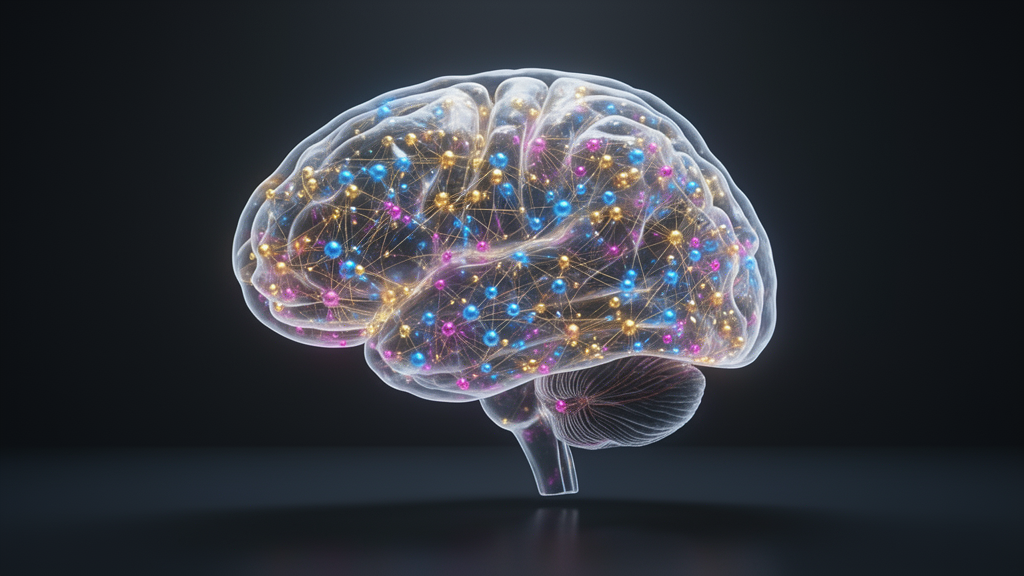
Every human brain begins as a sheet of dividing cells, and the transformation of those cells into the billions of neurons that populate a mature cortex depends on an intricate choreography of genes switching on and off at precisely the right moments. A new study published in Genome Biology by researchers at the University of Wisconsin–Madison has now assembled one of the most comprehensive maps to date of the gene regulatory networks that govern this process, capturing how the genetic control of early brain development unfolds across time, brain regions, cell types, and species. The work, led by co-first authors Kalpana Hanthanan Arachchilage and Ryan D. Risgaard under the senior guidance of André M. M. Sousa and Daifeng Wang, offers a resource that could reshape how scientists think about both the evolution of the human brain and the developmental origins of neurological disorders.
Neurogenesis, the process by which neural progenitor cells divide and differentiate into neurons, is orchestrated by dynamic transcriptional programs. These programs vary across developmental time, across brain regions, and across cell types, and it is precisely this variability that gives rise to the regionally specialized neuronal circuits that make different parts of the brain do different things. Yet despite decades of research, the gene regulatory networks, or GRNs, that coordinate these processes across species and brain regions have remained incompletely characterized. The new study set out to close that gap by constructing a comprehensive GRN resource spanning 24 neurogenic lineages drawn from three mammalian species: human, macaque, and mouse.
The scale of the resource is what makes it powerful. Twenty of the lineages come from the human brain, with two each from macaque and mouse, allowing the researchers to perform systematic cross-species and cross-regional comparisons. By integrating these datasets, the team characterized the temporal dynamics of gene regulation across neurogenic lineages and introduced a new computational metric, a dynamic score, designed to identify lineage-specific regulatory subnetworks. This analytical approach revealed hundreds of dynamic regulons, groups of genes controlled by a common regulator, as well as co-regulatory modules that shift their activity as development proceeds.
Among the discoveries emerging from this atlas are both known and entirely novel candidate regulators that underlie neuronal differentiation and regional identity across the human brain. The identification of new regulatory candidates is significant because it provides concrete starting points for experiments aimed at understanding how the brain’s diverse regions acquire their distinct identities during development. The study also uncovered evolutionary divergence in neurogenic gene regulatory networks, revealing molecular differences that distinguish neurogenesis in humans from that of other mammalian species, a finding with direct implications for understanding how human brains came to be so distinctive.
The researchers did not stop at computational prediction. To validate their resource, they experimentally characterized one of the candidate neurogenic regulators identified by their analysis, a protein called ILF2. This experimental work provides evidence that ILF2 plays a role in neurogenesis, demonstrating that the atlas is not merely a descriptive catalog but a tool capable of generating testable, biologically meaningful hypotheses. The characterization of ILF2’s expression during human cortical development is documented in detail in the study’s supplementary materials, alongside extensive sensitivity analyses confirming the robustness of the computational framework.
Perhaps the most clinically consequential application of the new resource lies in disease research. The team mapped genes associated with neurological conditions onto their regulatory network atlas, revealing gene regulatory dynamics linked to 30 neurological disorders and traits. Among these are some of the most prominent and puzzling conditions in neurology and psychiatry, including autism spectrum disorder, schizophrenia, intellectual disability, and microcephaly. By connecting disease-associated genes to the specific regulatory programs and developmental time points in which they act, the atlas provides a framework for investigating how disruptions to gene regulation during early brain development may contribute to disease risk.
This approach reflects a growing recognition in neuroscience that many neurodevelopmental and psychiatric disorders are not caused by the failure of a single gene but by perturbations to entire regulatory circuits. A gene variant that has only a modest effect on its own may, by altering the timing or intensity of a transcriptional program during a critical window of neurogenesis, ripple through a network of downstream targets with substantial consequences. An atlas that captures these networks in their full temporal and spatial context allows researchers to ask not just which genes are associated with a disorder, but when and where in development those genes exert their influence, and through which regulatory pathways they act.
The cross-species dimension of the work adds another layer of significance. Comparing human neurogenic GRNs with those of macaque and mouse allows the researchers to distinguish conserved regulatory mechanisms, those shared across mammals and likely fundamental to brain development in general, from those that have diverged over evolutionary time. Because the human brain differs from other mammalian brains in its size, its cellular diversity, and the protracted course of its development, identifying regulatory programs that are uniquely or distinctively human offers clues about the molecular basis of human brain evolution. Such insights may eventually help explain how the regulatory landscape of the developing human brain came to support cognitive capacities not found in other species.
The study was conducted at the Waisman Center at the University of Wisconsin–Madison, with contributions from researchers across the institution’s departments of neuroscience, biostatistics and medical informatics, computer sciences, and population health sciences. The work was supported by funding from the National Institutes of Health and the National Science Foundation, among other sources, and was performed in accordance with the ethical guidelines of the University of Wisconsin–Madison Institutional Review Board for research use of human brain tissue. The research was published as an open-access article, and the underlying data, including the full gene regulatory networks for all 24 lineages, regulon dynamic scores, co-regulatory gene modules, and regulon-disorder associations, are provided in extensive supplementary tables.
Crucially, the resource is freely accessible through an interactive online platform, allowing researchers anywhere in the world to explore the dynamic neurogenic regulatory networks for themselves. As the authors conclude, the atlas facilitates the discovery of key regulators of early neuronal development, offers insights into the evolution of human brain regulatory programs, and enables the investigation of disease-associated regulatory mechanisms. For a field that has long sought to connect the dots between genes, development, evolution, and disease, the study provides something that has been missing: a single, integrated map of the regulatory landscape on which the mammalian brain is built, and a demonstration that when that landscape is viewed dynamically, across species and across time, new regulators, new evolutionary signatures, and new disease connections come into focus.
Subject of Research: Gene regulatory networks controlling early mammalian neurogenesis across species, brain regions, and neurological disease risk
Article Title: Dynamic landscapes of gene regulatory networks during early mammalian neurogenesis for understanding brain evolution and disorder risk
Article References: Dynamic landscapes of gene regulatory networks during early mammalian neurogenesis for understanding brain evolution and disorder risk. (n.d.). https://doi.org/10.1186/s13059-026-04307-4
Image Credits: AI Generated
DOI: 10.1186/s13059-026-04307-4
Keywords: neurogenesis, gene regulatory networks, brain development, human evolution, autism spectrum disorder, schizophrenia, microcephaly, intellectual disability, transcription factors, single-cell genomics, ILF2, comparative genomics
Cite Scienmag News
Juliet Wilcox. (October 15, 2026). New Atlas Maps the Gene Networks That Build the Human Brain. Scienmag. https://scienmag.com/new-atlas-maps-the-gene-networks-that-build-the-human-brain/
Juliet Wilcox. "New Atlas Maps the Gene Networks That Build the Human Brain." Scienmag, 15 October 2026, https://scienmag.com/new-atlas-maps-the-gene-networks-that-build-the-human-brain/. Accessed 15 October 2026.
Juliet Wilcox. "New Atlas Maps the Gene Networks That Build the Human Brain." Scienmag. October 15, 2026. https://scienmag.com/new-atlas-maps-the-gene-networks-that-build-the-human-brain/


