


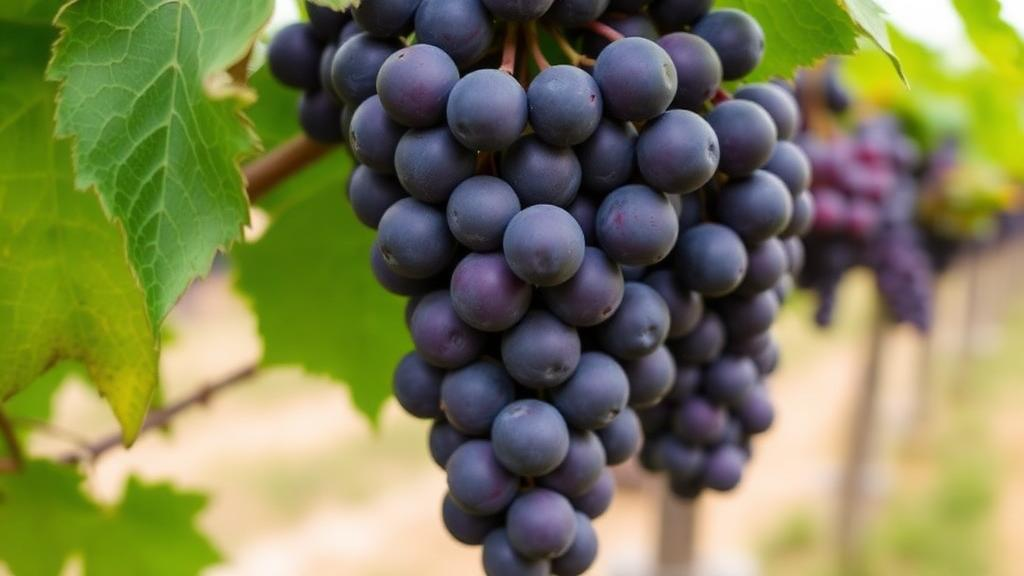
In the sun-scorched vineyards of semi-arid Iran, where rain-fed grapevines must survive on whatever moisture the soil can hold, a four-year field experiment has delivered one of the most striking results yet in the search for climate-resilient agriculture. Researchers report that a specially engineered biochar — charcoal made from grapevine-pruning residues and then enriched with chitosan, fulvic acid, brassinosteroid, and three beneficial microorganisms — more than doubled grape yields while dramatically improving the vines’ ability to withstand drought. The study, published in the journal Plant and Soil, offers a rare combination of hard field data and economic analysis, and it suggests that the humble charcoal-like soil amendment may be on the verge of becoming something far more sophisticated: a multifunctional delivery platform for plant health.
The scale of the improvements is what makes the findings remarkable. Compared with conventional fertilization, the fully enriched biochar treatment raised soil organic carbon by 109 percent and cation exchange capacity by 68 percent, while cutting soil bulk density by 19 percent. Those three numbers describe a soil that stores more carbon, holds and exchanges more nutrients, and is physically less compacted — a combination that directly benefits roots, which must push through dense soil to reach water and nutrients. In semi-arid regions where drought degrades soil structure year after year, reversing all three trends at once with a single amendment is an unusual outcome.
Below ground, the effects were even more dramatic. Root surface area increased 2.8-fold under the enriched treatment, and fine roots — those thinner than half a millimeter — made up 71 percent of total root length. This shift in root architecture matters enormously for drought adaptation. Fine roots are the workhorses of water and nutrient uptake, exploring soil pores that thicker roots cannot penetrate. A root system dominated by fine roots can exploit a much larger volume of soil for the same carbon investment, effectively giving the vine a larger and more efficient foraging network precisely when water is scarce. The researchers attribute this architectural shift partly to the biostimulant components, particularly brassinosteroid, a plant hormone known to regulate root development, and partly to the improved physical conditions created by the biochar itself.
The physiological evidence of drought relief was equally clear. Leaf relative water content — a direct measure of how well-hydrated the foliage is — climbed from 68.5 percent to 88.2 percent under the fully enriched treatment. Meanwhile, two classic biochemical stress markers moved sharply in the right direction: proline, an amino acid that accumulates when plants are water-stressed, fell by 67 percent, and malondialdehyde, a byproduct of oxidative damage to cell membranes, dropped by 62 percent. In plain terms, the vines were no longer desperately conserving water or repairing membrane damage. They were functioning as well-hydrated, low-stress plants despite receiving no irrigation at all.
These physiological gains translated into photosynthetic performance and nutrient uptake. The enriched treatment improved photosynthetic efficiency and increased the uptake of essential nutrients, consistent with the combined action of the amendment’s components. The arbuscular mycorrhizal fungus Rhizophagus irregularis extends the root’s effective reach through fungal hyphae that access phosphorus and other nutrients beyond the depletion zone around roots. The bacteria Azospirillum brasilense and Pseudomonas fluorescens contribute nitrogen fixation, hormone production, and general growth promotion. Biochar serves as an ideal carrier for these organisms, offering a porous, carbon-rich habitat that protects microbial inoculants from the harsh conditions of semi-arid soil — a role that has attracted growing attention in recent years as researchers seek reliable ways to keep beneficial microbes alive long enough to colonize plant roots.
The enrichment strategy is what distinguishes this work from most biochar studies. Plain biochar has been tested extensively in vineyards, with mixed results that often depend on soil type, pyrolysis conditions, and climate. Here, the researchers layered multiple functions onto the same carbon matrix. Chitosan, a biopolymer derived from crustacean shells, acts as a soil conditioner and elicitor of plant defense responses, and it can improve water retention in amended soils. Fulvic acid, a small-molecule component of humic substances, chelates nutrients and enhances their mobility toward roots. Brassinosteroid tunes hormonal signaling for stress tolerance and root growth. By loading all of these onto grapevine-pruning biochar — itself a clever piece of circular agriculture, since the feedstock comes from the same vineyards being treated — the team created what is essentially a slow-release, biologically active soil supplement.
The four-year duration of the experiment, running from 2022 to 2025, lends the results particular weight. Many biochar trials last a single season, which raises questions about whether initial flushes of improvement will persist once the amendment’s labile fractions are consumed. Multi-year data showing sustained gains in soil carbon, root architecture, water status, and yield suggest that the enriched biochar is not merely a short-lived fertilizer spike but a durable modification of the soil-plant system. The seven treatments evaluated across the trial also allowed the researchers to isolate the contribution of each enrichment component, and the fully enriched formulation consistently outperformed simpler combinations.
Yield is where the story becomes genuinely viral-worthy for the agricultural world: the fully enriched treatment produced a 114 percent increase in yield relative to conventional fertilization. Doubling the productivity of rain-fed vines, without irrigation, in a semi-arid climate, is the kind of result that could reshape how marginal vineyard regions approach water scarcity. And the economics held up. The benefit-to-cost ratio for the fully enriched treatment was 2.95 — the highest among all treatments — meaning that every unit of money spent on the amendment returned nearly three units of value. For growers operating on thin margins in drought-prone regions, that ratio may matter as much as the yield figure itself, because it demonstrates that the approach is not just scientifically interesting but commercially viable.
The broader context is a growing scientific consensus that single-tool solutions are insufficient for climate adaptation in agriculture. Reviews of biochar research have emphasized that its effects on soil and plants depend on mechanisms that vary widely — carbon sequestration, water retention, microbial habitat, nutrient exchange — and that combining biochar with complementary technologies often outperforms biochar alone. Similarly, meta-analyses of mycorrhizal fungi and plant growth-promoting bacteria show consistent benefits for drought tolerance and nutrient uptake, but field delivery of living inoculants remains a persistent challenge. The enriched-biochar approach addresses that challenge directly by using the biochar’s porous structure as a protective carrier, effectively solving two problems — soil conditioning and microbial survival — with one material.
For the wine and grape industries, which face intensifying drought pressure across the Mediterranean, the Middle East, and other warm-climate regions, the study points toward a practical pathway: recycle vineyard pruning waste into biochar, enrich it with chitosan, fulvic acid, brassinosteroid, and proven microbial strains, and return it to the soil. The result, according to the Iranian research team led by Mohammad Saeed Tadayon of the Agricultural Research, Education and Extension Organization, is a soil that holds more carbon and water, roots that forage more efficiently, leaves that stay hydrated under stress, and harvests that roughly double. As climate change tightens its grip on rain-fed agriculture worldwide, a treatment that turns vineyard waste into vineyard resilience — profitably — is exactly the kind of innovation the sector has been waiting for.
Subject of Research: Enriched biochar amendments for drought resilience and productivity in rain-fed grapevines
Article Title: Biochar enriched with chitosan and biostimulants improves root architecture, nutrient uptake, and drought adaptation of rain-fed grapevines
Article References: Tadayon, M. S., Mousavi, S. M., Hosseini, S. M., & Sadeghi, S. (2026). Biochar enriched with chitosan and biostimulants improves root architecture, nutrient uptake, and drought adaptation of rain-fed grapevines. Plant and Soil. https://doi.org/10.1007/s11104-026-09031-3
Image Credits: AI Generated
DOI: 10.1007/s11104-026-09031-3
Keywords: biochar, grapevine, drought resilience, chitosan, fulvic acid, brassinosteroid, mycorrhizal fungi, plant growth-promoting bacteria, root architecture, soil organic carbon, rain-fed viticulture, biostimulants
Cite Scienmag News
Alan Morgan. (October 14, 2026). Supercharged Biochar Doubles Grape Yields and Helps Vines Beat Drought. Scienmag. https://scienmag.com/supercharged-biochar-doubles-grape-yields-and-helps-vines-beat-drought/
Alan Morgan. "Supercharged Biochar Doubles Grape Yields and Helps Vines Beat Drought." Scienmag, 14 October 2026, https://scienmag.com/supercharged-biochar-doubles-grape-yields-and-helps-vines-beat-drought/. Accessed 14 October 2026.
Alan Morgan. "Supercharged Biochar Doubles Grape Yields and Helps Vines Beat Drought." Scienmag. October 14, 2026. https://scienmag.com/supercharged-biochar-doubles-grape-yields-and-helps-vines-beat-drought/


