


Iron deficiency remains the most widespread nutritional shortfall on the planet. According to the World Health Organization, anemia affected roughly 40 percent of children aged six to 59 months, 37 percent of pregnant women, and 30 percent of women aged 15 to 49 worldwide in 2019. The standard response has long been to sprinkle reactive iron salts such as ferrous sulfate into staple foods, but those salts come with a hidden cost: they discolor flour, trigger rancid flavors, oxidize fats, and irritate the gut. A comprehensive review published in Food Chemistry: X now examines ferric pyrophosphate, a far gentler iron compound, and asks a deceptively simple question: can food scientists finally close the bioavailability gap that has kept this promising fortificant on the sidelines?
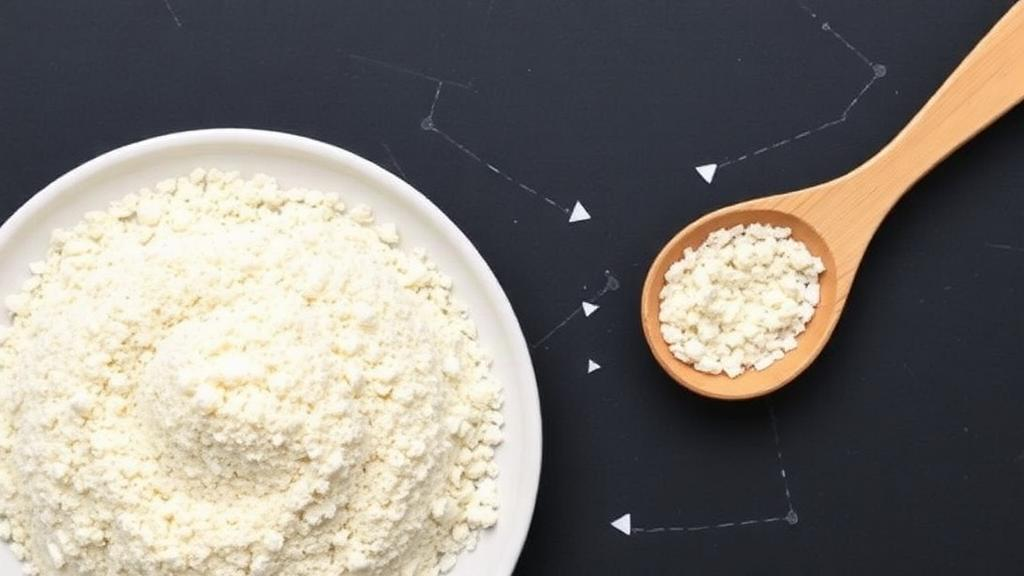
Ferric pyrophosphate, or FePP, is a coordination complex in which ferric ions are bound to pyrophosphate ligands. That structure makes it remarkably stable in the gastrointestinal environment and, unlike ferrous supplements, it does not readily catalyze the Fenton reaction that generates damaging free radicals. It barely disturbs the gut microbiota, causes minimal gastrointestinal irritation, and its white color preserves the appearance of fortified foods, eliminating the need for color masking in many applications. Among available ferric supplements, it shows a favorable safety profile, whereas ferrous citrate and iron EDTA chelates have raised concerns about colorectal cancer risk. The catch is absorption: using ferrous sulfate as the reference with a bioavailability value of 100, FePP scores only about 45, because its low water solubility means iron is released slowly and must be reduced before the intestine can take it up.
The absorption pathway explains both the problem and the opportunities. Before intestinal uptake, FePP must dissolve and release ferric iron, which duodenal cytochrome b or ascorbic acid then reduces to ferrous iron at the brush border. The ferrous iron enters enterocytes through divalent metal transporter 1, exits via ferroportin 1, is re-oxidized by hephaestin, and binds transferrin for delivery to the bone marrow and liver. The whole system is governed by hepcidin, a hormone that rises with body iron stores and suppresses further absorption. Every step in this chain, from dissolution to reduction to transport, is a potential bottleneck, and every modification strategy reviewed by the researchers targets one or more of these steps.
In cereals, the review documents striking trade-offs. Micronized FePP caused only slight color changes in fortified rice after two weeks of storage, while rice fortified with water-soluble iron salts turned markedly brown, and even encapsulated ferrous sulfate retained a reddish-brown tint. Accelerated storage of FePP-fortified restructured rice at 40 degrees Celsius and 60 percent relative humidity kept iron retention near 100 percent for 32 weeks. Extrusion reconstitution, which embeds FePP inside reconstituted grains, preserved more than 80 percent of the iron during subsequent cooking, whereas a soaking-and-puffing approach retained only 18 percent because poorly soluble FePP tends to sit on the grain surface where heat strips it away. Yet higher retention did not always mean better absorption: cold-extruded rice, which lost more iron during cooking, actually delivered 64 percent higher iron absorption in young women, likely because its more digestible starch structure released iron more readily in the gut.
Soluble-salt chemistry has emerged as one of the most powerful levers. Co-extruding FePP with citric acid and sodium citrate forms soluble ferric pyrophosphate citrate complexes, raising in vitro iron solubility from 2.7 to 9.6 percent and doubling human iron absorption from 1.7 to 3.2 percent, reaching 83 percent of ferrous sulfate’s bioavailability. Sodium pyrophosphate works differently: it shifts ferric iron into a mixed spin state that loosens the coordination structure, boosting soluble iron concentrations eight to tenfold and lifting absorption in bouillon from 4.4 to 6.4 percent. But the matrix fights back. In a low-phytate meal, citrate-modified FePP achieved 9.9 percent absorption; in high-phytate doubanjiang, absorption fell to 4.8 percent, a roughly 50 percent drop. Phytate, the phosphorus-storage molecule in cereals and legumes, binds iron into insoluble complexes, and no amount of solubilization fully overcomes it.
Particle size offers another route. Reducing FePP to submicron particles of 0.3 micrometers raised solubility from 2.38 to 5.52 percent, and amorphous nanoparticles of 10 to 30 nanometers achieved a relative bioavailability of about 103 percent in iron-deficient rats, matching ferrous sulfate. Laboratory models suggest these nanoparticles may even cross the intestinal epithelium through M-cell-mediated pathways in addition to conventional transport. But nanosizing carries costs: the increased surface energy drives agglomeration and sedimentation in liquid foods, stabilizers such as whey protein and gum arabic are needed to keep particles dispersed, and long-term safety data, tissue distribution studies, and regulatory frameworks for nano-iron remain incomplete. The review is explicit that short-term toxicity results cannot establish long-term safety.
Delivery systems add further sophistication. Liposomes, phospholipid vesicles that shield FePP from the harsh gastrointestinal environment, have shown impressive clinical results: in children with iron deficiency anemia, one month of micronized liposomal FePP raised hemoglobin from 9.4 to 12.1 grams per deciliter with an adverse reaction rate of just 5.2 percent, compared with 25 percent in controls. In pregnant women, liposomal FePP with ascorbic acid improved hemoglobin and ferritin with no adverse pregnancy outcomes. Biomacromolecular carriers are advancing too: a complex of casein phosphopeptides and beta-glucan pushed solubility from 25.59 to 93.98 percent and held gastric iron release to just over 10 percent while releasing more than 80 percent during intestinal digestion, a sustained-release profile well matched to the absorption window. Most of these systems, however, have been tested as supplements rather than in actual fortified foods.
Dietary synergy and antagonism shape real-world outcomes. Ascorbic acid is the workhorse enhancer: at a 2:1 molar ratio it can double or triple iron absorption, and in a seven-month trial in Indian children, daily guava providing roughly 170 milligrams of vitamin C with meals raised hemoglobin by 3.7 grams per liter and cut anemia incidence by 51 percent. Meat factors, likely cysteine-containing peptides, can dramatically counteract phytate inhibition, and lactic acid fermentation lowers intestinal pH while microbial phytase degrades inhibitors. On the antagonistic side, calcium can halve non-heme iron absorption at 300-milligram intakes, and the chemical form of co-fortified zinc matters enormously: in fortified rice, zinc oxide reduced iron absorption from 4.0 to 2.7 percent by neutralizing gastric acid, while zinc sulfate at the same molar ratio caused no significant antagonism. Even polyphenols complicate matters, forming dark insoluble complexes with iron released from FePP surfaces, though calcium-iron mixed pyrophosphates with reduced surface iron exposure kept color changes acceptable and polyphenol retention above 85 percent.
The review’s central message is that evaluation must be layered and honest. In vitro digestion models following the INFOGEST protocol, Caco-2 cell assays measuring ferritin formation, rat hemoglobin regeneration studies, and human stable-isotope trials each answer different questions, and improved solubility in a flask does not guarantee improved iron status in a child. Human evidence is encouraging where it exists: dual-fortified salt with micronized FePP increased hemoglobin by 16 grams per liter in children and cut iron-deficiency anemia prevalence from 30 to 5 percent, and an eight-month rice trial in Indian schoolchildren reduced iron deficiency from 33 to 14 percent. But the authors caution that absorption rate alone is insufficient, since total absorbed iron depends on intake, and that long-term safety, particularly for nanoparticles, still demands rigorous study. Precision iron fortification, they argue, means matching the iron source, its modification, and the food matrix to the population, the diet, and the processing reality of each setting, a far more nuanced recipe than simply adding iron to food.
Subject of Research: Bioavailability enhancement strategies for ferric pyrophosphate in precision iron fortification of foods
Article Title: Ferric pyrophosphate in precision iron fortification: mechanistic insights into food-system suitability, bioavailability modulation, and evaluation strategies
Article References: Wang, Y., Wei, Y., Chang, M., No, J., & Liu, K. (2026). Ferric pyrophosphate in precision iron fortification: mechanistic insights into food-system suitability, bioavailability modulation, and evaluation strategies. Food Chemistry: X, 39, Article 104600. https://doi.org/10.1016/j.fochx.2026.104600
Image Credits: AI Generated
DOI: 10.1016/j.fochx.2026.104600
Keywords: ferric pyrophosphate, iron fortification, anemia, bioavailability, food chemistry, nanoparticles, liposomes, phytate, ascorbic acid, extrusion, iron deficiency, food matrix
Cite Scienmag News
Bethany Barker. (October 12, 2026). The Quiet Iron Compound That Could Fix Fortified Food’s Biggest Trade-Off. Scienmag. https://scienmag.com/the-quiet-iron-compound-that-could-fix-fortified-foods-biggest-trade-off/
Bethany Barker. "The Quiet Iron Compound That Could Fix Fortified Food’s Biggest Trade-Off." Scienmag, 12 October 2026, https://scienmag.com/the-quiet-iron-compound-that-could-fix-fortified-foods-biggest-trade-off/. Accessed 12 October 2026.
Bethany Barker. "The Quiet Iron Compound That Could Fix Fortified Food’s Biggest Trade-Off." Scienmag. October 12, 2026. https://scienmag.com/the-quiet-iron-compound-that-could-fix-fortified-foods-biggest-trade-off/


