


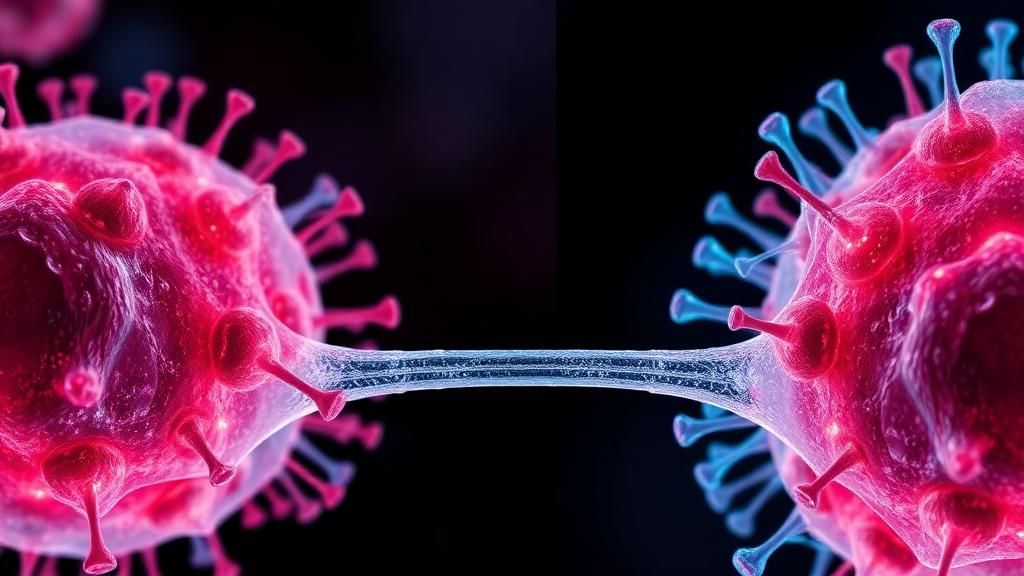
Cancer immunotherapy has entered a new phase in which the central challenge is no longer simply activating immune cells, but physically bringing them into contact with tumor cells. A comprehensive review published in Materials Today Bio by Hee Won Park and Sungjun Kim maps the rapidly expanding field of immune cell engagers, or ICEs, engineered platforms designed to bridge effector immune cells and malignant cells so that immune synapses form and cytotoxic or phagocytic programs can proceed. The review organizes this landscape into three engineering levels: molecular constructs such as engineered antibodies and aptamers, living cell engagers created by decorating immune cell membranes with targeting ligands, and nanoparticle platforms that organize immune-engaging ligands and therapeutic payloads within nanoscale architectures.
The rationale for these platforms stems from the many ways tumors evade immune surveillance. Cancer cells overexpress PD-L1 to suppress T cell activation, downregulate MHC class I to escape T cell receptor-mediated recognition, and display so-called don’t eat me signals such as CD47 and CD24 that bind SIRPα and Siglec-10 on macrophages and block phagocytosis. The tumor microenvironment compounds these defenses through hypoxia and dense extracellular matrix deposition that restrict immune infiltration. Immune checkpoint inhibitors such as ipilimumab and pembrolizumab have transformed treatment by blocking inhibitory signals, but they do not directly coordinate the membrane-level contact between immune cells and cancer cells that is required for lytic granule polarization and immune synapse formation. ICEs were conceived to fill precisely this gap.
At the mechanistic level, ICEs share a common structural principle: an immune cell-binding domain and a tumor-targeting domain integrated within a single construct. Yet physical proximity alone does not guarantee a productive synapse. In T cells, engager-mediated CD3 signaling must be coordinated with adhesion through LFA-1 and ICAM-1 interactions, TCR microcluster organization, F-actin remodeling, and polarization of the microtubule organizing center and lytic granules toward the target cell, culminating in polarized perforin and granzyme release. After target killing, synapse disassembly allows serial killing of subsequent targets. NK cells use similar downstream cytolytic machinery but regulate it through the balance of activating receptors, including CD16, NKp30, NKp44, NKp46, and NKG2D, against inhibitory receptors such as KIRs and NKG2A. Macrophage engagers instead drive an actin-rich phagocytic cup that engulfs and internalizes the tumor cell.
Engineered antibodies dominate the clinically established side of the field. Twelve CD3-engaging T cell engagers have now been approved by the FDA or European Medicines Agency, beginning with blinatumomab for CD19-positive B-cell acute lymphoblastic leukemia in 2014 and extending through CD20-directed agents for lymphoma, BCMA- and GPRC5D-directed agents for multiple myeloma, the TCR-based tebentafusp for uveal melanoma, tarlatamab for small cell lung cancer, and catumaxomab for EpCAM-positive malignant ascites. These approvals demonstrate that T cell redirection has moved from proof-of-concept hematologic applications into selected solid tumor settings, although antigen heterogeneity, limited T cell infiltration, and toxicity remain formidable obstacles.
Next-generation multispecific T cell engagers are addressing those limitations by adding functional modules to a single scaffold. MK-6070 targets DLL3, CD3, and serum albumin for half-life extension, while ISB 2001 and ramantamig co-target two myeloma antigens alongside CD3 to counter antigen escape, with early clinical results showing encouraging response rates and manageable toxicity. Tetraspecific formats push further: MP0533 recognizes a combinatorial antigen pattern of CD33, CD123, and CD70 in acute myeloid leukemia, and GNC-038 combines CD19 and PD-L1 targeting with CD3 engagement and 4-1BB costimulation. These designs illustrate that additional binding domains are being assigned defined jobs, from pharmacokinetic tuning to checkpoint neutralization, rather than merely increasing molecular complexity.
NK cell engagers are advancing rapidly behind them. CD16-targeting bispecific killer cell engagers have redirected NK cells against EpCAM-positive carcinomas, CD133-positive colorectal cancer, and CD33-positive AML, while the tetravalent CD30/CD16A TandAb, developed as AFM13, showed that avidity-enhanced formats retain tumor binding far better than monovalent counterparts. NKp30- and NKp46-directed engagers exploit natural cytotoxicity receptors, and NKG2D-based constructs recruit multiple cytotoxic lymphocyte populations at once because the receptor is shared by NK cells, CD8-positive T cells, γδ T cells, and NKT cells. Cytokine-armed TriKEs embed IL-15 directly into the engager to support NK cell expansion and persistence, and tetraspecific formats such as IPH6501 combine CD20 targeting, NKp46 and CD16A engagement, and an IL-2 variant in one molecule. Phagocytic cell engagers, meanwhile, pursue a distinct endpoint: macrophage-mediated engulfment, driven either by activating receptors such as CD89 or by tumor-localized blockade of the CD47-SIRPα checkpoint.
Beyond antibodies, aptamers offer a chemically programmable alternative. These short single-stranded DNA or RNA oligonucleotides, at 5 to 50 kilodaltons far smaller than antibodies, can be synthesized with high reproducibility and assembled into bispecific bridges classified by an m-plus-n valency scheme. A [1+1] aptamer targeting c-Met and CD16a redirected NK cells against tumor cells, with linker length proving critical: linkers of roughly 49 to 154 angstroms supported cytotoxicity while a 200-angstrom linker markedly reduced it. Circularized CD16/PD-L1 aptamers simultaneously recruit NK cells and block checkpoint suppression, [1+2] conjugates deliver 4-1BB costimulation selectively to PSMA-positive or stromal tumor sites without systemic toxicity, and newer aptamer-drug conjugates integrate immune recruitment with localized chemotherapy delivery.
Living cell engagers represent a striking biomaterial-based extension of the concept. Rather than injecting soluble molecules that largely fail to reach tumors, researchers install targeting ligands directly onto immune cell membranes ex vivo. Lipid-PEG conjugates bearing hyaluronic acid anchor into NK cell membranes through hydrophobic insertion and confer CD44-mediated recognition of pancreatic and breast cancer cells, and systematic optimization showed that DSPE anchors, intermediate PEG spacer lengths, and tuned ligand density each determine whether engineered contacts become signaling-competent synapses. Dual-ligand designs display both hyaluronic acid and phenylboronic acid to target heterogeneous tumors, antibody-capturing lipid anchors allow NK cells to be redirected with any chosen therapeutic antibody, and fusogenic liposomes can even remodel tumor cell glycans to make them more visible to NK cells. Metabolic glycoengineering with azide sugars and strain-promoted click chemistry provides covalent, more durable attachment of nanobodies and glycopolymers to NK and T cell surfaces.
Nanoparticle platforms add a third dimension by organizing multiple functions within a single nanoscale scaffold. Solid nanoparticles carrying anti-PD-L1 and anti-4-1BB antibodies have acted as immuno-switch particles that block checkpoint signaling while delivering costimulation, and trispecific nano-antibodies co-presenting anti-PD-L1, anti-4-1BB, and anti-NKG2A on albumin-polyester particles promoted infiltration of both NK and CD8-positive T cells and improved survival. Protein cage nanodrones bridge NK cells to HER2- or EGFR-positive tumors, PEG-PLGA nanoengagers combine NK cell bridging with encapsulated epirubicin, and macrophage-directed particles couple checkpoint blockade with STING agonist delivery. Liposomal engagers, including nanoBiTEs and TRAFsomes displaying defined copy numbers of anti-CD3 and tumor-targeting fragments, extend these principles with biomimetic membrane architecture and favorable circulation half-lives of roughly 50 to 60 hours.
Significant challenges remain before these platforms reach their full potential. Antibody-based engagers risk cytokine release syndrome, neurotoxicity, and antigen escape; aptamers face nuclease degradation and rapid clearance; living cell engagers must control ligand shedding and preserve cell phenotype; and nanoparticles contend with protein corona formation and clearance by the mononuclear phagocyte system. The review also highlights a translational gap: standardized criteria for defining a functionally productive immune synapse in potency testing have not yet been established, even though quantitative imaging of receptor clustering, F-actin accumulation, granule polarization, and serial killing is technically feasible. The authors argue that next-generation ICEs must move beyond simply increasing immune cell recruitment toward precise control over where, when, and to what extent immune activation occurs. If molecular engineering, immunology, and biomaterials science continue to converge, immune cell engagers could evolve from structurally diverse constructs into precisely controlled therapeutic systems that translate tumor recognition into effective, adaptable antitumor immunity.
Subject of Research: Engineering of immune cell engager platforms, including antibodies, aptamers, cell surface engineering, and nanoparticles, for cancer immunotherapy
Article Title: Engineering immune cell engagers: From molecular constructs to biomaterial platforms
Article References: Park, H. W., & Kim, S. (2026). Engineering immune cell engagers: From molecular constructs to biomaterial platforms. Materials Today Bio, 41, Article 103737. https://doi.org/10.1016/j.mtbio.2026.103737
Image Credits: AI Generated
DOI: Not provided
Keywords: immune cell engagers, bispecific antibodies, T cell engagers, NK cell engagers, macrophage engagers, aptamers, cell surface engineering, nanoparticles, cancer immunotherapy, immune synapse, checkpoint blockade, biomaterials
Cite Scienmag News
Nathaniel Bowman. (October 11, 2026). Immune Cell Engagers Evolve From Simple Bridges to Smart Biomaterial Platforms. Scienmag. https://scienmag.com/immune-cell-engagers-evolve-from-simple-bridges-to-smart-biomaterial-platforms/
Nathaniel Bowman. "Immune Cell Engagers Evolve From Simple Bridges to Smart Biomaterial Platforms." Scienmag, 11 October 2026, https://scienmag.com/immune-cell-engagers-evolve-from-simple-bridges-to-smart-biomaterial-platforms/. Accessed 11 October 2026.
Nathaniel Bowman. "Immune Cell Engagers Evolve From Simple Bridges to Smart Biomaterial Platforms." Scienmag. October 11, 2026. https://scienmag.com/immune-cell-engagers-evolve-from-simple-bridges-to-smart-biomaterial-platforms/


